

Commercial plantscaping process for Iowa workspaces 2026
TL;DR:
- Proper space assessment and environmental analysis are crucial for successful commercial plantscaping.
- Selecting appropriate plant formats and materials based on location improves longevity and aesthetics.
- Consistent maintenance, including watering, pruning, and rotation, ensures thriving biophilic spaces long-term.
Dead plants in lobby corners. Yellowing ferns next to HVAC vents. A living wall that looked stunning on installation day but now looks like a science experiment gone wrong. These are not rare sights in Iowa commercial buildings, and they all trace back to the same problem: a plantscaping process that skipped the fundamentals. Getting interior plants right in a commercial space is not just about picking something green and hoping for the best. This guide walks you through every key step, from your first space assessment to long-term care routines, so your biophilic investment actually delivers the elevated, alive environment you envisioned.
Table of Contents
- Assessing your space and goals
- Planning your plantscaping installation
- Executing the commercial plantscaping process step by step
- Maintaining a thriving biophilic space
- The overlooked details that make or break plantscaping success
- Bring your plantscaping vision to life with Trendy Gardener
- Frequently asked questions
Key Takeaways
| Point | Details |
|---|---|
| Space assessment matters | Understanding your space is the single best way to ensure successful commercial plantscaping results. |
| Match plants to conditions | Each area may require live, preserved, or replica plants depending on light, air quality, and traffic challenges. |
| Proactive care is crucial | Regular maintenance, rotation, and quick problem solving keep biophilic spaces thriving over time. |
| Design for safety | Proper plant placement and protective barriers help prevent damage and maintain a polished professional look. |
Assessing your space and goals
Before you order a single plant or spec a living wall, you need an honest look at what your commercial interior actually offers. Iowa office buildings vary widely, from sun-drenched atriums in Des Moines to windowless conference rooms in Cedar Rapids. What works beautifully in one environment can die slowly and expensively in another.
Start with light. Walk your space at different times of day and note where natural light lands, for how long, and how intense it gets. Then assess your artificial lighting. Standard overhead fluorescents rarely provide enough intensity for most live plants, but full-spectrum LED fixtures can compensate effectively. Be honest here. Overestimating light availability is one of the most common and costly mistakes in plantscaping workplace planning.
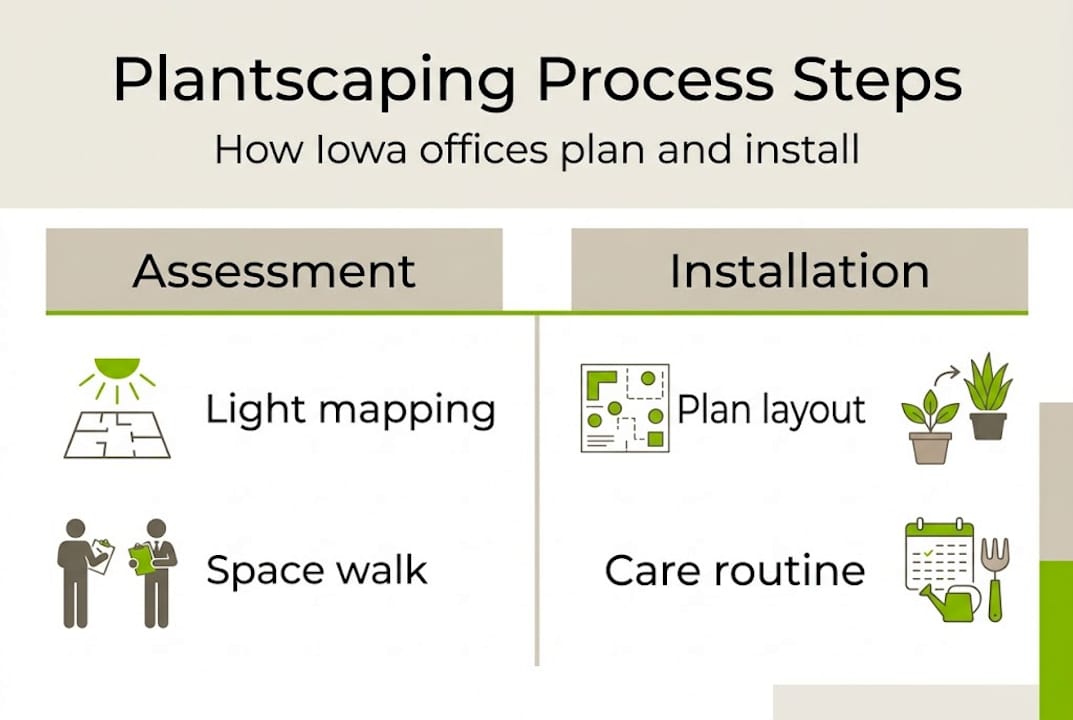
Next, map your HVAC system. Low-light offices, HVAC drafts, and high-traffic areas require special plant selection and careful planning. Note where vents blow cold or hot air, where drafts travel in winter, and where humidity drops below comfortable levels. Iowa winters are brutal on indoor air quality, and plants placed near exterior walls or heating vents suffer the most.
Finally, trace your high-traffic patterns. Busy corridors, reception desks, and elevator lobbies expose plants to physical contact, soil disturbance, and inconsistent care. These zones often need a different plant type entirely.
Here is a quick overview of how environmental conditions map to plant type:
| Condition | Best plant type | Why |
|---|---|---|
| Bright indirect light | Live tropical plants | Supports active growth and lush appearance |
| Low or artificial light | Low-light live species or replica | Reduces mortality risk |
| High-traffic corridor | Replica or preserved moss | Eliminates physical damage risk |
| HVAC draft zone | Preserved moss wall | No moisture or airflow sensitivity |
| High humidity zone | Live ferns or tropicals | Thrives with ambient moisture |
Once you understand your environment, clarify your design goals. Are you prioritizing aesthetics, measurable employee wellness, acoustic absorption, or brand impression for clients? Your answers shape which commercial plant choices will actually deliver results.
Key assessment checklist:
- Light levels per zone (natural and artificial)
- HVAC vent locations and airflow direction
- Traffic volume and physical contact risk per area
- Humidity and temperature fluctuations
- Existing design style and spatial scale
- Maintenance budget and internal resources
Pro Tip: Take photos of each zone at morning, midday, and late afternoon. This quick visual audit often reveals light inconsistencies that feel invisible during a single walkthrough.
Planning your plantscaping installation
With your space assessed and goals in mind, it is time to design and organize your plantscaping plan. This is where most property managers either get it right or set themselves up for long-term frustration.
The planning phase determines your materials, formats, and layout. Think of it as drawing a map before a road trip. You may adjust the route, but you need the destination and the terrain defined first.
Start by selecting your primary installation formats. The three most common for Iowa commercial spaces are living walls, freestanding containers, and preserved or replica solutions. Each has a distinct profile:
| Format | Upfront cost | Maintenance intensity | Best environment |
|---|---|---|---|
| Living wall | High | High | Bright, humid, accessible areas |
| Freestanding containers | Medium | Medium | Versatile, most office environments |
| Preserved moss wall | Medium | Very low | Any environment, especially low-light |
| Replica plants | Low to medium | Minimal | High-traffic, low-light, or dry zones |
For transforming indoor spaces with maximum visual impact, living walls remain the premium choice where conditions support them. However, high-traffic and low-light environments may favor preserved moss walls or replicas, and that is not a compromise. It is smart design.
Here are the essential materials to gather before installation begins:
- Containers and planters sized to your spatial scale
- Appropriate growing media (not standard potting soil for most commercial use)
- Irrigation or self-watering inserts for freestanding planters
- Wall mounting hardware for living or moss walls
- Drainage trays rated for commercial floors
- Plant labels and care cards for maintenance staff
- Protective barriers or decorative guards for high-traffic zones
Now build your layout. Use your traffic pattern map from the assessment phase and identify visual anchor points, natural sightlines from entry areas, and zones where plants will soften hard architectural lines. Pair this with your 2026 office plant trends research to ensure your choices feel current and intentional.
Installation planning steps:
- Finalize plant format choices per zone
- Source plants, containers, and installation hardware
- Create a scaled floor plan with plant placement marked
- Assign care responsibility for each zone
- Schedule installation during low-traffic hours
Executing the commercial plantscaping process step by step
Once your plan is ready and materials have been gathered, you can carry out the installation. This phase rewards precision. Rushing it creates problems you will spend months correcting.
Step-by-step installation guide:
- Prep the space. Clear the installation zones. Protect floors with drop cloths. Mark safe pedestrian zones with tape so workers and building occupants have clear paths throughout the process.
- Position containers first. Place empty containers in their intended spots before adding plants or soil. This lets you adjust for spacing, sightlines, and traffic flow without the added weight.
- Install living walls. Mount wall frames and irrigation lines before introducing plant panels. Test water flow thoroughly. A leak behind a living wall inside an Iowa office building is a significant problem.
- Introduce plants carefully. Move large specimens using proper equipment. Tipping a heavy planter can damage both the plant and the floor. Two-person lifts and wheeled dollies are standard practice.
- Set lighting. Adjust or install supplemental grow lighting for low-light zones. Position fixtures to avoid glare on workstations.
- Complete initial watering. Water thoroughly after installation and allow drainage before opening the space.
Unstable planters and improper placement near HVAC vents or drafts can result in unhealthy plants within weeks. Anchor heavy containers and verify every plant is at least 3 to 4 feet from direct vent airflow.
“The best plantscaping installations look effortless because everything invisible was handled first, anchoring, drainage, lighting, and airflow. What the eye sees is just the reward.”
After installation, consult a solid office plant care guide to set up your immediate post-installation care routine. The first two weeks are critical for plant acclimation. Review current plantscaping tips for additional installation pitfalls to avoid.
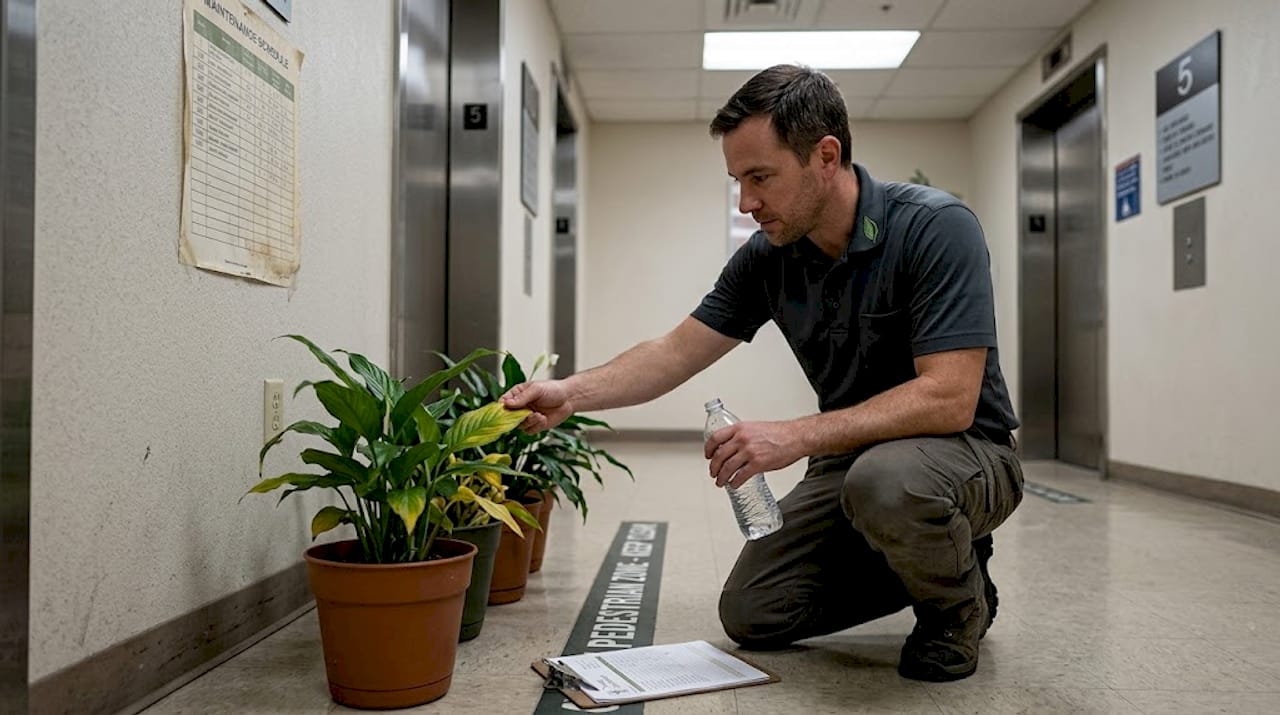
Pro Tip: Mark safe pedestrian zones with floor decals or low decorative barriers around new plant installations. This protects both the plants and your visitors during the acclimation period.
Maintaining a thriving biophilic space
Even the best-designed installation needs proactive care. Here is how to keep your biophilic space thriving long-term.
Most commercial plantscaping projects do not fail at installation. They fail at month three, when the novelty fades, the watering schedule slips, and nobody notices the spider mites until half the plants look ragged. Consistent routines prevent this.
Here is a practical maintenance schedule for Iowa commercial spaces:
| Frequency | Task | What to look for |
|---|---|---|
| Weekly | Watering check | Dry soil, yellowing leaves, root crowding |
| Weekly | Leaf cleaning | Dust buildup blocking light absorption |
| Monthly | Pruning | Dead or leggy growth reducing appearance |
| Monthly | Rotation | Uneven growth, light fatigue on one side |
| Seasonal | Full plant assessment | Species suitability, container sizing, design refresh |
| As needed | Pest treatment | Sticky residue, webbing, visible insects |
Routine rotation and choosing sturdy species are the best ways to address dry air, drafts, and high-traffic wear. Rotation is especially important in Iowa winters when indoor air becomes significantly drier and plant stress increases.
Common issues and fast fixes:
- Yellowing leaves: Usually overwatering or low light. Adjust watering schedule and assess light levels.
- Wilting despite watering: Check for root rot. Remove affected roots and repot with fresh media.
- Leaf drop near entry doors: Cold drafts from Iowa winters. Move sensitive species away from exterior doors.
- Pest presence: Isolate affected plants immediately. Treat with appropriate horticultural soap and monitor for spread.
- Leggy growth: Insufficient light. Supplement with grow lighting or swap to a more tolerant species.
For most property managers, the most reliable approach is a professional maintenance workflow that removes the guesswork. Scheduled service visits ensure nothing gets missed and your biophilic investment continues to perform month after month.
The overlooked details that make or break plantscaping success
After working through countless commercial installations, one pattern is clear: the projects that disappoint almost always skipped something early. Not the plants. Not the containers. The setup phase. A rushed assessment leads to plants placed in the wrong zones. Wrong zones lead to early plant loss. Early plant loss leads to a client who concludes that plantscaping simply does not work in their building.
Here is what rarely gets mentioned. Even preserved moss walls and replica installations benefit from periodic repositioning or accent refreshes. Spaces change. Furniture moves. New tenant improvements shift the visual center of a room. A fixed installation that made perfect sense in 2024 can feel stale or misaligned by 2026 without any intentional review.
Visual anchors also deserve more attention than they typically get. A well-placed large specimen plant near an entry or intersection does not just look good. It guides foot traffic, softens acoustic hardness, and signals that the space is cared for. These anchors shape how people experience a building before they consciously notice the plants at all. The real impact of plants in commercial spaces goes far beyond aesthetics, and that impact only materializes when the process behind it is taken seriously from day one.
Bring your plantscaping vision to life with Trendy Gardener
Ready to put these steps into action? A trusted partner makes every phase of commercial plantscaping smoother, from concept to ongoing care.
At Trendy Gardener, we handle the full process for Iowa commercial clients, assessment, design, installation, and scheduled maintenance. Our wall mounted living wall system and recirculating living wall system are designed to perform in real office environments, not just showrooms. Whether you need a statement installation or a building-wide plant program, we deliver results that look exceptional on day one and stay that way. Reach out for a design consultation and let us build the biophilic workspace your team and clients deserve.
Frequently asked questions
What is the most common reason office plants fail in commercial settings?
Office plants often fail due to improper placement in low-light, dry areas without sufficient rotation or physical protection from high-traffic zones. The right species in the right spot solves most of these problems before they start.
How often should commercial plants be rotated or replaced?
Plants should be rotated or assessed for replacement every 3 to 4 weeks to ensure even growth and continued health. Routine rotation offsets the effects of draft exposure and uneven light distribution common in Iowa offices.
Do replica plants or moss walls really solve tough office conditions?
Yes. Preserved moss walls and high-quality replicas work well where light, airflow, or foot traffic makes live plants impractical. Unsuitable conditions do not limit your design options when you use the right format for each zone.
What maintenance schedule is best for Iowa office plants?
A weekly check for watering and cleaning, plus monthly rotation and pruning, works best for most Iowa office environments. Routine care is especially important during winter months when dry indoor air accelerates plant stress.