

Expert Guide to Plant Care Programs for Bespoke Spaces
Every vibrant commercial space in Greater Des Moines starts with a clear vision and expert attention to detail. For property managers and interior designers, the challenge lies in crafting bespoke living installations that are both beautiful and resilient. By starting with a comprehensive site analysis and strategic plant selection, you set the stage for thriving green environments that align seamlessly with architectural goals, daily use, and ecological responsibility.
Table of Contents
- Step 1: Assess Site Needs And Design Goals
- Step 2: Select Ideal Plants And Materials
- Step 3: Set Up Customized Care Protocols
- Step 4: Implement Professional Installation
- Step 5: Monitor And Refine Care Performance
Quick Summary
| Key Insight | Explanation |
|---|---|
| 1. Conduct a Thorough Site Assessment | Understand natural light, temperature, and humidity to align plant selection with site conditions and design objectives. |
| 2. Prioritize Native Plants for Selection | Native plants adapt well to local environments, ensuring sustainability and reducing long-term maintenance efforts. |
| 3. Develop Customized Care Protocols | Tailor plant care strategies like watering and fertilization to the specific needs of each plant species for optimal health. |
| 4. Implement Professional Installation Techniques | Skilled installation ensures precise plant placement and proper environmental preparation for long-term success. |
| 5. Continuously Monitor and Adjust Care | Use systematic assessments to refine care protocols and maintain plant health and aesthetics over time. |
Step 1: Assess Site Needs and Design Goals
Designing an effective plant care program starts with a comprehensive understanding of your unique space and goals. This initial assessment provides the critical foundation for creating a tailored, thriving green environment.
Begin by conducting a thorough site analysis using comprehensive techniques that evaluate multiple environmental factors. Your assessment should include detailed documentation of several key elements:
- Natural light exposure across different times of day
- Temperature variations throughout seasonal cycles
- Humidity levels in specific areas
- Existing architectural features that might impact plant placement
- Traffic patterns and potential interaction zones
- Maintenance accessibility
To develop a precise design strategy, prioritize understanding both the physical constraints and aesthetic objectives. Professional designers recommend analyzing not just environmental conditions, but also the intended functional purpose of the space. Are you creating a serene reception area? A dynamic collaborative workspace? A welcoming retail environment?
Your site’s unique characteristics will directly influence plant selection, positioning, and long-term care strategies.
Careful documentation during this initial phase prevents costly mistakes and ensures your plant installation aligns perfectly with your design vision. Garden design principles emphasize the importance of matching plant characteristics with site conditions for sustainable, visually compelling results.
Pro tip: Create a detailed digital or physical site map that includes precise measurements, lighting diagrams, and environmental notes to serve as your comprehensive planning blueprint.
Step 2: Select Ideal Plants and Materials
Transforming your bespoke space with the right plants and materials requires strategic selection that balances aesthetics, functionality, and sustainability. This crucial step determines the long-term success and visual impact of your plant care program.
Begin by prioritizing native plant selections for sustainable landscapes that adapt naturally to your specific environmental conditions. Your selection process should focus on several key considerations:
- Environmental compatibility with your specific site conditions
- Growth characteristics matching architectural constraints
- Maintenance requirements aligned with available resources
- Visual aesthetic complementing existing design elements
- Resilience to local climate and potential stress factors
Professional designers recommend incorporating bio-based building materials that enhance both ecological performance and design flexibility. These innovative materials can provide unique textures, sustainable solutions, and additional design dimensions beyond traditional plant selections.
Successful plant and material selection is about creating harmony between biological requirements and design vision.
Consider creating a detailed matrix that cross-references plant species with your site’s specific environmental parameters. This systematic approach ensures you choose plants that will not just survive but truly thrive in your unique space.
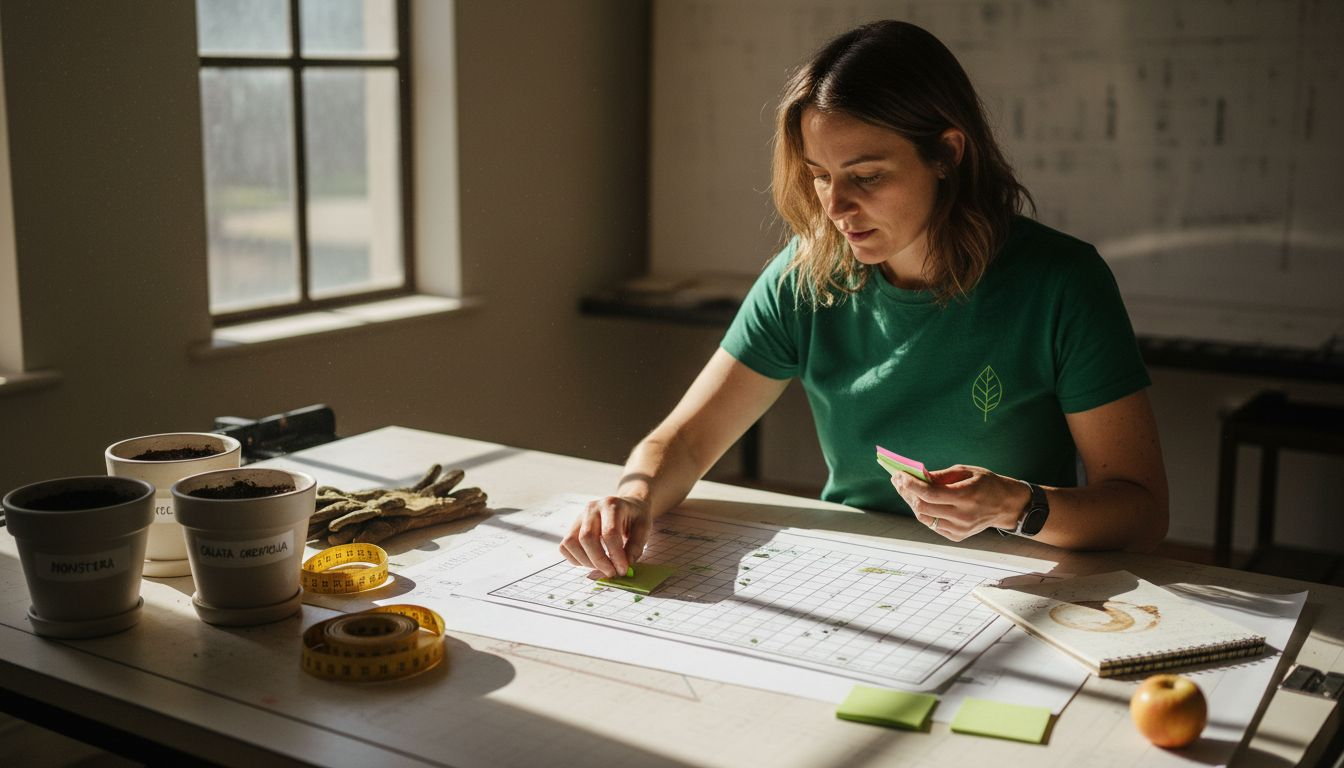
Pro tip: Develop a seasonal adaptability matrix that tracks each plant’s performance across different environmental conditions to make more informed long-term design decisions.
Step 3: Set Up Customized Care Protocols
Developing precise plant care protocols transforms your green installation from a static design to a living, thriving ecosystem. This step requires creating a comprehensive strategy that addresses each plant’s unique requirements and environmental interactions.
Begin by establishing detailed plant maintenance protocols that account for individual species characteristics. Your customized care strategy should encompass multiple critical components:
- Watering schedules tailored to specific plant water requirements
- Fertilization programs matching nutritional needs
- Pruning and grooming techniques for optimal plant health
- Pest and disease monitoring protocols
- Seasonal adjustment strategies
Professional plant management recognizes that plant conservation practices require nuanced, research-driven approaches. This means developing protocols that are not just generic instructions, but living documents that evolve with your specific plant collection and environmental conditions.
Effective care protocols transform plant maintenance from a reactive task to a proactive, strategic management system.
Documentation is crucial. Create a detailed tracking system that logs each plant’s individual performance, growth patterns, and response to care interventions. This systematic approach allows for continuous refinement of your care strategy.
Pro tip: Develop a digital tracking spreadsheet with separate tabs for each plant species, enabling real-time monitoring and rapid protocol adjustments.
Step 4: Implement Professional Installation
Transforming your plant design from concept to reality requires meticulous professional installation that ensures every element is positioned and integrated with precision. This critical phase determines the long-term success and visual impact of your bespoke green space.
Begin by implementing strategic native plant installation techniques that account for each species’ specific environmental requirements. Your professional installation strategy should focus on several key execution elements:
- Site soil preparation matching plant root system needs
- Precise plant positioning considering growth trajectories
- Root zone protection during transplantation
- Immediate aftercare scheduling
- Microclimate optimization for each plant location
Professional landscapers recognize that advanced installation training provides the technical expertise necessary to transform design concepts into living, breathing environments. This means moving beyond basic planting techniques to understand the nuanced interactions between plants, their root systems, and surrounding architectural elements.
Professional installation is the bridge between design imagination and ecological reality.
Careful documentation during installation helps track each plant’s initial placement, root condition, and environmental context. This systematic approach allows for immediate interventions and long-term performance tracking.
Pro tip: Create a detailed installation map with GPS coordinates and environmental notes for each plant, enabling precise future maintenance and monitoring.
Here is a comparison of key professional and DIY plant installation approaches:
| Aspect | Professional Installation | DIY Installation |
|---|---|---|
| Precision | High accuracy in placement and measurements | May vary based on experience |
| Tools Used | Advanced, specialized equipment | Basic household tools |
| Long-Term Success | Greater plant survival and health | Depends on owner skill |
| Documentation Detail | Comprehensive maps and records | Often informal or limited |
Step 5: Monitor and Refine Care Performance
Successful plant care programs require continuous evaluation and strategic refinement to maintain optimal health and aesthetic impact. This critical phase transforms your initial design into a dynamically responsive living system that adapts and evolves.
Begin by implementing systematic performance assessment protocols that track key health indicators and care effectiveness. Your monitoring strategy should encompass multiple comprehensive evaluation elements:
- Regular visual health inspections
- Quantitative growth tracking
- Stress and disease detection
- Environmental condition correlation
- Care protocol response metrics
Advanced plant managers leverage emerging health monitoring technologies that provide real-time insights into plant physiological conditions. This means moving beyond traditional observation methods to utilize sensor technologies and data-driven assessment techniques.
Continuous monitoring transforms plant care from reactive maintenance to proactive ecological management.
Documentation remains crucial. Create a comprehensive tracking system that records each intervention, environmental change, and plant response, enabling precise, scientifically informed refinements to your care protocols.
Pro tip: Develop a digital dashboard that aggregates plant health data, allowing rapid visualization of performance trends and immediate intervention strategies.
Below is a summary of common plant care performance assessment methods and their strengths:
| Method | Main Benefit | Typical Use |
|---|---|---|
| Visual Inspections | Quick issue detection | Routine site checks |
| Sensor Monitoring | Real-time data insights | Large or high-value spaces |
| Growth Tracking | Measures progress over time | Long-term health analysis |
| Digital Dashboards | Centralized tracking | Rapid trend visualization |
Elevate Your Bespoke Space with Expert Plant Care Solutions
Creating a thriving, intentional green environment takes more than just choosing beautiful plants. The article highlights key challenges such as selecting species suited to unique site conditions, developing customized care protocols, and ensuring professional installation and ongoing monitoring. These critical pain points can feel overwhelming when aiming for a seamless balance between ecological needs and sophisticated design.
At Trendy Gardener we understand that every bespoke space demands thoughtful plant programs that are meticulously crafted and expertly maintained. With our full-service approach including consultation, sourcing, and installation, paired with proactive care management, you can avoid common pitfalls like poor plant survival or mismatched aesthetics. Whether you want bespoke living walls or customized indoor plant styling, our expert team brings your vision to life while ensuring your greenery thrives long term.
Discover how our end-to-end plant solutions transform your space into an elevated sanctuary that feels alive from day one. Visit Trendy Gardener to explore our premium services including indoor plant styling and staging and customized care programs tailored to your needs. Start your journey toward a vibrant, sustainable space today and experience the difference true expertise makes.
Frequently Asked Questions
How do I assess my site’s needs for a plant care program?
Begin by conducting a thorough site analysis that considers natural light, temperature, humidity, and existing architectural features. Document these factors to create a solid foundation for your plant care program.
What key factors should I consider when selecting plants for my bespoke space?
Focus on choosing plants that are environmentally compatible with your unique conditions, match the aesthetic of your space, and have manageable maintenance requirements. Use a structured matrix to cross-reference each species with your site’s characteristics.
How can I create effective plant care protocols?
Develop detailed protocols that cover watering schedules, fertilization, pruning, and monitoring for pests. Regularly update these protocols based on individual plant performance and environmental changes to ensure optimal care.
What should I keep in mind during professional plant installation?
Ensure that soil preparation and plant positioning meet each species’ specific needs. Prepare a detailed plan that notes precise placements and environmental conditions to facilitate effective long-term care.
How do I monitor and assess the performance of my plant care program?
Implement regular inspections and tracking of growth metrics to evaluate plant health. Use this data to make necessary adjustments to your care protocols and enhance the thriving aspect of your green space.
What documentation is essential for a successful plant care program?
Maintain comprehensive records of site analyses, plant selections, care protocols, and performance assessments. This information serves as a valuable resource for future adjustments and helps ensure the longevity and beauty of your plant installations.