

Indoor Plant Maintenance Workflow for Impeccable Interiors
Managing lush indoor plant installations across luxury residences and commercial settings in Des Moines requires more than a keen eye for design. Balancing plant health with ever-changing indoor environments is an ongoing challenge. Research highlights the value of monitoring factors like temperature, humidity, and pollutants to promote optimal indoor plant vitality and meet client expectations for thriving greenery. This guide reveals clear, actionable steps to refine your maintenance routine and achieve professional standards with every indoor plant project.
Table of Contents
- Step 1: Assess Plant Health And Environmental Needs
- Step 2: Gather Materials And Prepare Maintenance Tools
- Step 3: Clean, Prune, And Inspect Plants Thoroughly
- Step 4: Water And Fertilize According To Specific Requirements
- Step 5: Verify Placement And Monitor Ongoing Conditions
Quick Summary
| Key Point | Explanation |
|---|---|
| 1. Assess Plant Health Regularly | Conduct thorough visual inspections to identify issues early, ensuring optimal growing conditions for indoor plants. |
| 2. Assemble Essential Maintenance Tools | Gather the necessary tools like pruning shears and moisture meters to facilitate effective plant care and prevent disease. |
| 3. Clean and Prune for Health | Regularly clean leaves and prune damaged parts to promote growth and maintain the aesthetic appeal of your plants. |
| 4. Water and Fertilize Based on Needs | Adjust watering and fertilization according to each plant’s specific requirements to avoid under or overfeeding. |
| 5. Monitor and Adjust Environmental Conditions | Continuously track light, temperature, and humidity levels to create ideal conditions for your plants’ growth. |
Step 1: Assess Plant Health and Environmental Needs
Successful indoor plant maintenance begins with a comprehensive health assessment that considers both the plant’s physical condition and its surrounding environmental parameters. By systematically evaluating key indicators, you can proactively prevent potential issues and create optimal growing conditions.
Start by conducting a thorough visual inspection of each plant, examining leaves, stems, and soil for signs of stress or disease. Look for discoloration, wilting, pest activity, and unusual growth patterns. Indoor plant health research highlights the critical importance of understanding specific physiological needs and environmental factors that impact plant vitality. Pay special attention to leaf texture, color uniformity, and structural integrity as primary health indicators. Check soil moisture levels using a moisture meter or the finger test, ensuring proper hydration without overwatering. Monitor environmental conditions like temperature, humidity, and light exposure using precision tools to create a microclimate that supports robust plant growth.
Tracking these parameters systematically allows you to develop targeted care strategies. Pollutant and microclimate monitoring plays a crucial role in maintaining not just plant health, but also indoor environmental quality. Document your observations in a dedicated plant log, recording details about each plant’s specific requirements and response to care interventions.
Pro tip: Invest in a digital plant tracking app or notebook to consistently record health assessments and create a personalized maintenance history for each of your indoor plants.
Here’s a quick reference summarizing key plant health indicators and their possible causes:
| Indicator | Possible Cause | Suggested Action |
|---|---|---|
| Yellowing leaves | Overwatering or nutrient lack | Adjust water or fertilize |
| Wilting | Underwatering or root rot | Check soil and water properly |
| Leaf spots | Fungal/bacterial infection | Isolate and treat |
| Stunted growth | Low light or poor nutrition | Increase light or fertilize |
| Uneven color | Nutrient imbalance | Use balanced fertilizer |
Step 2: Gather Materials and Prepare Maintenance Tools
Preparing a comprehensive toolkit is essential for efficient and effective indoor plant maintenance. By assembling the right equipment and understanding its proper use, you can ensure your plants receive consistent and professional care.
Start by collecting critical indoor plant care tools that will support your maintenance workflow. Your core toolkit should include precision pruning shears for trimming damaged or overgrown foliage, a narrow spout watering can for controlled hydration, a reliable moisture meter to prevent overwatering, and clean microfiber cloths for wiping leaves. Digital or analog tools like thermometers and humidity sensors will help you monitor environmental conditions. Invest in high-quality, stainless steel pruning tools with sharp blades to ensure clean cuts that minimize plant stress. Select tools with ergonomic handles and lightweight designs to make maintenance comfortable and efficient.
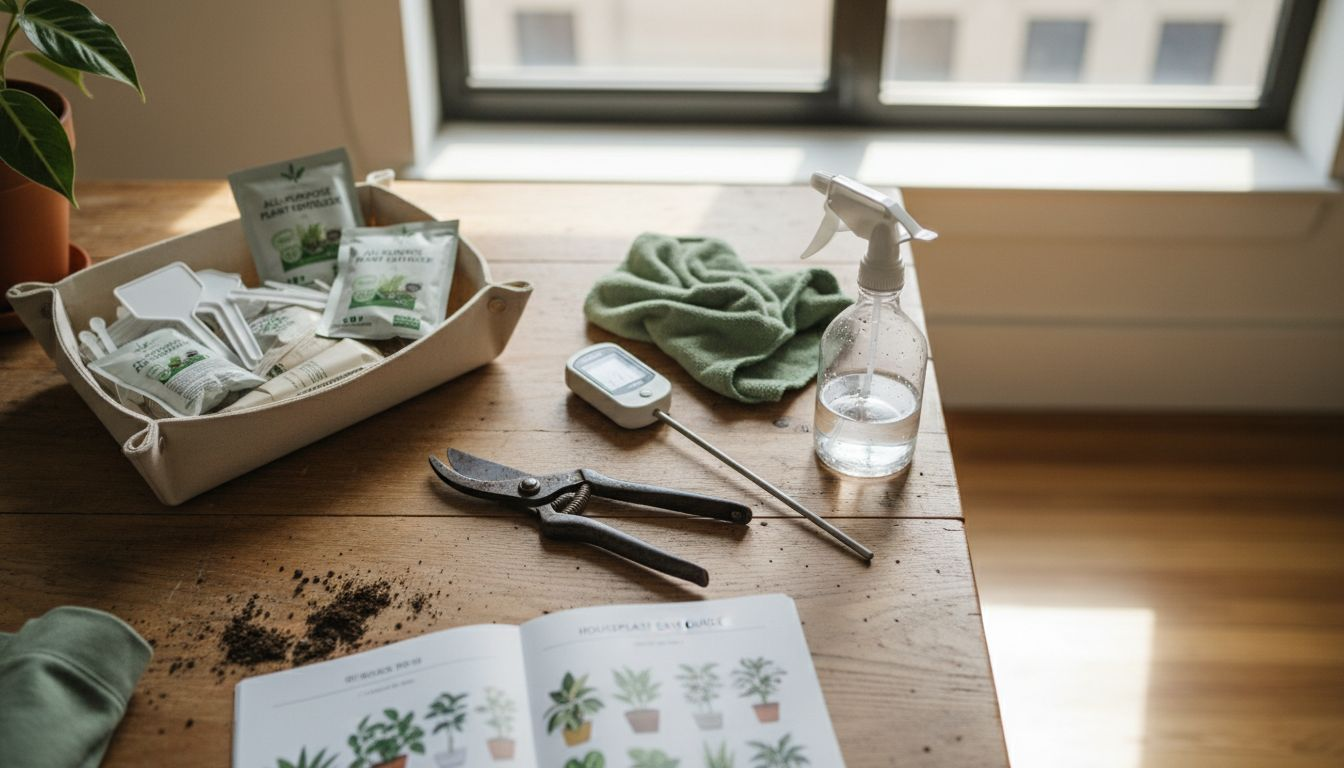
Sanitizing maintenance equipment is crucial for preventing disease transmission between plants. Before each use, clean your tools with rubbing alcohol or a specialized disinfectant solution, paying special attention to pruning shears and cutting implements. Store your tools in a clean, dry location to maintain their condition and prevent rust or bacterial growth. Consider organizing your plant care toolkit in a dedicated caddy or container with separate compartments for different tools, making your maintenance process more streamlined and professional.
Pro tip: Create a dedicated plant care station with all your tools neatly organized and easily accessible, helping you maintain a consistent and efficient maintenance routine.
Step 3: Clean, Prune, and Inspect Plants Thoroughly
Cleaning, pruning, and thorough plant inspection are critical maintenance steps that ensure your indoor plants remain healthy, vibrant, and visually stunning. These interconnected processes help prevent disease, promote robust growth, and maintain the aesthetic appeal of your indoor greenery.
Cutting edge plant care techniques involve systematic approaches to removing damaged foliage and maintaining plant hygiene. Begin by carefully examining each plant under good lighting, using clean microfiber cloths to gently wipe leaves from base to tip. Remove dust and debris that can block photosynthesis and attract pests. For delicate or fuzzy leaves, use a soft brush or compressed air to clean without causing damage. When pruning, use sterilized sharp scissors or pruning shears to cut at a 45 degree angle just above leaf nodes, removing dead, yellowing, or damaged leaves and stems. Focus on maintaining the plant’s natural shape while promoting healthy new growth.

Weekly maintenance routines are essential for comprehensive plant care. Rotate plants quarterly to ensure even light exposure and symmetrical growth. Check for signs of pest infestation, examining both leaf surfaces and soil. Look for discoloration, unusual spots, webbing, or tiny insects. Remove any affected areas immediately and isolate the plant if necessary. During inspection, also assess soil moisture, checking for proper drainage and avoiding overwatering. Take notes on each plant’s condition to track changes and develop personalized care strategies.
Pro tip: Designate a specific time each week for thorough plant maintenance, treating it like a scheduled appointment to ensure consistent and comprehensive care.
Step 4: Water and Fertilize According to Specific Requirements
Nutrient management and hydration are fundamental to maintaining vibrant and healthy indoor plants. Each plant species requires a unique approach to watering and fertilization that considers its individual growth characteristics, seasonal needs, and environmental conditions.
Indoor plant fertilization strategies demand a nuanced understanding of plant nutrition. Macronutrients like nitrogen, phosphorus, and potassium play critical roles in plant development. Nitrogen supports leaf growth, phosphorus encourages root and flower development, and potassium enhances overall plant stress tolerance. Choose liquid or water soluble fertilizers with balanced nutrient ratios appropriate to your specific plant types. During active growth periods typically between spring and early fall, apply fertilizer at half the recommended strength to prevent nutrient burn. Different plants have varying nutrient requirements seasonal variations can significantly impact their absorption rates.
Precise fertilization techniques require careful observation and adaptation. Water plants thoroughly before applying fertilizer to prevent root damage and ensure even nutrient distribution. Use room temperature water and avoid fertilizing stressed or recently repotted plants. Monitor your plants closely for signs of nutrient deficiency such as yellowing leaves, stunted growth, or pale coloration. Adjust your fertilization schedule based on individual plant responses, understanding that tropical plants often require more frequent feeding compared to succulents or cacti. Always err on the side of under fertilizing rather than overwhelming your plants with excessive nutrients.
Pro tip: Create a fertilization calendar tracking each plant species specific nutritional needs to maintain consistent and targeted plant care.
Here’s a summary comparing plant types and their basic care needs:
| Plant Type | Light Level | Watering Frequency | Fertilization Need |
|---|---|---|---|
| Ferns | Medium to high | Frequent, moist soil | Moderate, monthly |
| Succulents | Bright, direct | Infrequent, dry soil | Light, twice each season |
| Orchids | Indirect, bright | Weekly, damp not wet | High, every 2 weeks |
| Philodendron | Low to medium | Weekly, dry top inch | Moderate, monthly |
| Cacti | High, direct sun | Rare, allow full dry | Minimal, once per season |
Step 5: Verify Placement and Monitor Ongoing Conditions
Successful indoor plant maintenance extends beyond initial care to continuous monitoring and strategic placement. Understanding how environmental factors interact with your plants enables you to create optimal growing conditions that support long term health and vitality.
Plant physiology monitoring techniques are essential for maintaining indoor plant performance. Use digital and analog tools to track key environmental parameters including light intensity, temperature fluctuations, humidity levels, and soil moisture. Position plants strategically near windows with appropriate light exposure, but avoid direct sunlight that might scorch sensitive foliage. Invest in affordable sensors or smart monitoring devices that provide real time data about your plants microclimate. Pay special attention to seasonal changes that can dramatically impact plant health, adjusting placement and care accordingly.
Indoor plant placement strategies involve more than aesthetic considerations. Grouping plants with similar environmental needs creates microclimates that enhance overall plant health and indoor air quality. Ensure adequate ventilation around your plants to prevent moisture buildup and potential fungal growth. Regularly rotate plants to promote even growth and prevent leaning towards light sources. Document your observations in a dedicated plant journal, tracking each plant species response to its current location and making incremental adjustments to optimize its environment.
Pro tip: Create a digital or physical grid mapping each plant’s location, environmental conditions, and performance to systematically improve your indoor plant placement strategy.
Elevate Your Indoor Plant Care with Expert Support from Trendy Gardener
Maintaining impeccable indoor plants involves detailed steps like assessing plant health, precise watering and fertilizing, and strategic placement to create vibrant interiors. If you find balancing these tasks challenging or want to ensure your indoor greenery stays stunning and healthy, Trendy Gardener offers the perfect solution. Our comprehensive services cover everything from consultation and sourcing to professional installation and ongoing care designed for both residential refinement and commercial scale.
Transform your space with living walls, custom moss designs, and expertly styled plants that look exceptional from day one and thrive long term. Discover how our bespoke programs and reliable maintenance can unlock the full potential of your indoor plants. Visit Trendy Gardener today to bring intentional, elevated, and alive interiors within reach. Start now and enjoy the effortless beauty of expertly cared-for plants in your home or office.
Frequently Asked Questions
How can I assess the health of my indoor plants?
Start by conducting a thorough visual inspection to check for signs of stress such as discoloration or wilting. Use a moisture meter to evaluate soil moisture levels and ensure your plants are hydrated without being overwatered.
What tools do I need for effective indoor plant maintenance?
Gather essential tools like precision pruning shears, a narrow spout watering can, and a moisture meter. Organize these tools in a dedicated caddy to streamline your maintenance routine.
How should I clean and prune my indoor plants?
Use clean microfiber cloths to gently wipe the leaves, removing dust and debris that can hinder photosynthesis. When pruning, cut damaged leaves at a 45-degree angle above the leaf nodes to promote healthy new growth.
What is the best way to water and fertilize indoor plants?
Water your plants according to their specific needs, ensuring thorough saturation before applying fertilizer. Track your fertilization schedule and adjust based on the plants’ seasonal growth patterns for optimal results.
How can I monitor the environmental conditions for my indoor plants?
Use both digital and analog tools to track key parameters like light intensity, temperature, and humidity. Regularly assess these factors and make adjustments to your plants’ placement to create a more suitable environment.
Why is it important to document plant care?
Documenting each plant’s specific requirements and your observations allows you to track changes and personalize care strategies. Maintain a dedicated plant log to help identify issues early and optimize your indoor plant maintenance workflow.