


Indoor Plant Trends 2026: Transforming Luxury Spaces
Every luxury space in Des Moines now faces the challenge of creating interiors that are both visually stunning and scientifically optimized for wellness. Upscale homeowners and commercial property managers are embracing advanced plant integration inspired by NASA’s controlled environment agriculture, which enables precise environmental control while supporting dramatic water savings. This article uncovers how innovative indoor plant trends for 2026 combine technology, sustainability, and customized design to help redefine air quality and aesthetic sophistication in luxury environments.
Table of Contents
- Defining Indoor Plant Trends For 2026
- Types Of Biophilic Plant Installations
- Tech-Integrated And Low-Maintenance Solutions
- Impact On Wellness And Air Quality
- Cost, Maintenance, And Common Pitfalls
Key Takeaways
| Point | Details |
|---|---|
| Technological Integration | Advanced technologies enable the creation of responsive indoor plant environments with minimal maintenance. |
| Sustainability and Aesthetics | Strategic plant selection prioritizes sustainability, enhancing both environmental resilience and visual appeal. |
| Wellness Impact | Indoor plants contribute to psychological well-being and improved air quality, fostering healthier living spaces. |
| Cost Considerations | Effective management strategies are necessary to balance initial investments and ongoing maintenance costs in luxury installations. |
Defining Indoor Plant Trends for 2026
Luxury interior design is undergoing a transformative shift driven by advanced plant integration and scientifically optimized biophilic environments. The emerging landscape of indoor plant trends for 2026 reflects a sophisticated blend of technological innovation and aesthetic refinement, particularly for high-end residential and commercial spaces in urban centers.
The future of indoor plant design centers around three critical dimensions:
- Technological Integration: Controlled environment agriculture technologies are revolutionizing how we conceptualize indoor plant ecosystems
- Sustainability Principles: Strategic plant selection emphasizing water conservation and environmental resilience
- Aesthetic Customization: Personalized plant arrangements tailored to specific architectural and design requirements
NASA’s research into closed environmental agriculture has been particularly influential, demonstrating how advanced plant science can create extraordinary indoor landscapes. These innovations enable precise environmental controls that optimize plant growth while dramatically reducing resource consumption. By leveraging hydroponic systems and tailored artificial lighting, luxury spaces can now transform interior environments into living, breathing ecosystems.
Advanced plant integration isn’t just decoration - it’s a comprehensive approach to designing intelligent, responsive interior environments.
The selection of plant species for luxury spaces now involves intricate considerations beyond aesthetic appeal. Designers are increasingly consulting specialized databases like the USDA PLANTS Database to identify species with optimal growth characteristics, environmental adaptability, and visual sophistication.
Key Factors Driving 2026 Indoor Plant Trends:
- Precision Environmental Control
- Water-Efficient Growing Systems
- Scientifically Optimized Plant Selection
- Aesthetic-Functional Design Integration
Pro tip: Consult professional biophilic designers who understand the intersection of plant science, technology, and interior design to create truly transformative indoor environments.
Types of Biophilic Plant Installations
Biophilic design has evolved far beyond traditional plant placement, emerging as a sophisticated approach to integrating nature into luxury interior environments. Virtual environments are transforming biophilic strategies, creating immersive experiences that blend technological innovation with natural aesthetics.
The primary categories of biophilic plant installations for 2026 include:
-
Physical Green Installations
- Living walls
- Vertical gardens
- Potted plant arrangements
- Integrated landscape zones
-
Technology-Enhanced Environments
- Sensory nature simulations
- Digital plant interaction interfaces
- Augmented reality plant experiences
-
Architectural Plant Integration
- Structural plant embeddings
- Climate-responsive plant systems
- Modular green design elements
Luxury spaces are now conceptualizing biophilic design as a holistic approach that goes beyond mere decoration. Biophilic installations in hospitals demonstrate how these environments can significantly impact psychological well-being, stress recovery, and cognitive restoration.
Here’s a quick comparison of the main types of biophilic plant installations and their unique benefits:
| Installation Type | Distinctive Feature | Best Suited For |
|---|---|---|
| Physical Green Installations | Tangible plant presence | High-visibility luxury areas |
| Technology-Enhanced Environments | Interactive digital nature | Experiential commercial spaces |
| Architectural Plant Integration | Plants as building elements | Modern residential interiors |
Biophilic design is not just about adding plants - it’s about creating living, breathing ecosystems within human spaces.
Technology is playing an increasingly critical role in expanding biophilic design possibilities. Advanced sensors, artificial intelligence, and immersive digital interfaces now enable designers to create responsive plant environments that adapt to human interactions and environmental conditions.
Key Technological Advancements in Biophilic Installations:
- Smart environmental monitoring
- Adaptive lighting systems
- Automated plant care technologies
- Sensory interaction interfaces
Pro tip: Collaborate with multidisciplinary experts including botanists, designers, and technology specialists to create truly innovative biophilic installations that seamlessly blend nature and human experience.
Tech-Integrated and Low-Maintenance Solutions
Luxury indoor plant environments are undergoing a technological revolution, driven by sophisticated systems that minimize maintenance while maximizing plant health and aesthetic appeal. NASA’s closed-loop plant growth systems represent the cutting edge of automated indoor plant cultivation, introducing robotics and precision environmental management into luxury spaces.
Key technological innovations for low-maintenance indoor plant solutions include:
-
Automated Environmental Controls
- Sensor-based humidity regulation
- Precision nutrient delivery systems
- Smart irrigation mechanisms
-
Robotic Plant Management
- Autonomous monitoring platforms
- AI-driven health diagnostics
- Robotic pruning and maintenance tools
-
Energy-Efficient Plant Support
- LED growth lighting
- Climate optimization systems
- Water recycling technologies
Smart building technologies are transforming how we integrate and maintain indoor plant ecosystems. Advanced sensor networks now enable real-time monitoring and instantaneous environmental adjustments, creating self-regulating plant environments that require minimal human intervention.
Technology is turning plant maintenance from a complex task into an elegant, automated experience.
The convergence of artificial intelligence, robotics, and botanical science is creating unprecedented opportunities for sustainable, low-maintenance indoor plant installations. These systems not only reduce human labor but also optimize plant growth conditions with scientific precision.
Emerging Technologies in Plant Care:
- Machine learning plant health diagnostics
- Automated nutrient and water management
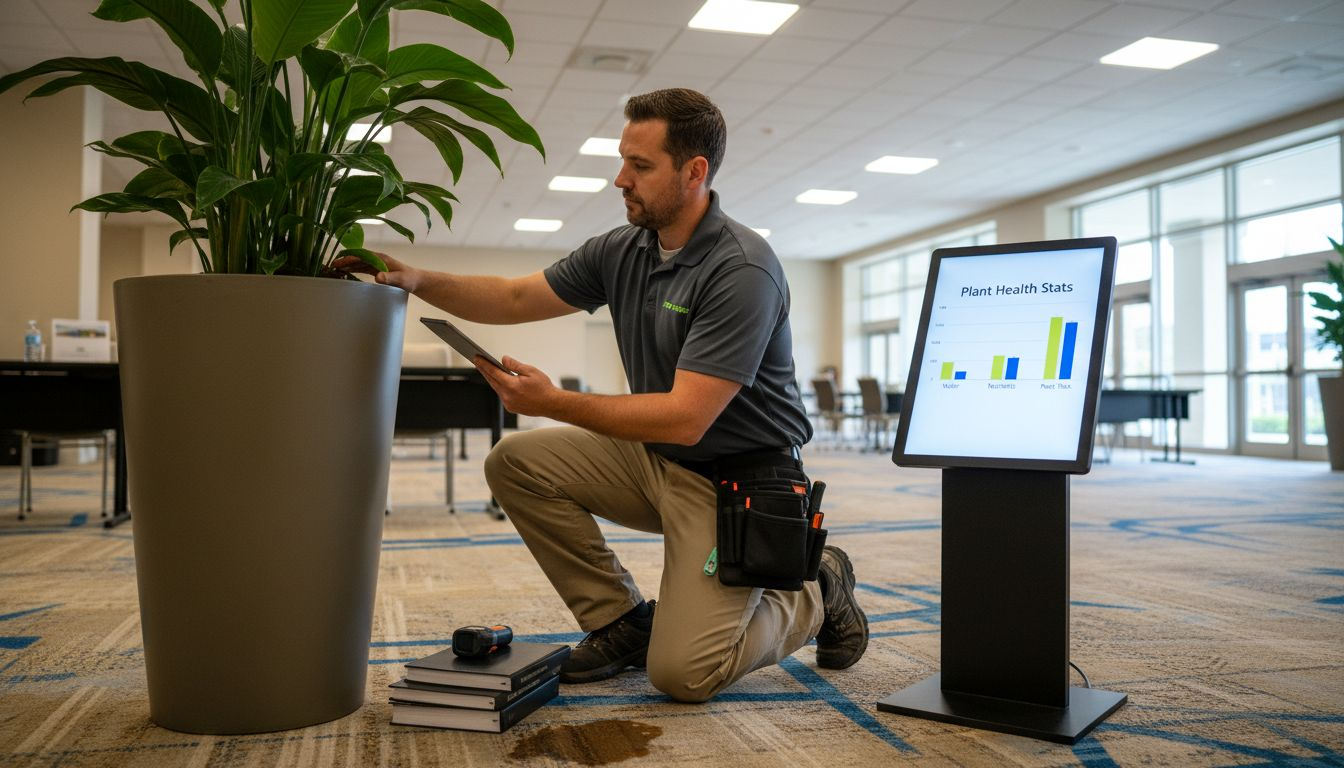
- Remote monitoring smartphone applications
- Predictive maintenance algorithms
Pro tip: Invest in integrated sensor systems that provide comprehensive plant health data, allowing you to make informed decisions about your indoor botanical environments.
Impact on Wellness and Air Quality
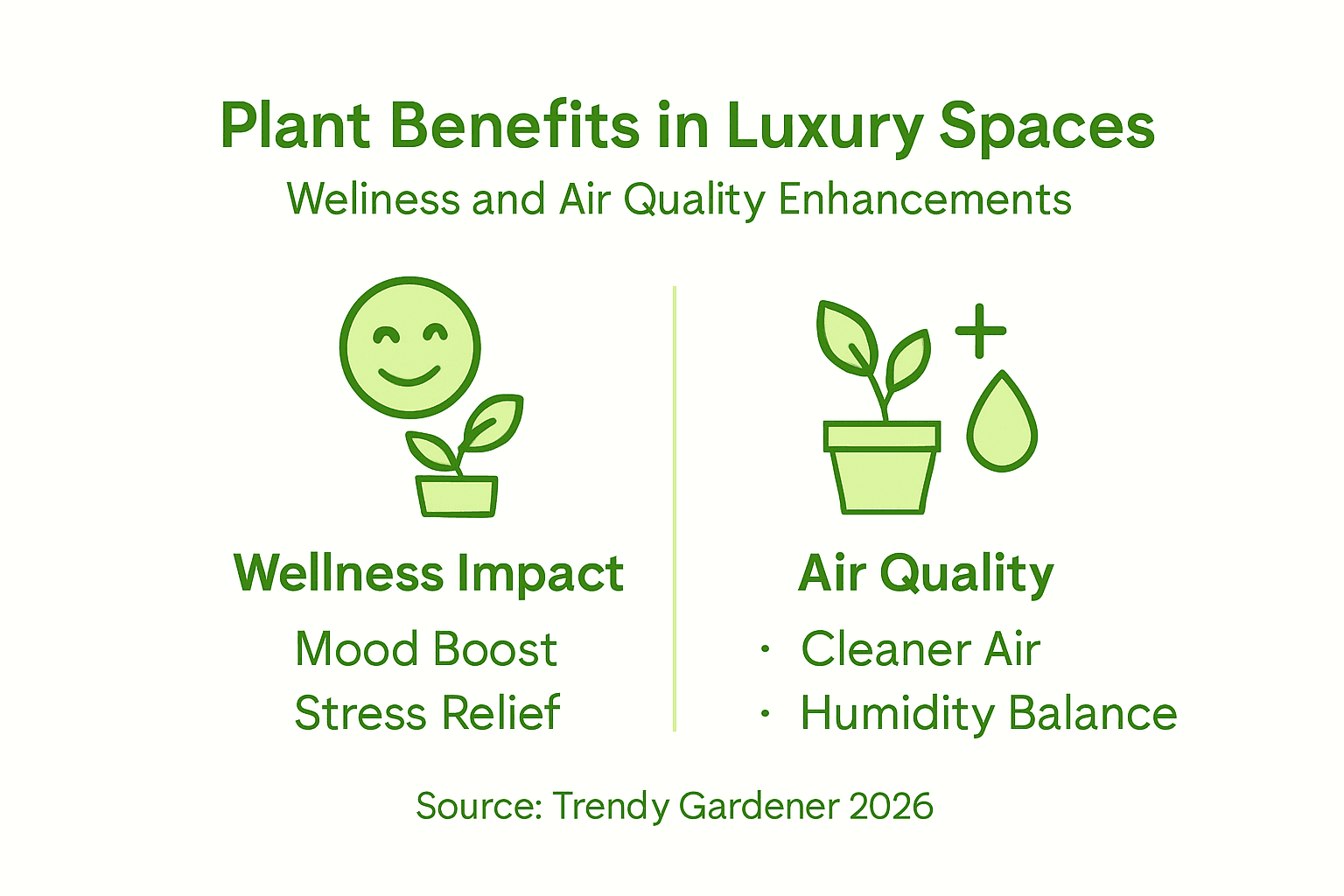
Indoor plant installations are revolutionizing luxury spaces by creating environments that actively support human health and psychological well-being. Indoor air quality research reveals complex interactions between plant presence and environmental wellness, challenging traditional assumptions about botanical interventions.
Key wellness benefits of strategic indoor plant integration include:
-
Psychological Health Impacts
- Stress reduction
- Improved mood
- Enhanced cognitive performance
- Increased sense of calm
-
Physiological Health Contributions
- Minimal carbon dioxide absorption
- Subtle humidity regulation
- Potential pollutant mitigation
-
Sensory Environment Improvements
- Natural aesthetic enhancement
- Sound absorption
- Visual complexity reduction
Lawrence Berkeley National Laboratory research emphasizes that while plants alone cannot dramatically transform indoor air quality, their holistic impact extends far beyond direct environmental modification. The psychological benefits of botanical environments can significantly influence occupant perception of wellness and comfort.
Indoor plants are not just decorative elements - they are sophisticated environmental partners in human health.
The scientific understanding of plant interactions with indoor environments continues to evolve, revealing nuanced connections between botanical presence and human physiological responses. Modern luxury design recognizes plants as active contributors to spatial wellness, not merely static decorative elements.
Measurable Wellness Dimensions:
- Stress hormone reduction
- Cognitive performance enhancement
- Perceived air quality improvement
- Emotional state stabilization
Pro tip: Select plant species strategically, considering not just aesthetic appeal but also their potential psychological and environmental interaction capabilities.
Cost, Maintenance, and Common Pitfalls
Creating sustainable and cost-effective indoor plant installations requires strategic planning and comprehensive understanding of potential financial and operational challenges. Plant production and operational expenses reveal that initial investments can be substantial, demanding meticulous budgeting and thoughtful plant selection for luxury environments.
Critical considerations for managing indoor plant installation costs include:
-
Initial Investment Factors
- Plant selection complexity
- Installation infrastructure
- Specialized equipment needs
- Professional design consultation
-
Ongoing Maintenance Expenses
- Regular nutrient management
- Pest control protocols
- Environmental monitoring
- Replacement and rotation strategies
-
Risk Mitigation Strategies
- Preventive care planning
- Automated monitoring systems
- Diversified plant portfolio
- Adaptive maintenance approaches
Reliability Centered Maintenance strategies emphasize proactive care methodologies that can significantly reduce unexpected expenses and performance disruptions in botanical installations.
Effective plant maintenance transcends routine care - it’s a sophisticated balance of science, technology, and strategic investment.
Understanding the nuanced economic landscape of indoor plant installations requires recognizing that costs extend beyond initial procurement. Sophisticated luxury spaces demand comprehensive approaches that integrate technological monitoring, specialized care protocols, and adaptive management techniques.
For decision-makers, here’s a summary of strategies to optimize indoor plant costs and maintenance in luxury projects:
| Strategy | Financial Impact | Performance Benefit |
|---|---|---|
| Automated monitoring systems | Reduces unexpected expenses | Early detection of plant issues |
| Strategic plant selection | Lowers replacement frequency | Ensures long-term vitality |
| Preventive care planning | Minimizes emergency repairs | Increases installation lifespan |
| Diversified plant portfolio | Balances ongoing costs | Reduces risk of total loss |
Primary Cost Management Dimensions:
- Strategic plant selection
- Advanced maintenance technologies
- Predictive care systems
- Long-term performance optimization
Pro tip: Develop a comprehensive maintenance budget that accounts for both predictable expenses and potential adaptive requirements, ensuring your botanical investments remain vibrant and cost-effective.
Elevate Your Luxury Space with Expert Indoor Plant Integration
The future of indoor plant design demands precise environmental control, sustainable solutions, and aesthetically customized living ecosystems. If you seek to transform your space into a scientifically optimized, low-maintenance botanical environment that enhances wellness and exudes sophistication, Trendy Gardener is your trusted partner. From bespoke living walls to curated plant styling, our end-to-end services address the challenges of high-end indoor plant selection, installation, and ongoing care with expert precision.
Discover how our innovative plant programs blend advanced biophilic design with operational reliability to create spaces that captivate and nurture. Don’t let the complexities of automated maintenance and strategic plant selection hold you back from experiencing the benefits of next-generation indoor greenery. Visit Trendy Gardener now to explore our comprehensive offerings including living walls, plant leasing, and bespoke interior plantscaping that bring the 2026 indoor plant trends to life.
Start your journey to an intentional, elevated, and vibrant indoor environment today with Trendy Gardener’s expert solutions.
Frequently Asked Questions
What are the key trends in indoor plant design for 2026?
The key trends for indoor plant design in 2026 include technological integration, sustainability principles, and aesthetic customization. These trends focus on creating biophilic environments that enhance both beauty and functionality in luxury spaces.
How do technology and automation impact indoor plant maintenance?
Technology and automation improve indoor plant maintenance through automated environmental controls, robotic plant management, and energy-efficient systems. These innovations minimize maintenance efforts while optimizing plant health and growth conditions.
What are the wellness benefits of incorporating indoor plants into luxury spaces?
Incorporating indoor plants can lead to numerous wellness benefits, including stress reduction, improved mood, enhanced cognitive performance, and a greater sense of calm. They also contribute to better indoor air quality and overall psychological well-being.
What should I consider when selecting plants for luxury indoor environments?
When selecting plants for luxury indoor environments, consider factors such as the plants’ growth characteristics, environmental adaptability, and visual appeal. It’s essential to consult specialized databases to make informed choices about species that best fit the design and function of the space.