


Indoor Plants in Hospitality: Enhancing Guest Experience
Creating memorable guest experiences in upscale hospitality settings across Greater Des Moines requires more than elegant finishes and top-tier service. The integration of indoor plants offers a dual advantage, transforming both ambiance and air quality. NASA research confirms that indoor plants act as natural air-cleaning systems, removing airborne pollutants to create healthier indoor spaces. Discover how selecting the right botanical features enhances not only visual appeal but also guest comfort and wellbeing.
Table of Contents
- Defining Indoor Plants In Hospitality Spaces
- Biophilic Design And Guest Wellbeing Benefits
- Types Of Plant Installations And Their Functions
- Operational Impacts And Maintenance Considerations
- Financial Advantages And Sustainability Factors
Key Takeaways
| Point | Details |
|---|---|
| Indoor Plants Enhance Guest Experience | Strategic placement of indoor plants improves air quality and fosters psychological wellness in hospitality environments. |
| Biophilic Design Supports Wellbeing | Integrating natural elements creates calming spaces that enhance cognitive performance and reduce stress. |
| Operational Management is Essential | Effective maintenance practices ensure plant health and contribute positively to the overall guest experience. |
| Sustainability Offers Financial Returns | Indoor plants can reduce operational costs and enhance brand perception, driving environmentally conscious guest attraction. |
Defining Indoor Plants in Hospitality Spaces
Indoor plants in hospitality spaces transcend mere decorative elements, functioning as strategic design components that transform guest environments. These carefully selected botanical installations serve multiple critical purposes beyond aesthetic appeal, ranging from air quality improvement to psychological wellness enhancement.
Understanding indoor plants requires recognizing their multifaceted roles in hospitality settings. Based on NASA research exploring air purification mechanisms, these green installations act as natural environmental filters, removing airborne pollutants and creating healthier interior atmospheres. The strategic placement of plants isn’t just about visual beauty - it’s a sophisticated approach to space management.
Hospitality professionals categorize indoor plants into several key functional types:
- Aesthetic Plants: Decorative species selected for visual harmony and design cohesion
- Air-Purifying Plants: Species scientifically proven to remove toxins and improve air quality
- Psychological Wellness Plants: Greenery designed to reduce stress and enhance guest mood
- Architectural Plants: Large specimens used to define spaces, create visual boundaries, and manage acoustic properties
Moreover, modern hospitality design recognizes that plant installations require careful infection control planning. Plants are not simply placed without consideration; they demand strategic selection, positioning, and maintenance to ensure they contribute positively to the guest experience.
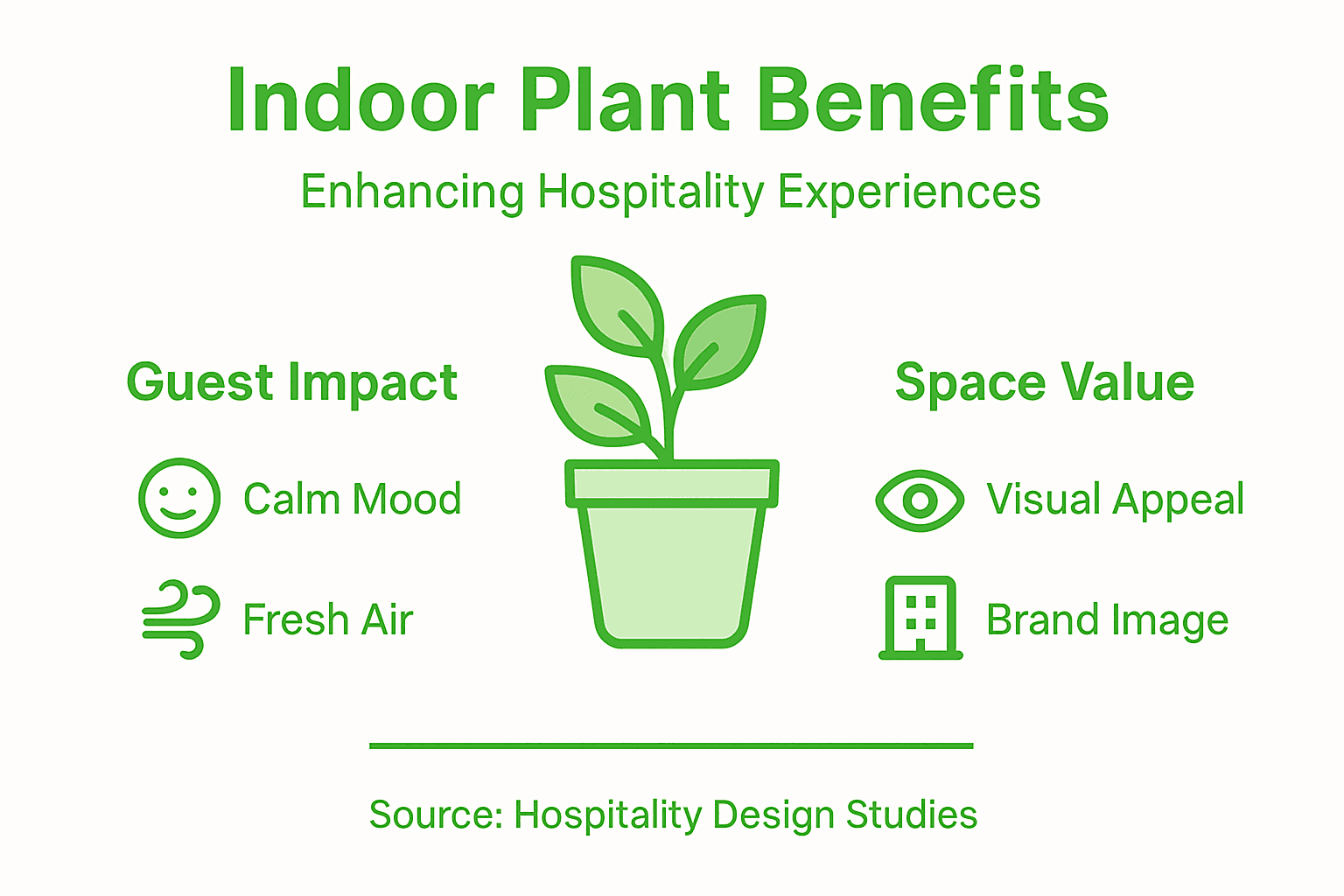
Pro tip: When selecting indoor plants for hospitality spaces, prioritize species that are low-maintenance, aesthetically versatile, and proven to enhance air quality while minimizing potential infection risks.
Biophilic Design and Guest Wellbeing Benefits
Biophilic design represents a revolutionary approach to hospitality interior design that goes far beyond traditional aesthetic considerations. By intentionally integrating natural elements, this design philosophy transforms guest spaces into holistic environments that actively support psychological and physiological wellness.
Indoor air quality research reveals that biophilic design is not merely decorative, but a strategic intervention in guest experience. Natural elements like indoor plants serve multiple critical functions, creating environments that actively reduce stress, improve cognitive performance, and enhance overall emotional well-being.
Key benefits of biophilic design in hospitality spaces include:
- Psychological Restoration: Providing visual connections to nature that reduce mental fatigue
- Stress Reduction: Creating calming environments through organic design elements
- Air Quality Improvement: Naturally filtering indoor pollutants through strategic plant placement
- Acoustic Moderation: Using green installations to absorb sound and create more peaceful environments
According to the International Society of Indoor Air Quality and Climate, integrating natural elements is not just an aesthetic choice but a critical strategy for creating healthier, more supportive guest environments. These design interventions recognize that human beings have an inherent psychological need to connect with natural systems.
Pro tip: When implementing biophilic design, focus on creating multi-sensory experiences that engage guests through visual, tactile, and olfactory connections to nature.
Types of Plant Installations and Their Functions
Plant installations in hospitality settings represent sophisticated design strategies that transcend simple decorative elements. These carefully curated green interventions serve multifunctional purposes, transforming spaces through strategic botanical placement and selection.

NASA Clean Air Study research reveals the intricate ways different plant installations contribute to environmental quality and guest experience. From compact potted arrangements to expansive vertical gardens, each installation type offers unique advantages for hospitality environments.
Key plant installation types in hospitality spaces include:
-
Potted Plant Arrangements:
- Standalone floor specimens
- Desktop and reception area plants
- Flexible and easily repositioned
-
Vertical Gardens:
- Wall-mounted green installations
- Maximum visual impact
- Significant air purification capabilities
-
Hanging Plant Displays:
- Overhead botanical features
- Creates dimensional visual interest
- Utilizes often-overlooked vertical space
-
Architectural Plant Dividers:
- Natural space segmentation
- Acoustic buffering
- Dynamic design element
According to sustainable hospitality environmental management guidelines, these plant installations are not merely aesthetic choices but strategic interventions that support broader sustainability and wellness objectives. Each installation type can be tailored to specific functional and design requirements of different hospitality environments.
Here’s a quick reference to how plant installation types align with operational needs and design goals in hospitality spaces:
| Installation Type | Best For | Space Requirement | Maintenance Complexity |
|---|---|---|---|
| Potted Arrangements | Flexible placement | Small to medium | Simple, regular care |
| Vertical Gardens | Maximum visual impact | Large wall area | High, needs monitoring |
| Hanging Displays | Dimensional accents | Moderate ceiling | Moderate, frequent checks |
| Architectural Dividers | Space segmentation | Variable | Moderate, regular cleaning |
Pro tip: Select plant installations that align with your specific space constraints, maintenance capabilities, and desired aesthetic and functional outcomes.
Operational Impacts and Maintenance Considerations
Managing indoor plants in hospitality settings requires a sophisticated approach that balances aesthetic appeal with rigorous operational standards. Maintenance protocols are critical to ensuring that plant installations remain healthy, visually appealing, and conducive to positive guest experiences.
Infection control research reveals the complex considerations involved in maintaining indoor plant installations, highlighting the importance of strategic management beyond simple aesthetic placement.
Key operational considerations for indoor plant maintenance include:
-
Environmental Monitoring:
- Regular humidity and temperature checks
- Light exposure assessment
- Microclimate management
-
Pest and Disease Prevention:
- Routine visual inspections
- Quarantine protocols for new plants
- Targeted treatment strategies
-
Watering and Nutrition:
- Customized irrigation schedules
- Precision nutrient management
- Water quality testing
-
Cleaning and Sanitization:
- Dust and debris removal
- Leaf cleaning protocols
- Preventing microbial growth
According to EPA indoor air quality guidelines, effective plant maintenance goes beyond visual appeal, directly impacting the overall environmental quality and guest experience in hospitality spaces.
Pro tip: Develop a comprehensive plant maintenance log that tracks each installation’s specific care requirements, environmental conditions, and health status to ensure consistent and proactive management.
Financial Advantages and Sustainability Factors
Indoor plant installations represent more than aesthetic enhancements in hospitality settings; they are strategic investments with measurable financial and environmental returns. Sustainable design is increasingly becoming a critical differentiator for businesses seeking to attract environmentally conscious guests and reduce operational costs.
Sustainable hospitality trends demonstrate that integrating indoor plants can generate significant economic advantages beyond traditional design considerations. These green interventions offer multifaceted benefits that directly impact a hospitality establishment’s bottom line and brand perception.
Key financial and sustainability benefits include:
-
Energy Efficiency:
- Reduced cooling requirements
- Natural temperature moderation
- Decreased HVAC system load
-
Brand Perception:
- Enhanced corporate social responsibility image
- Attraction of environmentally conscious guests
- Positive sustainability messaging
-
Operational Cost Reduction:
- Lower energy consumption
- Improved indoor air quality
- Potential tax incentives for green initiatives
-
Guest Experience Enhancement:
- Increased perceived value
- Competitive differentiation
- Higher likelihood of return visits
According to sustainable hotel management guidelines, these plant installations are not just decorative elements but strategic tools for improving environmental performance and financial outcomes.
The following summary compares the financial and sustainability impacts of indoor plants in hospitality:
| Benefit Category | Direct Business Impact | Environmental Outcome |
|---|---|---|
| Energy Efficiency | Lower utility expenses | Reduced carbon footprint |
| Brand Perception | Attracts eco-minded guests | Enhanced public image |
| Cost Reduction | Decreased maintenance costs | Improved air quality |
| Guest Experience | Higher satisfaction rates | Encourages repeat visits |
Pro tip: Develop a comprehensive sustainability metrics tracking system to quantify the economic and environmental impact of your indoor plant installations, enabling data-driven decision-making.
Transform Your Hospitality Spaces with Intentional Indoor Plant Design
Creating exceptional guest experiences starts with the environment you offer. This article highlights how indoor plants serve as more than decoration by enhancing air quality, supporting psychological wellness, and defining space within hospitality venues. However, effectively implementing these biophilic design elements demands expert insight, ongoing maintenance, and tailored plant solutions to meet operational challenges.
At Trendy Gardener, we specialize in delivering end-to-end interior plantscaping programs built precisely for hospitality spaces that want to feel intentional and alive. Whether you need bespoke living walls, expert indoor plant styling, or reliable plant leasing with maintenance, our team ensures your green installations provide maximum guest wellbeing benefits while seamlessly integrating with your design goals.
Elevate your guest environment now by partnering with Trendy Gardener for thoughtfully curated plant experiences designed to stay exceptional from day one. Explore how our premium biophilic design solutions can transform your hospitality space by visiting Trendy Gardener. Discover our comprehensive offerings for indoor plant styling and staging or learn about living wall installations that bring nature indoors with high-impact results. Start creating healthier and more memorable guest environments today.
Frequently Asked Questions
What are the benefits of using indoor plants in hospitality spaces?
Indoor plants provide multiple benefits, including improved air quality, enhanced aesthetic appeal, psychological wellness benefits, and acoustic moderation. They create healthier and more inviting environments for guests.
How do indoor plants improve air quality in hospitality settings?
Indoor plants act as natural air filters, removing airborne pollutants and toxins. Research shows that certain species can effectively purify indoor air, leading to a healthier atmosphere for guests.
What types of indoor plants are best for hospitality environments?
Aesthetic plants for visual appeal, air-purifying plants for improved indoor air quality, and large architectural plants for space definition are excellent choices. Low-maintenance species are often preferred to reduce care requirements.
What maintenance considerations should be taken into account for indoor plants in hospitality spaces?
Key maintenance considerations include environmental monitoring (humidity, temperature, light), pest and disease prevention, proper watering and nutrition, and regular cleaning to ensure the health and aesthetics of the plant installations.