

Interior plant care: healthy indoor spaces & cleaner air
TL;DR:
- Indoor plants can remove up to 87.5% of VOCs and improve indoor air quality. Proper care involves managing light, soil, humidity, and seasonal adjustments specific to Iowa’s climate. Selecting low-maintenance, dry-air-tolerant plants and tailored routines enhances plant health and air purification benefits.
Indoor plants can remove up to 87.5% of VOCs from indoor air, yet most Iowa homeowners and business owners assume plant care is just about watering on a schedule. It isn’t. Keeping indoor plants truly healthy means understanding light, soil, humidity, and seasonal shifts specific to your environment. Iowa’s cold, dry winters and warm, humid summers create a unique indoor climate that most generic plant advice completely ignores. This guide breaks down everything you need to know to grow thriving, beautiful indoor plants that genuinely clean your air and elevate your space.
Table of Contents
- What is interior plant care?
- Choosing the right plants for your Iowa interiors
- Daily and seasonal care routines
- The science and real impact of air purification
- A fresh perspective: Common pitfalls and Iowa-specific solutions
- Transform your space with expert plant solutions
- Frequently asked questions
Key Takeaways
| Point | Details |
|---|---|
| Interior plant care matters | Proper care transforms spaces and promotes lasting plant health indoors. |
| Right plant, right place | Match plant species to your environment and climate for best results. |
| Routine improves outcomes | Consistent care routines lead to beautiful, thriving plants year-round. |
| Plants clean indoor air | Certain indoor species significantly reduce pollutants and improve air quality. |
| Local guidance boosts success | Utilizing Iowa-specific tips and resources ensures plants adapt to your conditions. |
What is interior plant care?
Interior plant care is the practice of managing all the conditions that keep plants alive and looking their best inside a building. It goes well beyond watering. Think of it as creating a miniature ecosystem that matches a plant’s natural habitat as closely as possible within your four walls.
The role of plant care inside a space is threefold: it supports aesthetics, improves air quality, and boosts the well-being of everyone in the room. A well-cared-for plant signals intentionality. A struggling plant does the opposite.
According to foundational plant science, optimal plant health requires balancing six core elements:
- Light: The right intensity and duration for each species
- Water: Correct frequency and volume, adjusted by season
- Soil and drainage: The right mix to prevent root rot and compaction
- Nutrients: Fertilizer applied at the right time and concentration
- Climate: Temperature and humidity within the plant’s preferred range
- Maintenance: Pruning, cleaning leaves, and monitoring for pests
When even one of these is off, the plant signals stress through yellowing leaves, wilting, or stunted growth. Most people see wilting and reach for the watering can. That’s often the wrong move. Understanding what each symptom actually means is what separates confident plant owners from frustrated ones.
Interior plant care also has measurable payoffs beyond beauty. Offices with well-maintained plants report lower stress levels among employees. Homes with healthy greenery feel calmer and more welcoming. These aren’t abstract benefits; they’re reasons why professional plantscaping has grown into a serious design discipline.
Choosing the right plants for your Iowa interiors
Plant selection is where most people go wrong first. They buy a plant they love the look of, bring it home, and put it wherever there’s space. Weeks later, it’s struggling. The fix is simple: match the plant to the location, not the other way around.
Houseplant placement comes down to light first. South-facing windows in Iowa get the most sun. North-facing rooms get the least. East and west exposures offer bright morning or afternoon light. Map your windows before you shop.
Iowa’s winters also drop indoor humidity significantly, sometimes below 30%, as heating systems run constantly. This rules out many tropical plants that demand 60%+ humidity. The plants that perform best here are the ones that can handle the dry air without constant intervention.
| Plant | Maintenance level | Air quality benefit | Iowa winter suitability |
|---|---|---|---|
| Snake plant | Low | High (PM2.5 reduction) | Excellent |
| Pothos | Low | Moderate | Excellent |
| Cordyline fruticosa | Medium | High (87.5% VOC removal) | Good |
| Peace lily | Medium | Moderate | Fair |
| Fiddle leaf fig | High | Low | Poor |
For Iowa homes and offices, these plants stand out as reliable performers:
- Snake plant: Tolerates low light and dry air. Nearly indestructible and a strong air purifier.
- Pothos: Trails beautifully, thrives in indirect light, handles neglect gracefully.
- Cordyline: Stunning foliage, proven VOC removal, needs moderate care and some humidity.
The plant care tips for architects and designers we work with emphasize location mapping as a first step in any project. It saves time and money by eliminating guesswork. Iowa State University Extension’s Iowa houseplant guidance also supports this approach for local growers.
You can find more plant expert tips on species selection for specific interior conditions on our blog.
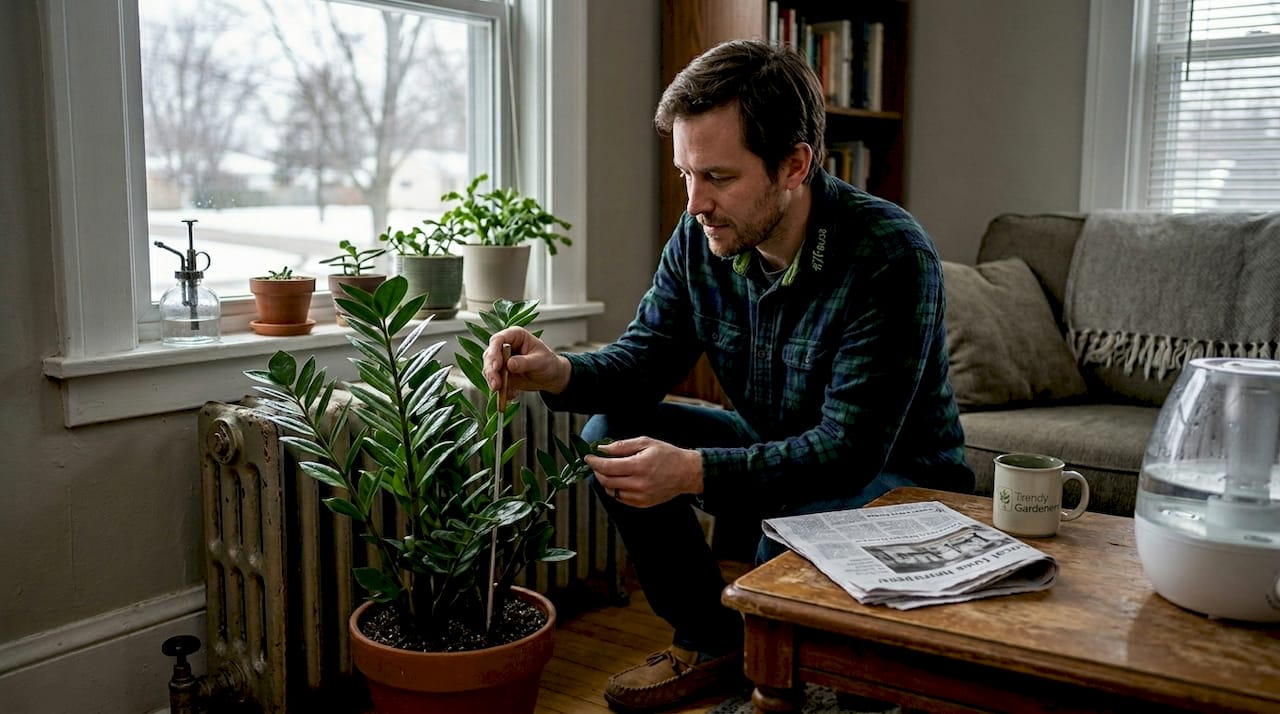
Pro Tip: During Iowa winters, prioritize plants with thick, waxy leaves. They retain moisture better and handle furnace-dry air far more gracefully than thin-leafed tropicals.
Daily and seasonal care routines
Once you have the right plants in the right spots, consistency is everything. A loose routine beats a perfect plan you never follow.
Here’s a practical 5-step care routine adapted for Iowa interiors:
- Check soil moisture before watering. Push a finger about an inch into the soil. Water only when it feels dry at that depth.
- Inspect leaves for yellowing, spots, or pests. Catching problems early saves plants.
- Rotate plants a quarter turn weekly so all sides get equal light exposure.
- Clean leaves monthly with a damp cloth to remove dust, which blocks light absorption.
- Adjust care by season. Iowa winters mean lower light and lower water needs for most plants.
The table below gives you a quick reference for the most common Iowa indoor plants:
| Plant | Watering frequency | Feeding schedule | Repotting interval |
|---|---|---|---|
| Snake plant | Every 2-4 weeks | Spring/summer only | Every 2-3 years |
| Pothos | Every 1-2 weeks | Monthly in growing season | Every 1-2 years |
| Cordyline | Every 1-2 weeks | Every 2 weeks in summer | Every 2 years |
| Peace lily | Every 1-2 weeks | Monthly spring through fall | Every 1-2 years |
Fertilizing and repotting should follow the plant’s growth cycle. Feed with a balanced formula at half strength during spring and summer, and stop entirely in winter when most plants rest. Repot every one to two years in spring if you notice roots circling the bottom of the pot or pushing through drainage holes.
Expert insight: “Wilting is the plant world’s most misread signal. Before you water, always check the soil. Overwatered roots rot and cause the same drooping as underwatering. The soil tells the real story, not the leaves.”
Our indoor care workflow for luxe spaces walks through how professional care programs handle exactly these judgment calls. You can also review our full breakdown of plantscaping maintenance tasks for a deeper reference.
Hard water and smart watering are real Iowa concerns. Municipal tap water in many Iowa cities is high in minerals. Over time, this causes brown leaf tips. Let water sit overnight before using it, or collect rainwater when possible.
Pro Tip: Skip self-watering pots for most indoor plants. They look convenient, but they keep roots constantly moist, which is exactly the condition that invites root rot in Iowa’s less humid winters.
The science and real impact of air purification
Here’s where indoor plants genuinely surprise people. The air cleaning effect is real, measurable, and increasingly well documented.
Phytoremediation is the process by which plants absorb airborne pollutants through their leaves and roots, then break them down or store them. Recent research confirms that snake plant and cordyline are particularly effective. Cordyline fruticosa removes up to 87.5% of VOCs (volatile organic compounds) from indoor air. Snake plant measurably reduces PM2.5 particulate matter, the fine particles linked to respiratory problems.
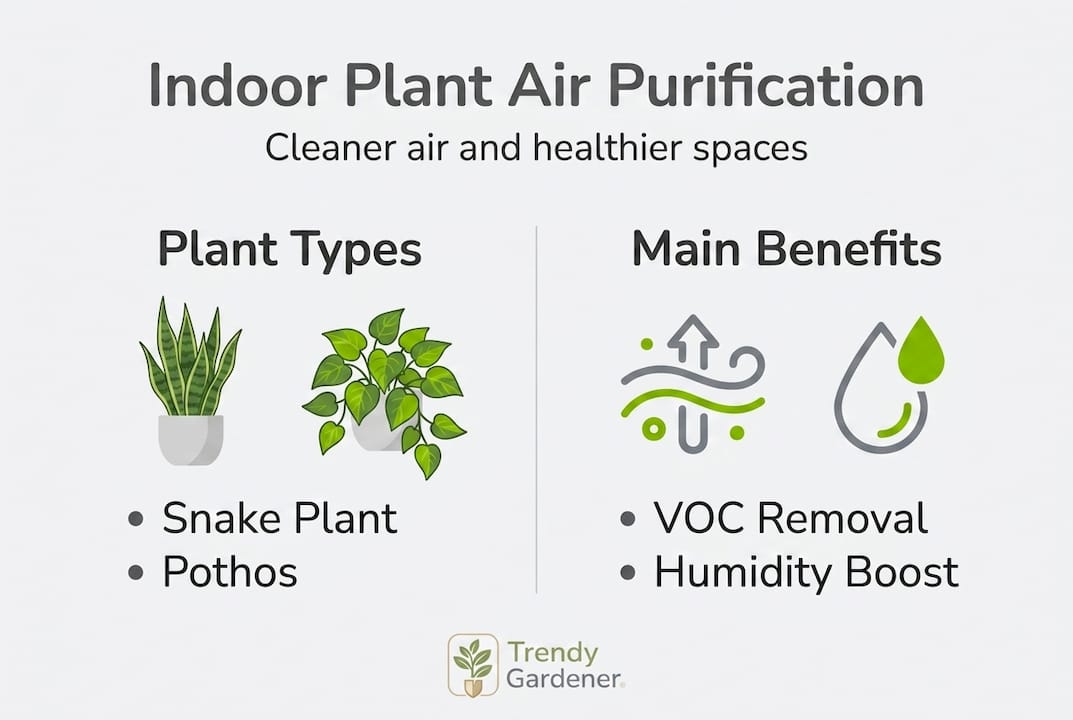
A separate study found that measurable VOC and PM reduction of 80 to 90% is achievable in controlled settings, though results vary by species, pollutant type, and room size. Plants aren’t a replacement for your HVAC system or air filters. They complement those systems and add a biological layer of filtration that mechanical systems can’t replicate.
For Iowa homes, this matters because our indoor environments tend to be sealed tight in winter. VOCs from furniture, paint, and cleaning products accumulate when ventilation is minimal. A few well-placed, healthy plants can meaningfully reduce that load.
Top 3 air-purifying plants for Iowa interiors:
- Cordyline fruticosa: The strongest documented VOC remover. Needs moderate care.
- Snake plant: Effective against PM2.5 and extremely low maintenance. Ideal for offices.
- Pothos: Removes formaldehyde and benzene, handles low light, very forgiving.
The connection between biophilic design and ongoing plant care goes deeper than air quality. Spaces that integrate living plants consistently score higher on occupant satisfaction surveys, and that data is pushing more Iowa businesses to invest in professional plant programs.
A fresh perspective: Common pitfalls and Iowa-specific solutions
Most plant care guides are written for coastal climates. Iowa is not coastal. Our winters are genuinely harsh on indoor plants, and the advice that works in Seattle or Miami simply doesn’t translate.
The biggest mistake we see? People treat plant care as a fixed routine rather than a responsive one. Iowa’s dramatic seasonal swings mean you need to actively shift your habits. In January, your snake plant needs water half as often as it does in July. That’s not an estimate; it’s a measurable difference based on light hours and humidity levels.
Iowa houseplant guidance from ISU Extension specifically flags draft exposure near windows as a major winter killer. A plant sitting two feet from a frost-covered window in Des Moines in February is sitting in a cold microclimate that its tropical origins simply weren’t built for.
Our office plant care guide addresses exactly this kind of Iowa-specific challenge. The fix is simple: move sensitive plants away from exterior windows in November and bring them back in March. Create a small grouping of plants together to naturally raise the local humidity through transpiration. It costs nothing and makes a real difference.
The uncomfortable truth is that most plant failure in Iowa isn’t from neglect. It’s from applying the wrong advice confidently.
Transform your space with expert plant solutions
If you’re ready to move beyond trial and error, working with a professional plant partner makes the entire process more reliable and far more beautiful.
At Trendy Gardener, we design, install, and maintain indoor plant programs for Iowa homeowners and businesses that look exceptional and stay that way. Whether you’re interested in a curated plant collection for your home or a full living wall installation for your office lobby, we handle every detail. Explore our wall-mounted living wall system or our recirculating living wall system for a dramatic, low-maintenance focal point that doubles as an air purifier.
Frequently asked questions
Which indoor plants are best for Iowa winters?
Low-humidity tolerant plants like snake plant and pothos handle Iowa’s dry, heated winter air best. Keep them away from cold drafts near exterior windows.
How often should indoor plants be watered in Iowa?
Check soil moisture weekly rather than watering on a fixed schedule. Water less in winter because lower light and humidity slow plant growth significantly.
Can indoor plants really improve air quality?
Yes. Plants like cordyline and snake plant have been shown to remove up to 87.5% VOCs and reduce PM2.5, though results vary by species and room conditions.
What does wilting mean and how can I fix it?
Wilting signals both over and underwatering, so always check the soil before adjusting your routine. Wet soil plus wilting means root rot; dry soil means the plant needs water.
Is it safe to use self-watering pots indoors?
Self-watering pots risk root rot by keeping soil constantly moist. Manual watering gives you better control and helps you catch problems early.
Recommended
- Indoor Plant Maintenance Workflow for Impeccable Interiors
- Role of Plant Care in Elevated Interiors
- Office Plant Care Guide for Healthy and Lively Workspaces
- Role of Indoor Plants in Enhancing Productivity
- Professional Air Quality Testing in Cape Coral: Ensure Your Home’s Health - Ultra Air Heating and Cooling