

Iowa interior landscaping: biophilic design guide
- Interior landscaping enhances well-being, productivity, and property appeal in Iowa spaces.
- Biophilic design must account for Iowa’s dry, seasonal climate with tailored plant choices and care.
- Customized interior plant programs ensure durability and long-term aesthetic appeal in Iowa environments.
Most Iowa homeowners and commercial property managers walk past the same bare lobbies, living rooms, and offices every single day without realizing what’s missing. It’s not better furniture or a fresh coat of paint. It’s nature. Interior landscaping, when done right, doesn’t just make a space look better. It changes how people feel, focus, and function inside it. Iowa’s climate adds a layer of complexity that generic plant advice simply ignores. This guide covers what interior landscaping actually involves, how biophilic design principles apply to Iowa’s specific conditions, which plants survive and thrive here, and how to keep everything looking exceptional long after installation day.
Table of Contents
- What is interior landscaping and why does it matter?
- Key biophilic design principles for Iowa interiors
- Selecting the right plants for Iowa’s unique climate
- Ongoing maintenance: Keeping interior landscapes healthy and attractive
- Why bespoke biophilic design is the future for Iowa interiors
- Ready to transform your Iowa space? Partner with interior landscaping pros
- Frequently asked questions
Key Takeaways
| Point | Details |
|---|---|
| Climate-smart design | Tailor plant selections and layouts for Iowa’s unique indoor climate challenges and seasonality. |
| Biophilic benefits | Interior landscaping improves wellness, productivity, air quality, and property value in any space. |
| Expert maintenance matters | Professional upkeep is critical for maximizing plant health and investment in Iowa. |
| Custom over cookie-cutter | Bespoke solutions offer better results than off-the-shelf kits thanks to tailored design and care. |
What is interior landscaping and why does it matter?
Interior landscaping is the intentional design, installation, and ongoing care of plants and natural elements inside built environments. It goes far beyond dropping a potted fern in the corner. A true interior landscape considers architecture, light, airflow, humidity, foot traffic, and the people who use the space every day. It’s a design discipline, not a decorating afterthought.
A lot of people assume interior landscaping is only for high-end hotels or corporate headquarters with unlimited budgets. That’s a myth worth correcting. Scalable solutions exist for every size of home, office, or commercial property. The real barrier isn’t cost. It’s knowing what works and why.
The benefits are well-documented. Interior landscaping improves well-being, productivity, and property appeal in measurable ways. Studies consistently show that people in plant-filled environments report lower stress, better concentration, and higher satisfaction with their space. For commercial property managers, that translates directly to tenant retention and lease value.
Iowa adds its own set of challenges. The state experiences some of the most dramatic seasonal swings in the Midwest. Summers are humid and warm. Winters are brutally dry, with indoor heating systems stripping moisture from the air. Iowa climate challenges like low winter humidity and significant temperature variation between seasons demand plant selections and care protocols that generic national guides simply don’t address.
Here’s what makes biophilic design especially valuable in harsh climates like Iowa’s:
- Connection to nature becomes scarce. When outdoor greenery disappears for months, indoor plants fill a genuine psychological need.
- Air quality drops indoors. Sealed winter buildings trap pollutants. Plants help filter and refresh indoor air.
- Productivity suffers in sterile environments. Biophilic spaces counteract the mental fatigue that comes from long Iowa winters spent mostly indoors.
- Property differentiation matters more. In competitive rental and commercial markets, a well-designed interior landscape sets a property apart.
“The environments we create indoors shape how people think, feel, and perform. In climates where outdoor nature is seasonal, interior landscaping isn’t a luxury. It’s a necessity.”
Understanding interior landscaping’s impact is the foundation. From here, the design principles that make it work in Iowa become much clearer.
Key biophilic design principles for Iowa interiors
Biophilic design is built on a straightforward idea: humans are wired to respond positively to natural environments. When you bring those natural cues indoors, people feel calmer, more alert, and more connected to their space. The role of plant care in achieving this is central, not optional.
There are three core principles worth understanding for Iowa applications.
Direct nature contact means live plants, water features, and natural light. These elements have the strongest measurable effect on mood and productivity. Indirect nature contact covers natural materials like wood, stone, and preserved moss, as well as nature-inspired patterns and textures. Spatial variability refers to designing spaces that feel dynamic, with varying heights, zones, and sensory experiences, much like a natural landscape.
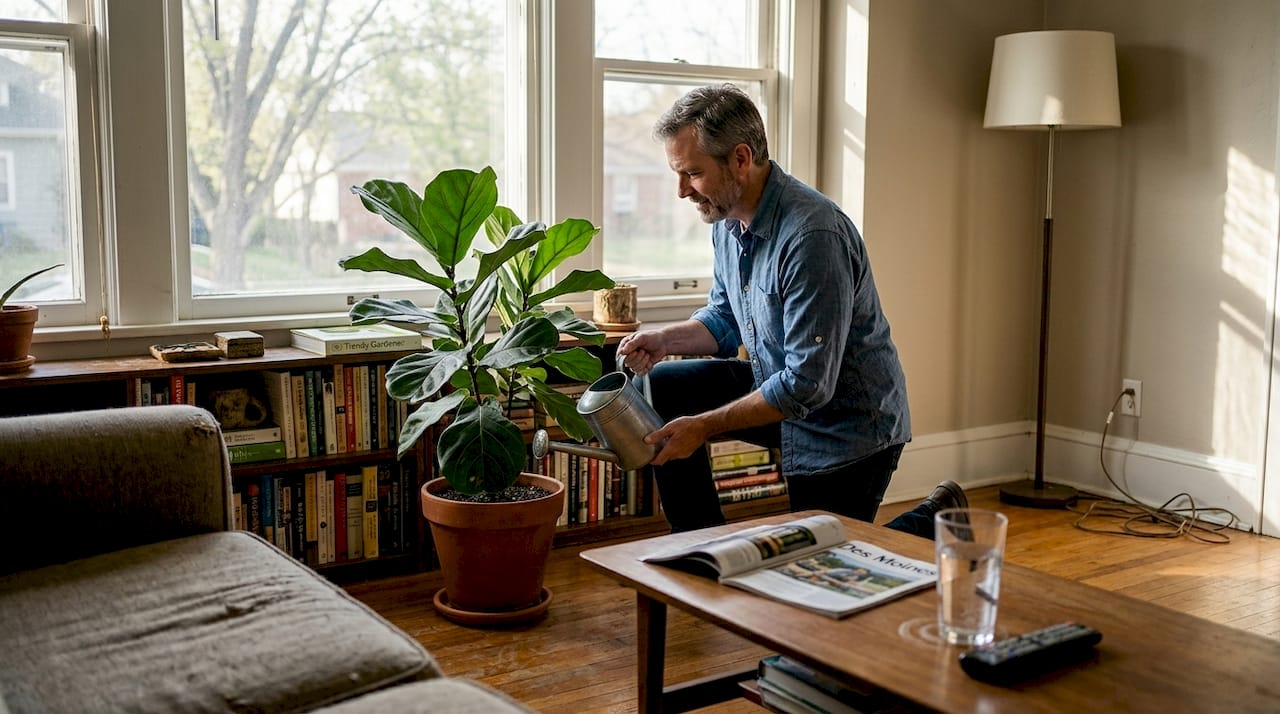
Here’s how standard design compares to true biophilic design in practice:
| Element | Standard design | Biophilic design |
|---|---|---|
| Greenery | One or two potted plants | Layered plant arrangements, living walls |
| Materials | Synthetic finishes | Natural wood, stone, preserved moss |
| Light | Uniform overhead lighting | Natural light zones, varied intensity |
| Air quality | HVAC only | Plants + humidity control systems |
| Maintenance | Occasional watering | Scheduled professional care programs |
For Iowa specifically, biophilic strategies must account for low winter humidity and limited natural light from November through March. This means selecting plants that tolerate dry air, supplementing with grow lights where needed, and using preserved moss walls as a low-maintenance way to maintain natural texture year-round without humidity concerns.
Some practical adaptations that work well in Iowa interiors:
- Use humidity trays or small humidifiers near plant groupings in winter months
- Choose north and east-facing placements for low-light tolerant species
- Incorporate preserved moss panels in areas where live plants struggle with airflow from heating vents
- Select matte natural finishes for planters and containers to reinforce the organic aesthetic
Pro Tip: Layering plants at multiple heights, floor-level, mid-height, and eye-level, creates visual depth and maximizes the air-quality benefit even in smaller Iowa rooms. It also makes a space feel more intentional and designed rather than randomly decorated.
Selecting the right plants for Iowa’s unique climate
Now that you know the design principles, let’s focus on which plants will actually thrive and endure in your Iowa-based interior. Plant selection is where many well-intentioned projects go wrong. The wrong species in Iowa’s dry winter conditions will decline fast, costing you money and making the space look worse than it did before.

The key concept here is evapotranspiration, or ET. Plants with low ET rates lose less water to the air, which means they’re naturally suited to dry environments. Selecting low-ET plants is especially important in Iowa’s dry winters, where indoor humidity can drop below 20% during heating season. Properly chosen low-ET species can reduce your maintenance needs by up to 50% compared to moisture-hungry tropical varieties.
Here’s a quick reference for plants that perform well in Iowa interiors:
| Plant | Light needs | Water frequency | Care level |
|---|---|---|---|
| ZZ plant | Low to medium | Every 2 to 3 weeks | Easy |
| Snake plant | Low to bright indirect | Every 2 to 4 weeks | Easy |
| Pothos | Low to medium | Weekly | Easy |
| Cast iron plant | Low | Every 2 to 3 weeks | Easy |
| Dracaena | Medium indirect | Every 1 to 2 weeks | Moderate |
| Peace lily | Low to medium | Weekly | Moderate |
For plant maintenance essentials in commercial settings, the priority is always durability and visual consistency. A plant that looks stunning for two weeks and then declines is not a design asset. It’s a liability.
Here’s a step-by-step plant selection process for Iowa homes and offices:
- Assess your light conditions by room and season. Iowa’s winter sun angle dramatically reduces natural light in north-facing rooms.
- Measure average indoor humidity in January and February. If it drops below 30%, prioritize low-ET species.
- Identify high-traffic zones where plants need to be durable and resistant to accidental contact or drafts.
- Match plant scale to architecture. Tall ceilings support large statement plants. Compact spaces benefit from vertical arrangements.
- Plan for ongoing plant care before you buy. A plant without a care plan is a plant on its way out.
Pro Tip: Rotate plant positions by 90 degrees every four to six weeks during winter. Iowa’s low sun angle means one side of a plant receives significantly more light than the other. Rotating keeps growth even and prevents the lopsided, stressed look that signals a plant is struggling.
Ongoing maintenance: Keeping interior landscapes healthy and attractive
The right plants are only half the battle. Maintaining them is where many Iowa projects succeed or fail. A beautifully installed interior landscape that receives inconsistent care will deteriorate within months, and in Iowa’s climate, that deterioration happens faster than most people expect.
Core maintenance tasks for any interior plantscape include:
- Watering on schedule, adjusted for seasonal humidity levels rather than a fixed calendar
- Humidity monitoring and supplementation during Iowa’s heating season, when indoor air becomes especially dry
- Pest inspection and management, since stressed plants in dry environments are more vulnerable to spider mites and scale
- Pruning and grooming to maintain the visual integrity of the design
- Fertilizing on a seasonal cycle, reducing inputs in winter when plant growth slows
- Cleaning leaves to remove dust buildup, which blocks light absorption and signals neglect
Iowa’s seasonal humidity fluctuations require care protocols that shift with the calendar. What works in July will not work in January. A maintenance workflow guide built for Iowa’s four distinct seasons is far more effective than a generic monthly checklist.
Professional maintenance is critical for longevity in Iowa’s dry winters. Trained technicians catch early signs of stress before they become visible problems. They also adjust care routines in real time based on what they observe during each visit, something a fixed schedule simply can’t replicate.
“A well-maintained interior landscape doesn’t just survive. It becomes a defining feature of the space that people notice, remember, and return to.”
For commercial property managers, the case for outsourcing expert maintenance tasks is straightforward. The cost of professional care is almost always lower than the cost of replacing plants that were neglected. Beyond plant health, plant maintenance boosts productivity and tenant satisfaction in measurable ways, making it a legitimate business investment rather than an overhead expense.
Why bespoke biophilic design is the future for Iowa interiors
Here’s an uncomfortable truth most plant vendors won’t tell you: off-the-shelf plant kits and generic interior plant packages almost always underperform in Iowa. They’re designed for average conditions, and Iowa is not average. The state’s climate is genuinely demanding, with humidity that swings from tropical in summer to desert-dry in winter, light that drops sharply from October through March, and heating systems that create microclimates inside buildings that no national template accounts for.
Custom interior landscaping is not a premium indulgence. It’s the only approach that actually works here. Bespoke design accounts for your building’s specific light patterns, your HVAC system’s effect on air moisture, your aesthetic goals, and the realistic maintenance capacity of your team or your schedule. Generic solutions skip all of that.
We’ve seen Iowa properties invest in beautiful plant installations that looked great on day one and were struggling by February because no one planned for winter. Investing in plant maintenance from the start, as part of a custom program rather than an afterthought, is what separates interior landscapes that endure from ones that disappoint. The properties that get this right don’t just look better. They perform better, retain tenants longer, and become spaces people genuinely want to be in.
Ready to transform your Iowa space? Partner with interior landscaping pros
If a tailored approach sounds right for your home or commercial property, the next step is working with a team that understands Iowa’s climate, your design goals, and what it takes to keep an interior landscape thriving year-round.
At Trendy Gardener, we build end-to-end plant programs for Iowa homeowners and commercial property managers who want results that last. Our wall mounted living wall system brings dramatic vertical greenery to any interior, while our recirculating living wall system delivers a self-sustaining, high-impact feature for larger commercial spaces. From initial consultation through ongoing maintenance, we handle every detail so your space looks exceptional on day one and stays that way through every Iowa season.
Frequently asked questions
What types of plants are best for Iowa’s dry winters?
Low-ET, drought-tolerant species like ZZ plants, snake plants, and cast iron plants are best suited for Iowa’s dry winters because they require less humidity to thrive. These varieties maintain their appearance without constant moisture supplementation.
How often should I water indoor plants in Iowa homes?
Most indoor plants need less frequent watering in Iowa winters because seasonal conditions reduce light levels and slow plant metabolism. Check soil moisture rather than following a fixed schedule.
Does interior landscaping work in small spaces?
Absolutely. Biophilic design scales to any footprint, and vertical arrangements like living walls or layered plant groupings deliver strong visual and wellness impact without requiring floor space.
Is professional maintenance really necessary?
In Iowa’s variable climate, professional maintenance significantly extends plant life and prevents the costly replacement cycles that come from neglected seasonal care. It’s an investment that pays for itself in plant longevity and space quality.