

Luxury plant care explained: what sets elite services apart
- Luxury plant care is a strategic, design-aligned service that values ongoing management and measurable performance.
- It involves proactive routines, expert sourcing, biophilic integration, and detailed documentation to ensure plant performance.
- Proper maintenance and site-specific plant selection are essential for preserving the aesthetic and functional benefits of high-end interiors.
Well-maintained landscapes can boost property value by 15 to 20% and biophilic plants can increase workplace productivity by 15%. Those are not small numbers. Yet most people still think luxury plant care is just about having prettier plants or a more attentive watering schedule. It is not. True luxury plant care is a strategic, design-driven discipline that treats your greenery as a living asset, one that requires expert management, precision methodology, and ongoing investment to perform at the highest level. This guide breaks down exactly what defines elite plant care, how it works in practice, and what you should expect when you hire a provider worthy of your space.
Table of Contents
- Defining luxury plant care: not just watering and pruning
- Core methodologies: precision, consistency, and biophilic planning
- Expert nuances: plant selection and environment adaptation
- Luxury plant care in practice: service, certification, and measurable outcomes
- Perspective: why maintenance, not design, determines luxury plant care success
- Bring luxury plant care to your space
- Frequently asked questions
Key Takeaways
| Point | Details |
|---|---|
| Luxury is asset-driven | Elite plant care treats plants as investment assets with measurable outcomes, not just decor. |
| Pro care means precision | Success relies on consistent, transparent routines and expert-led methodologies in every visit. |
| Site adaptation is crucial | Top-tier results require tailored plant choices and systems for your space’s unique climate and light. |
| Ongoing investment pays off | Continuous professional care enhances wellbeing and increases property value by up to 20%. |
Defining luxury plant care: not just watering and pruning
With a baseline understanding of the value at stake, it is important to define exactly what makes plant care “luxury” rather than routine. The distinction is not cosmetic. Luxury plant care elevates standard plantscaping to an investment-grade asset through dedicated account managers, global plant sourcing, and full biophilic design integration. It is holistic, strategic, and measurable.
Standard plant maintenance typically covers basic watering, occasional pruning, and reactive problem-solving when something goes wrong. Luxury care flips that model entirely. It is proactive, documented, and tied to design intent from day one.
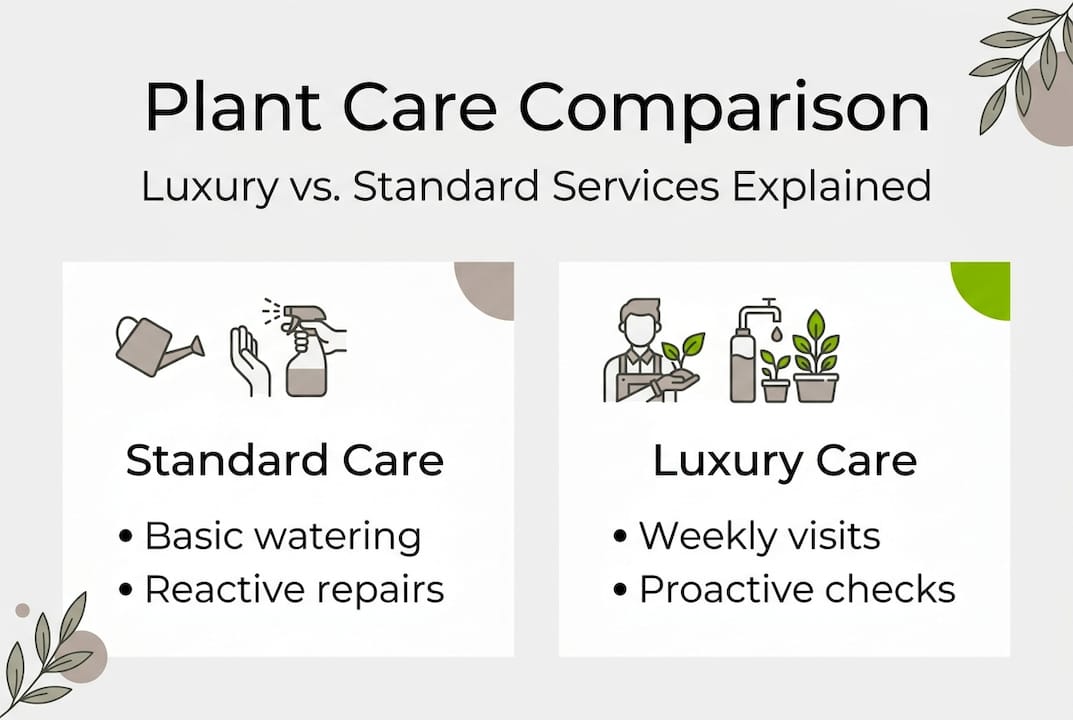
Here is how the two approaches compare:
| Feature | Standard plant care | Luxury plant care |
|---|---|---|
| Scheduling | As-needed or monthly | Weekly or biweekly |
| Plant sourcing | Local nurseries | Global, species-specific |
| Account management | None | Dedicated manager |
| Documentation | Minimal | Full service logs and KPIs |
| Design integration | Separate from care | Fully aligned |
| Problem resolution | Reactive | Proactive and preventive |
For homeowners and designers investing in high-end interiors, the difference matters enormously. A showpiece living wall or a curated indoor plant installation is only as good as the care program behind it. Without that infrastructure, even the most beautifully sourced plants will decline.
Luxury care also defines success differently. Rather than asking “are the plants alive?”, elite providers ask “are the plants performing against benchmarks?” That means tracking leaf health scores, growth consistency, soil condition, and visual alignment with the original design brief. You can explore what this looks like in real projects through luxury plantscaping examples that show the full scope of what elevated care produces.
Key hallmarks of a true luxury plant care program include:
- Dedicated account management with a named contact for your property
- Global and specialty plant sourcing matched to your design vision
- Biophilic design integration where care decisions support the spatial intent
- Documented service logs updated after every visit
- KPI tracking for plant health, aesthetics, and environmental performance
- Seasonal rotation planning to keep the space dynamic and fresh
Understanding the luxe plant care workflow gives you a clearer picture of how these elements connect into a seamless program rather than a series of disconnected tasks.
Core methodologies: precision, consistency, and biophilic planning
Understanding what sets luxury care apart, we turn to the advanced methods and routines that professional providers use to guarantee results. The methodology is where elite programs earn their reputation.
Core luxury care tasks include precise watering, design-intent pruning, integrated pest management, leaf cleaning, seasonal rotations, irrigation checks, and dedicated account management. Every visit is structured, not improvised.
Here is what a benchmarked luxury care visit typically covers:
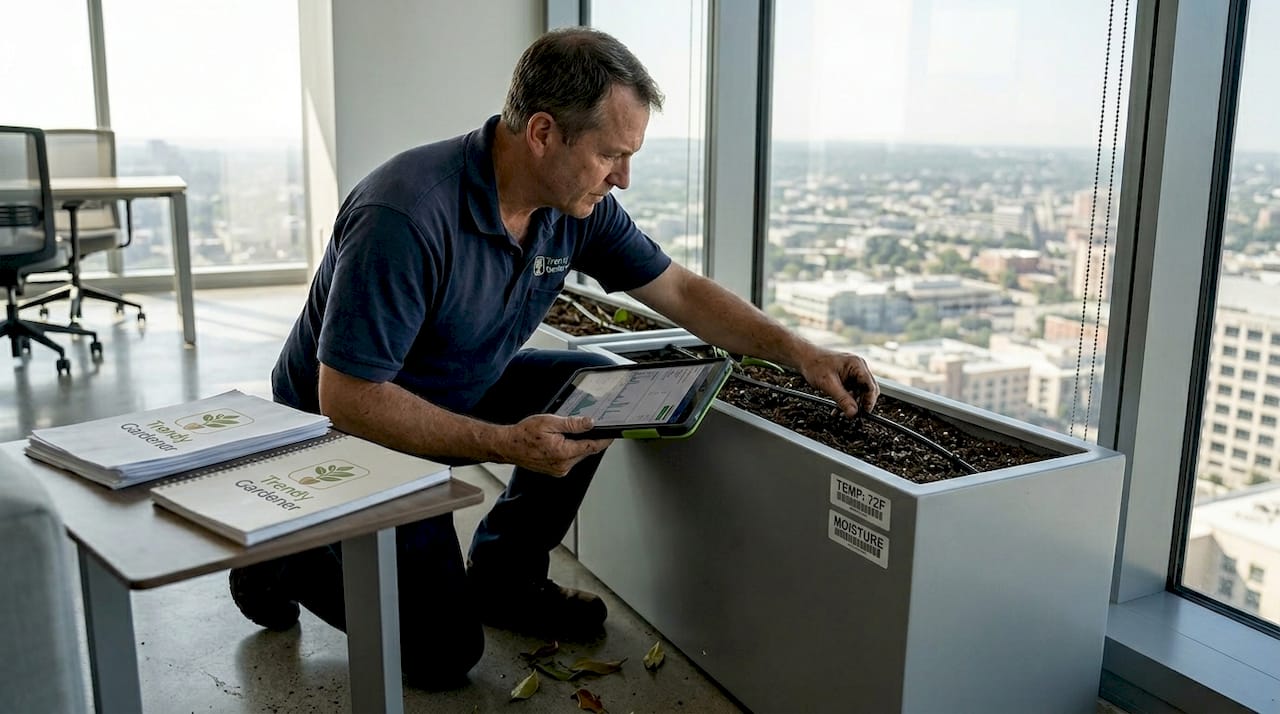
- Soil moisture assessment using calibrated sensors, not guesswork
- Leaf inspection for pests, disease, and dust accumulation
- Precision pruning aligned with the original design brief
- Irrigation system check including drip lines and reservoir levels
- Fertilization and pH testing based on species-specific requirements
- Service log update with photos and condition notes
- Escalation flag if any plant requires specialist intervention
Consistency is the backbone of this approach. Biweekly visits are standard for most luxury residential and commercial spaces, with weekly service scheduled for high-visibility areas like hotel lobbies, executive offices, or primary living spaces. Skipping visits or stretching intervals is where problems begin.
Pro Tip: Do not rely on visual checks alone to assess plant health. Soil sensors provide real-time moisture data that prevents both overwatering and drought stress before either becomes visible. They are one of the most cost-effective tools in a luxury care program.
Technology plays a supporting role, but it does not replace expert judgment. Drip irrigation systems maintain baseline hydration between visits, while soil sensors flag anomalies that a technician can address on the next scheduled call. For a deeper look at what expert plantscaping tasks involve at this level, the detail is genuinely surprising to most first-time clients.
Biophilic planning is woven into every methodological decision. Pruning is not just about size control. It shapes sight lines, reinforces spatial hierarchy, and maintains the visual weight the designer originally intended. Staying current with plant trends for luxury spaces also helps providers recommend seasonal rotations that keep the design feeling current.
Expert nuances: plant selection and environment adaptation
After establishing methodological rigor, let us examine how expert teams assess and optimize for site-specific demands, ensuring luxury results under any condition.
Biophilic integration prioritizes species selection by microclimate, strategic placement, and invisible system integration. That means before a single plant is ordered, a qualified team conducts a full site analysis covering light levels, humidity, airflow, temperature fluctuation, and how occupants move through the space.
Coastal and dense urban environments require highly specific species and systems that can handle salt air, reflected heat, or limited natural light. Getting this wrong is expensive. Replacing a mature specimen plant in a luxury lobby is not just a plant cost. It disrupts the design and signals neglect.
Common site-specific challenges and how luxury teams address them:
- Low-light interiors: ZZ plants, snake plants, and cast iron plants offer resilience without sacrificing elegance
- Coastal properties: Salt-tolerant species like agave and certain palms handle air quality challenges
- UV-intense spaces: Succulents and drought-adapted species prevent bleaching and stress
- Urban high-rises: Species selected for low humidity tolerance and air filtration capacity
- Climate-controlled offices: Consistent temperature species that do not react to HVAC cycling
Pro Tip: Always request a written site analysis before finalizing plant selections for a luxury project. A provider who skips this step is guessing, and guessing with high-value plants in a premium interior is a risk you do not need to take.
“The most resilient luxury plant programs are built around the site, not the trend. Species that thrive in their specific microclimate will always outperform visually exciting choices that fight their environment.”
Soil sensors deserve special mention here. They measure actual moisture at root depth rather than estimating from surface conditions or watering schedules. For a step-by-step maintenance approach that incorporates these tools, the improvement in plant health outcomes is measurable and consistent. Understanding the broader role of plant care in interiors helps explain why these nuances matter so much at the luxury level.
Luxury plant care in practice: service, certification, and measurable outcomes
With methodology and plant choices understood, the next step is ensuring the ongoing success of your luxury investment by partnering with best-in-class professionals.
Vetting a provider is not complicated, but it requires asking the right questions. Seek providers with horticultural certifications, service guarantees, and documented biophilic expertise. A certificate alone is not enough. Ask for case studies, client references, and examples of their service logs.
Here is a checklist for evaluating any luxury plant care provider:
- Verified horticultural certification from a recognized body
- Documented biophilic design experience, not just maintenance history
- Clear service level agreements with defined visit frequency
- Transparent KPI reporting and health benchmarking
- Written guarantees covering plant replacement and performance standards
- Named account manager assigned to your property
- Emergency response protocol for pest outbreaks or environmental failures
Maintenance as an operating system means measurable KPIs and service logs underpin long-term success. This framing is useful because it shifts the conversation from “are the plants being watered” to “is the plant program delivering against its design and wellness objectives.”
The real-world benefits are significant. Spaces with well-managed biophilic plant programs report improvements in occupant wellness, reduced stress levels, and stronger productivity scores. Property values increase when landscaping and interior planting are maintained to a high standard. For ongoing biophilic care to deliver those outcomes, the provider relationship must be treated as a long-term partnership, not a one-time installation.
Key performance indicators worth tracking include:
- Plant health score rated per visit on a consistent scale
- Replacement rate as a percentage of total plant inventory per year
- Service compliance measuring visit frequency against contract terms
- Visual alignment comparing current appearance to original design intent
- Client satisfaction tracked through regular check-ins
Reviewing your indoor maintenance workflow with your provider at least quarterly ensures the program stays aligned with your space as it evolves.
Perspective: why maintenance, not design, determines luxury plant care success
After covering the practical side, it is worth stepping back and considering what truly makes luxury plant care last.
Every showpiece plant installation looks exceptional on day one. The real test comes at month six, month twelve, and beyond. We have seen beautifully designed biophilic spaces lose their impact entirely within a year because the maintenance program was treated as an afterthought. The design gets the credit. The maintenance does the work.
Poor maintenance undermines biophilic benefits, turning what should be living features into liabilities. A declining plant in a luxury lobby communicates neglect far more loudly than no plant at all. The investment in design is only protected by the investment in ongoing care.
This is why we believe invisible maintenance is the most important element of any luxury plant program. When care is done right, nobody notices it. The plants look effortless. The space feels alive. Guests and clients experience the biophilic benefits without ever thinking about the work behind them. That invisibility is the goal, and it only happens through consistent, expert-led bespoke plant care programs built around your specific space.
Bring luxury plant care to your space
If this guide has clarified what premium plant care actually involves, the next step is finding a partner who can deliver it at the level your space deserves. At Trendy Gardener, we design, install, and maintain plant programs for homeowners, interior designers, and commercial clients who expect results that hold up over time.
Whether you are interested in a wall-mounted living wall for a residential feature wall or a fully managed recirculating living wall system for a commercial lobby, we bring the same design rigor and care discipline to every project. Our team handles everything from initial site analysis through ongoing maintenance, so your investment stays exceptional from day one through year five and beyond. Reach out to start a conversation about what luxury plant care can do for your space.
Frequently asked questions
How does luxury plant care differ from standard plant care?
Luxury plant care includes dedicated managers and biophilic integration alongside asset-grade management, while standard care covers only basic watering and reactive pruning. The key difference is strategic intent and measurable accountability.
What are the most important certifications for luxury plant care providers?
Look for horticultural certifications and biophilic expertise backed by documented project experience and clear service guarantees. Certifications alone are not enough without proven case studies to support them.
How often should luxury plant care services visit my space?
Biweekly visits are standard for most luxury spaces, with weekly service reserved for high-visibility areas like lobbies or primary living rooms. Frequency should be written into your service level agreement.
Which plants are typically recommended in upscale, low-light interiors?
Low-light tolerant species like ZZ plant and snake plant are popular choices because they combine resilience with a refined, architectural look. Both perform reliably without sacrificing visual quality.
Do soil sensors really make a difference for luxury plant care?
Yes. Soil sensors outperform AI apps for overwatering prevention, with significantly lower moisture deviation rates, making them one of the most reliable tools for protecting high-value plant investments.