

Trends in Luxury Plant Decor 2026: Elevated Spaces
High-end projects in Des Moines demand more than a token fern in the lobby. Today’s luxury plant decor calls for intentional integration—plants must become architectural elements, not mere decorations. Designers are expected to create living spaces that breathe, using curated species, smart irrigation, and native selections. This guide highlights the principles and innovations driving biophilic design in 2026, offering strategies to ensure your projects deliver sophistication, longevity, and genuine connection to nature.
Table of Contents
- Defining Luxury Plant Decor In 2026
- Emerging Plant Styles And Biophilic Innovations
- Living Wall Systems And Moss Wall Integration
- Sustainable Sourcing And Maintenance Protocols
- Common Pitfalls And Maximizing Design Impact
Key Takeaways
| Point | Details |
|---|---|
| Intentional Integration | Luxury plant decor must weave plants into the architecture, making them integral to the design rather than afterthoughts. |
| Holistic Ecosystems | Designers should approach projects by creating tailored ecosystems that promote longevity and sustainability through curated plant selections. |
| Elevated Client Engagement | Engaging clients with realistic maintenance discussions and ongoing care plans is essential for the success of luxury installations. |
| Sustainable Sourcing | Using native, climate-adaptive species and eco-friendly materials is crucial to align luxury design with responsible environmental practices. |
Defining luxury plant decor in 2026
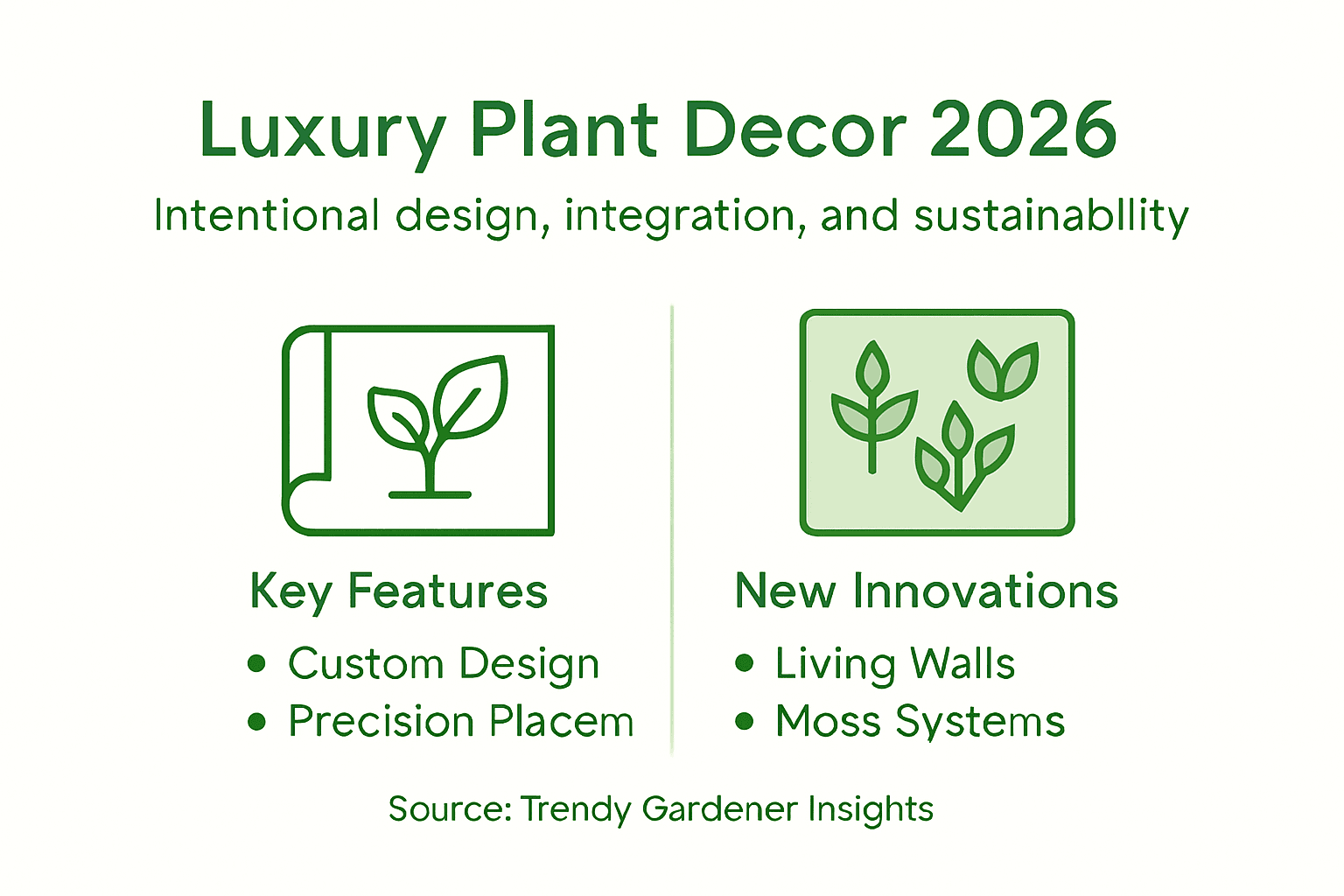
Luxury plant decor in 2026 isn’t about filling spaces with plants. It’s about intentional integration—weaving plants into the architecture itself so they feel like they were always meant to be there.
For interior designers and architects in Des Moines working on high-end projects, this shift changes everything. Your clients expect more than a fiddle leaf fig in a corner. They want spaces where plants and architecture work as one cohesive system.
The definition centers on three core principles:
- Architectural harmony: Plants function as design elements within the room’s structure, not afterthoughts added for greenery
- Meaningful selection: Each plant serves a purpose—aesthetic, air-quality, or spatial experience—never purely decorative filler
- Long-term design: Pieces are chosen and positioned for longevity, not seasonal refreshes that fade or underperform
Holistic integration with architecture and nature now defines the approach. Luxury spaces use custom designs that blend natural materials like concrete, steel, and stone with living elements. Think living walls that serve as room dividers, preserved moss installations that define brand identity, or strategically placed specimen plants that anchor a design narrative.
This also means responsibility. Regenerative design isn’t optional anymore in luxury spaces. Homeowners expect climate-resilient plantings that restore ecological health while maintaining visual refinement. Native plant selections paired with smart irrigation technologies deliver both aesthetics and sustainability.
For Des Moines-based designers, this translates to projects requiring deeper consultation and custom concepting. Your role shifts from selection to curation. You’re not just sourcing plants; you’re designing ecosystems that look exceptional day one and stay that way through expert care.
Luxury plant decor in 2026 succeeds when clients forget they’re looking at a designed space—it simply feels alive and intentional.
The difference between standard plant placement and luxury plant decor is precision. Custom designs use exacting specifications for light, humidity, and spatial relationships. Installation becomes installation art. Ongoing maintenance becomes part of the design promise.
Here’s a comparison of standard plant placement and luxury plant decor in 2026:
| Aspect | Standard Plant Placement | Luxury Plant Decor 2026 |
|---|---|---|
| Design Integration | Afterthoughts, decorative | Intentional, woven into structure |
| Plant Selection | Popular, low-maintenance | Curated for purpose and harmony |
| Longevity | Short-term, seasonal | Long-term, ecosystem-focused |
| Maintenance | Basic care, client-led | Expert, ongoing, part of design |
Pro tip: Start every high-end project with a design consultation that maps how plants will support the architecture, not sit beside it. This positions you as a strategic designer, not just a plant supplier.
Emerging plant styles and biophilic innovations
The plant styles defining 2026 reject the sterile minimalism of years past. Your clients want textural maximalism—layered, expressive indoor gardens that feel alive and intentional, not curated by algorithm.
This shift moves beyond the single statement plant. Instead, you’re designing ecosystems within rooms where trailing plants cascade beside bold structural leaves, and variegated foliage creates visual depth and movement.
Here’s what’s driving the trend:
- Personality over perfection: Plants chosen for their character and visual impact, not just their ability to survive neglect
- Layered composition: Multiple plant heights, textures, and colors working together as a cohesive design system
- Health integration: Each plant contributes to air quality, humidity, and occupant wellness alongside aesthetic function
Biophilic design reconnects occupants with nature through lush greenery, natural materials, and organic shapes. The innovation here is the combination: climate-adaptive plants paired with indoor water features and sculptural organic forms create sanctuary-like atmospheres that enhance mental well-being.
Technology plays a quiet but essential role. Smart lighting and smart irrigation systems remove the guesswork from plant care. For Des Moines designers managing high-end residential and commercial projects, this means you can specify more intricate planting schemes without compromising on maintenance reliability.
Statement plants now anchor these designs. Think specimen plants with dramatic form, variegated foliage that catches light, or trailing varieties that define spatial relationships. These aren’t background players—they’re design anchors.
The 2026 plant trend succeeds when clients notice their spaces feel better—more vibrant, more connected to living things—before they consciously recognize the plants themselves.
Low-maintenance yet luxurious species expand your design palette. Your projects can include more complex styling and layered compositions without requiring constant client intervention. This shifts the design conversation from “Can you keep this alive?” to “What experience do you want this space to create?”
For your projects, this means deeper curation during the consultation phase. You’re not just selecting plants; you’re designing the sensory experience of the space through living elements.
Pro tip: Specify mixed plantings with at least three height layers and varied textures in every design—this creates the visual depth clients associate with luxury while technology handles the maintenance complexity.
Living wall systems and moss wall integration
Living walls are no longer experimental installations reserved for corporate atriums. In 2026, they’re becoming the ultimate luxury focal point for high-end residential and commercial spaces in Des Moines.
Think of a living wall as a three-dimensional garden mounted vertically. It transforms blank wall space into lush, textured landscape that commands attention and redefines the room’s entire spatial experience.
What makes these systems work for luxury design:
- Vertical statement making: Plants grow upward, creating drama and depth without consuming floor space
- Customizable composition: Mix diverse species to achieve specific color palettes, textures, and seasonal variations
- Modular flexibility: Sections can be adjusted, refreshed, or redesigned as client preferences evolve
Living wall systems transform vertical spaces into lush gardens that serve as focal statement pieces. The real innovation is integration—adding moss components to these systems creates layered sensory experiences.
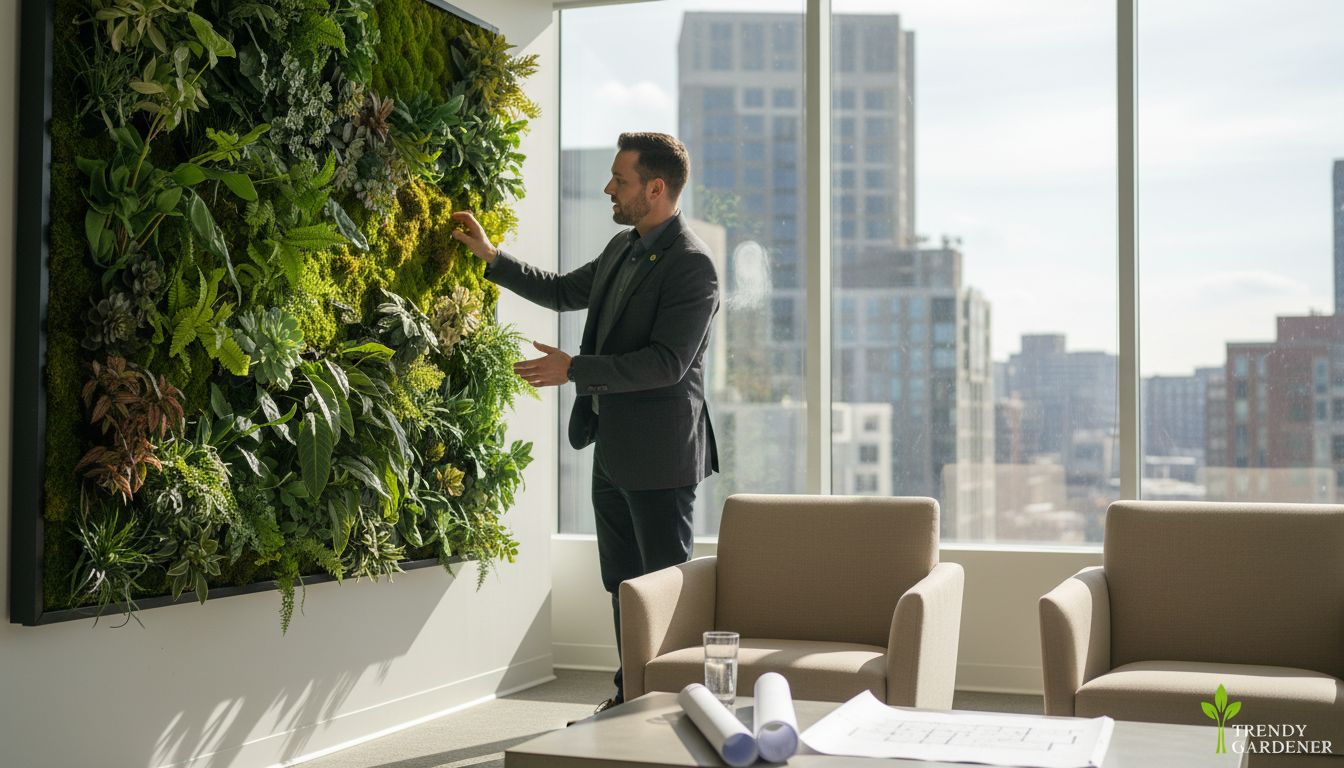
Moss walls contribute far more than aesthetics. They absorb sound, improving acoustics in open commercial spaces. They enhance air quality. They provide soft, tactile surfaces that create sanctuary-like atmospheres. For Des Moines designers, this means a single wall installation addresses multiple design objectives simultaneously.
The modular design of modern systems allows straightforward maintenance. Unlike traditional living walls requiring complex irrigation overhead, today’s systems deliver water efficiently and evenly. Clients get sustained luxury aesthetics without constant intervention.
To clarify innovation, here are the main elements of advanced living wall systems:
| System Feature | Function | Impact on Interior Spaces |
|---|---|---|
| Vertical Gardening | Maximizes wall real estate | Creates striking, three-dimensional art |
| Modular Sections | Customizes easily | Adapts to changing client preferences |
| Moss Integration | Absorbs noise, requires no light | Improves acoustics and placement flexibility |
| Smart Irrigation | Maintains optimal moisture | Ensures sustained visual excellence |
A well-designed living wall with moss integration becomes the room’s centerpiece—functional art that improves the space physically and psychologically.
For your projects, consider placement strategically. Behind reception desks. Anchoring open office areas. Creating visual privacy between residential zones. Each placement changes how the installation functions within the larger design narrative.
Preserved moss walls offer another advantage: they require no water or light maintenance, making them ideal for challenging spaces where live plants struggle. Combine live plantings with preserved moss sections to maximize both visual impact and practical viability.
Integration with architectural elements matters deeply. A living wall should feel like it belongs in the space, not like something applied afterward. Consider how it relates to nearby materials, light sources, and traffic patterns.
Pro tip: Specify a mix of trailing plants, structural plants, and moss sections in your living wall designs—this creates visual depth and ensures the installation stays visually compelling as plants grow and change over seasons.
Sustainable sourcing and maintenance protocols
Luxury in 2026 means responsibility. Your high-end clients expect plants that look exceptional and function sustainably—no compromise between aesthetics and environmental stewardship.
Sustainability starts before plants arrive on site. Sourcing protocols determine whether you’re working with regenerative suppliers or conventional nurseries. For Des Moines designers, partnering with suppliers who prioritize native, climate-adaptive species reduces both environmental impact and long-term maintenance complexity.
Here’s what sustainable sourcing looks like:
- Native plant prioritization: Species adapted to local climate require less water, fewer inputs, and perform predictably
- Eco-friendly containers: Reclaimed or rapidly renewable materials replace conventional plastic nursery pots
- Organic soil amendments: Natural fertilizers and biological pest management replace chemical inputs
Maintenance protocols anchor the design promise. Regenerative landscapes restore ecosystems while conserving resources through smart irrigation using AI weather data and permeable surfaces that recycle rainwater. For your projects, this means specifying systems that minimize waste while maximizing plant health.
Technology handles the precision work. Smart watering systems monitor soil moisture and environmental conditions in real time. You eliminate guesswork and overwatering—the primary killer of luxury installations. Environmental sensors track light and humidity, alerting maintenance teams before problems develop.
Composting integration closes the loop. Plant debris gets converted back into soil amendments rather than hauled away. For commercial projects, this demonstrates commitment to circular design that clients genuinely appreciate.
Sustainable protocols aren’t operational fine print—they’re core to the luxury experience, showing clients their investment aligns with their values.
Low-water maintenance becomes a selling point, not a limitation. Specify drought-tolerant specimen plants, preserved moss sections, and strategic layering that reduces overall irrigation demand. Your designs use less water while looking more abundant.
Non-invasive pest management protects plants without toxins. Biological controls, horticultural oils, and integrated approaches keep plants healthy in ways that align with luxury wellness environments.
Pro tip: Document your sourcing suppliers and maintenance protocols in writing for clients—this transparency builds trust and justifies premium pricing by demonstrating professional stewardship from sourcing through long-term care.
Common pitfalls and maximizing design impact
Most luxury plant design projects fail not because of plant selection, but because of execution gaps. Understanding what trips up even experienced designers helps you avoid costly mistakes and deliver exceptional results.
The biggest pitfall is overestimating client commitment. You specify a stunning living wall that demands precision watering and seasonal adjustments. Then reality hits: clients get busy, maintenance lapses, and your masterpiece becomes a cautionary tale. Start every project with honest conversations about realistic maintenance capacity.
Common mistakes derail even well-intentioned installations:
- Poor lighting assessment: Plants chosen without measuring actual light conditions fail predictably
- Ignoring humidity zones: Grouping plants with conflicting humidity needs creates constant struggle
- Undersized containers: Root-bound plants stunt growth and shorten lifespan dramatically
- Inconsistent care protocols: Lack of clear maintenance documentation leads to guesswork
Design impact maximizes when plants function within the architecture, not against it. Consider microclimates within each space. A living wall on the north side of a Des Moines commercial building gets different light than the same wall on the south side. Temperature swings near entrances differ from interior zones. Match plant selections to these realities from day one.
Ongoing plant care sustains the biophilic design impact you worked to achieve during installation. Partner with maintenance providers who understand luxury standards, not just basic plant survival.
Scale amplifies impact dramatically. A single statement plant creates presence. Multiple coordinated specimens create transformation. Your consultation process should help clients understand how layering and repetition multiply visual effect.
The difference between a nice installation and a luxury installation is the difference between done and sustained—between a moment and a lasting experience.
Documentation prevents drift. Provide clients with specific care instructions tied to their climate and space. Monthly check-in schedules. Seasonal adjustment protocols. Written guidelines transform vague expectations into clear operational standards.
Timing matters too. Installing living walls in summer means managing establishment during peak heat stress. Understanding Des Moines seasonal patterns helps you time installations for optimal establishment and performance.
Pro tip: Create a one-page “Design Promise” document for every project outlining what the installation will look like at 3 months, 6 months, and 12 months—this sets realistic expectations and demonstrates professional confidence in your design.
Elevate Your Space with Intentional Luxury Plant Design
The challenges in the luxury plant decor landscape of 2026 demand more than just placing greenery. You need precision in architectural harmony, curated plant selections, and sustainable maintenance protocols that ensure your spaces feel alive and purposeful from day one. If you want to avoid common pitfalls like improper lighting and inconsistent care, and instead deliver lasting biophilic design impact, you need a partner who understands these complexities.
At Trendy Gardener, we specialize in transforming spaces into intentional living ecosystems through our comprehensive services. From bespoke living walls and custom preserved moss walls to expert indoor plant design and maintenance, we provide end-to-end solutions tailored to your unique project needs. Our expertise ensures your installation not only looks exceptional but thrives sustainably, aligning with 2026’s focus on regenerative and climate-resilient designs.
Don’t settle for seasonal filler or guesswork. Take charge of your luxury plant décor now and create vibrant, elevated environments that truly connect occupants to nature. Visit Trendy Gardener today to schedule a consultation and start curating your living masterpiece.
Frequently Asked Questions
What is luxury plant decor in 2026?
Luxury plant decor in 2026 focuses on intentional integration, where plants are woven into the architecture of a space, creating harmony between nature and design. It emphasizes thoughtful plant selection, durability, and aesthetic value.
How can I ensure that my indoor plants maintain their health and visual appeal over time?
To maintain the health and beauty of your indoor plants, select varieties that are suited for your space’s light and humidity conditions and establish a consistent care routine that includes smart watering techniques and ongoing maintenance.
What are living walls, and why are they considered a luxury design element?
Living walls are vertical gardens that create a striking visual impact and enhance the spatial experience of a room. They provide benefits like improved acoustics, air quality, and aesthetics, making them a desirable feature in upscale design.
How does sustainable sourcing affect luxury plant decor?
Sustainable sourcing prioritizes native, climate-adaptive species and eco-friendly materials, making luxury plant decor both visually appealing and environmentally responsible, which is increasingly important for high-end clients.