


Office Plant Care Guide for Healthy and Lively Workspaces
Stressful workdays in Des Moines offices can feel less overwhelming with greener, more inviting spaces. Creating a vibrant workplace isn’t just about decor. Thoughtful plant care improves air quality and supports employee well-being if tailored to your building’s lighting and layout. This guide shares practical steps for matching office plants to local conditions, using smart watering systems, and monitoring growth, ensuring office managers create thriving indoor environments that support productivity and comfort.
Table of Contents
- Step 1: Evaluate Lighting And Space Requirements
- Step 2: Select Appropriate Office-Friendly Plants
- Step 3: Set Up Optimal Planting And Watering Systems
- Step 4: Monitor Growth And Adjust Care Routine
- Step 5: Verify Plant Health And Address Common Issues
Quick Summary
| Key Point | Explanation |
|---|---|
| 1. Assess Lighting Conditions | Evaluate natural and artificial light to identify which plants would thrive in specific areas of your office. |
| 2. Choose Low-Maintenance Plants | Select resilient species like Snake Plants and Peace Lilies that adapt well to office environments with low light and minimal care. |
| 3. Implement Smart Watering Systems | Use technology like moisture sensors and automated irrigation to maintain optimal plant hydration without overwatering. |
| 4. Monitor Plant Health Regularly | Observe key indicators like leaf color and growth rate to ensure plants are thriving and to catch issues early. |
| 5. Address Issues Promptly | Use mobile diagnostic tools to identify and resolve plant health problems quickly, preventing larger crises. |
Step 1: Evaluate lighting and space requirements
Successfully integrating office plants starts with understanding your workspace’s unique lighting and spatial conditions. This critical assessment determines which plants will thrive and where they can be strategically positioned for maximum visual impact and plant health.
Begin by conducting a comprehensive lighting evaluation using photosynthetic photon efficacy metrics that go beyond traditional illuminance measurements. Look for these key characteristics in your office environment:
- Natural light exposure from windows and glass surfaces
- Artificial lighting types including overhead fixtures, task lights, and indirect illumination
- Light intensity measured at typical workspace heights
- Daily light duration across different areas of your office
To effectively assess your space, map out light patterns throughout the day. Use a light meter or smartphone app to measure illuminance levels, which helps identify optimal plant placement zones. Some areas might receive direct sunlight, while others remain consistently shaded - each microclimate supports different plant species.
Matching plant species to specific light conditions is more art than science - think of it like creating a living, breathing interior design.
Pay close attention to potential obstacles like tall furniture, partition walls, or equipment that might block light transmission. Comprehensive lighting system assessments recommend measuring illuminance at standard workspace height to ensure accurate readings.
Pro tip: Keep a detailed lighting journal for a week, noting how sunlight moves through your office and recording precise light measurements at different times of day.
Step 2: Select appropriate office-friendly plants
Choosing the right plants for your office involves more than just picking something green and attractive. You want species that can survive and thrive in the unique environment of a workspace, considering factors like lighting, maintenance, and overall health impact.
Start by identifying plants that can tolerate fluorescent lighting conditions with minimal natural light. Look for resilient species that can adapt to indoor environments and require low maintenance. Here are some top contenders for office plant success:
- Snake Plant: Extremely tolerant of low light and irregular watering
- Parlor Palm: Provides relaxed ambiance and air-cleaning benefits
- Money Tree: Symbolizes prosperity and requires moderate care
- Peace Lily: Attractive white flowers with excellent air-purification capabilities
Consider your specific office microclimate when selecting plants. Some spaces have consistent temperatures and filtered light, while others might have fluctuating conditions near windows or HVAC systems. Low-maintenance office plants can transform your workspace into a more vibrant and healthier environment.
Here’s a quick comparison of top office-friendly plant choices and their unique benefits:
| Plant Type | Air Purification | Visual Appeal | Care Level |
|---|---|---|---|
| Snake Plant | Excellent | Modern, upright | Minimal attention |
| Parlor Palm | Good | Relaxed, tropical | Moderate, occasional |
| Money Tree | Moderate | Elegant foliage | Regular but simple |
| Peace Lily | Superior | White blooms | Low, some misting |
Not all plants are created equal - choose ones that match your office’s unique personality and environmental conditions.
Pay attention to each plant’s specific requirements. Some need occasional misting, while others thrive with minimal intervention. Matching the right plant to your workspace’s conditions ensures long-term success and minimal stress for both you and your green companions.
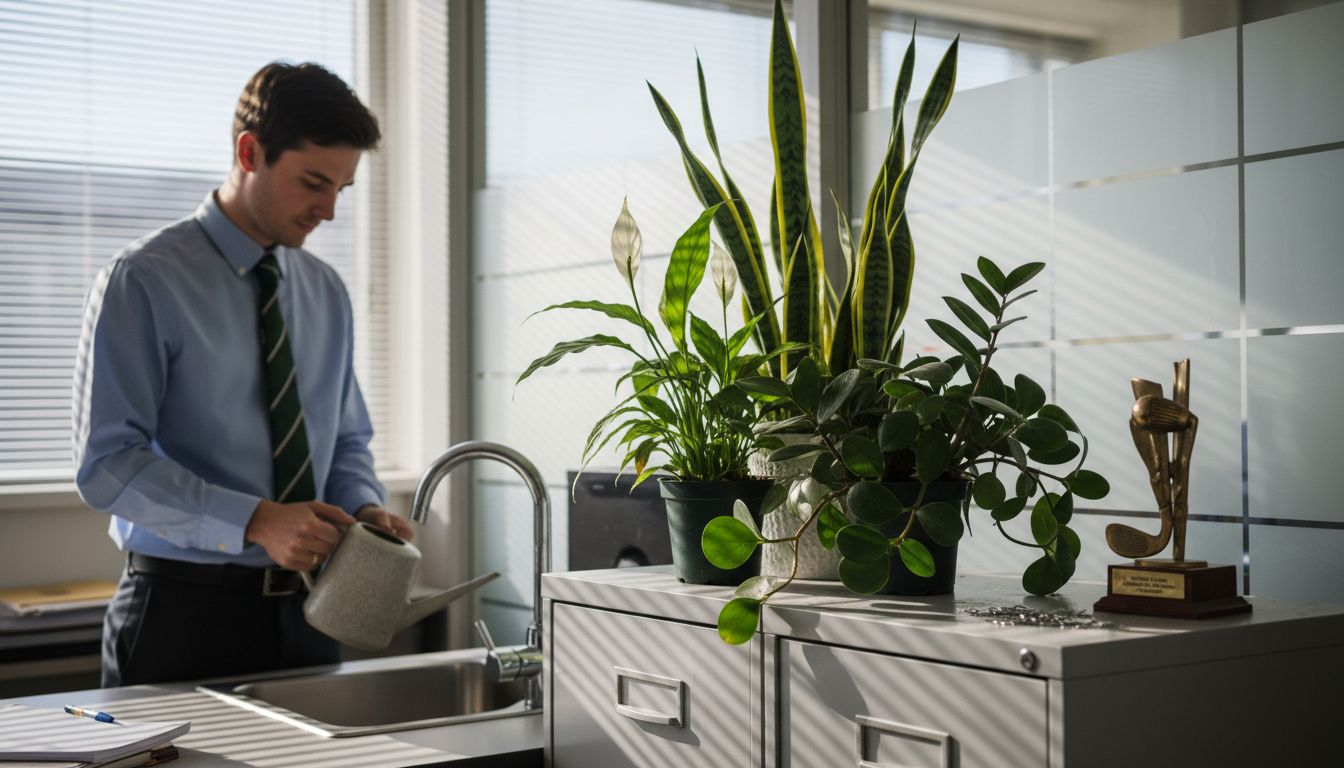
Pro tip: Start with 2-3 hardy plant varieties and observe their performance before expanding your office plant collection.
Step 3: Set up optimal planting and watering systems
Creating an effective watering system for your office plants goes beyond simply remembering to pour water occasionally. You need a strategic approach that ensures consistent moisture without risking overwatering or plant stress.
Consider implementing smart irrigation technologies that can revolutionize how you manage plant hydration. These innovative systems offer precise monitoring and automated care, perfect for busy office environments. Key components of an optimal watering setup include:
- Moisture sensors to track soil hydration levels
- Automated drip irrigation systems
- Wi-Fi enabled monitoring devices
- Mobile app controls for remote plant management
Water conservation and plant health are interconnected. Water-efficient irrigation methods can help you maintain plants with minimal waste. This means understanding each plant’s unique watering needs and creating a tailored approach that prevents both under and overwatering.
The secret to successful office plant care is consistency - your watering system should work smarter, not harder.
Group plants with similar water requirements together to simplify your maintenance routine. Some plants prefer morning watering, while others need less frequent but deeper hydration. By creating zones and using targeted watering techniques, you can ensure each plant receives exactly what it needs.
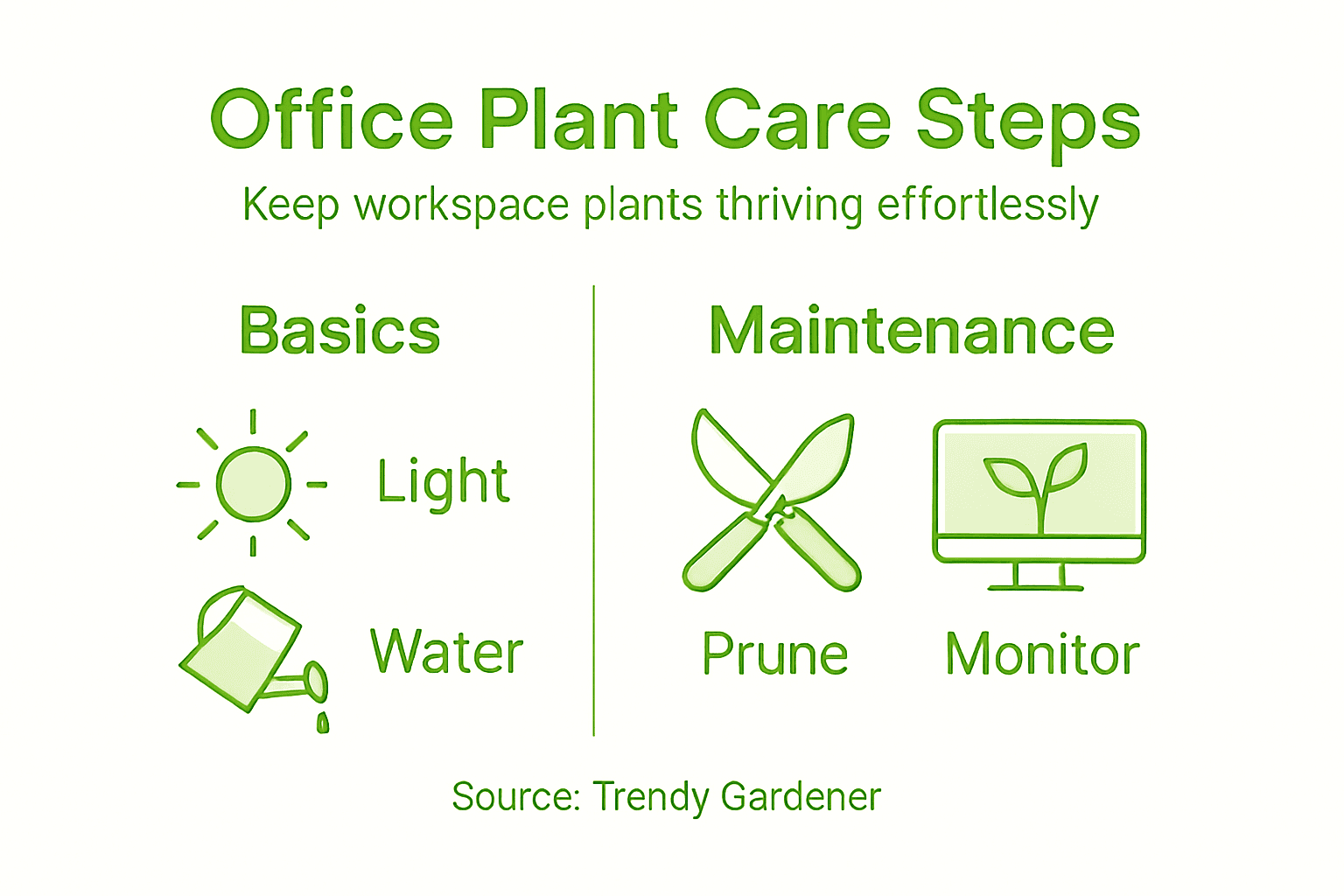
Pro tip: Invest in a digital moisture meter to take the guesswork out of watering and prevent potential plant health issues.
This table summarizes smart watering system technologies and their main business advantages:
| System Type | Primary Benefit | Ease of Use | Best For |
|---|---|---|---|
| Moisture Sensors | Prevents overwatering | Simple monitoring | Individual plant care |
| Drip Irrigation | Consistent hydration | Automated setup | Groups of plants |
| Wi-Fi Devices | Remote control | Highly convenient | Large or busy offices |
| App Controls | Data-driven insights | Intuitive apps | Tech-friendly workplace |
Step 4: Monitor growth and adjust care routine
Tracking the health and development of your office plants requires more than a casual glance. You need a systematic approach to understanding how your plants are responding to their environment and care routine.
Learn to recognize key indicators of plant health through careful observation. This involves monitoring multiple aspects of plant development beyond simple visual appearance. Critical growth monitoring elements include:
- Leaf color and texture as indicators of overall health
- Root development and mass
- Growth rate and new shoot production
- Response to current care practices
Indoor plant maintenance techniques require attentive seasonal adjustments. Different times of year demand unique care strategies. Winter might require reduced watering and less fertilization, while summer could necessitate more frequent hydration and increased light exposure.
Your plants are constantly communicating - learning their language is the key to successful long-term care.
Pay special attention to subtle changes that might signal stress. Leaf drooping, color shifts, or stunted growth are your plants’ way of telling you something needs adjustment. Regular check-ins and a willingness to adapt your care routine will keep your office greenery thriving.
Pro tip: Create a simple plant journal to track growth patterns, care adjustments, and seasonal changes for each of your office plants.
Step 5: Verify plant health and address common issues
Ensuring the long-term vitality of your office plants requires proactive health monitoring and swift intervention when problems arise. Think of yourself as a plant detective, always looking for subtle signs of distress or potential issues.
Utilize advanced plant pathogen detection techniques that leverage cutting-edge molecular biology and machine learning to diagnose plant health early. Key symptoms to watch for include:
- Unusual leaf discoloration
- Unexpected leaf dropping
- Stunted or irregular growth patterns
- Visible pest infestations
- Fungal or mold growth
Mobile-friendly plant diagnostic tools can help you quickly identify and address potential health issues. These resources provide comprehensive guidance on treating problems ranging from nutrient deficiencies to environmental stresses.
Early detection is your best defense - a keen eye can prevent minor issues from becoming major plant health crises.
Don’t panic if you notice problems. Most plant issues are treatable when caught early. Adjust watering, lighting, and nutrition based on your observations, and don’t hesitate to consult plant care experts if you’re unsure about a specific condition.
Pro tip: Take clear, well-lit photos of your plants every few weeks to create a visual health record and track subtle changes over time.
Elevate Your Office Plant Care with Expert Solutions
Office plant care can be challenging when it comes to balancing the perfect lighting, watering, and plant health monitoring described in this guide. Key pain points like choosing plants that thrive under artificial lighting and setting up smart watering systems are critical for creating a lively, healthy workspace. At Trendy Gardener, we understand these challenges and specialize in delivering tailored plant programs designed to meet these exact needs with style and reliability.
Transform your office environment effortlessly by partnering with Trendy Gardener. Our end-to-end services cover everything from consultation and plant selection to installation and ongoing care. Whether you want custom living walls or plant leasing programs, we ensure your workspace remains vibrant and stress-free so you can focus on your business. Discover how our expert solutions can bring life to your office today and enjoy plants that look exceptional on day one and thrive long-term. Visit us now and take the first step toward a healthier, more intentional office space.
Frequently Asked Questions
How do I evaluate the lighting conditions in my office for plant growth?
To evaluate lighting conditions, measure natural and artificial light exposure using a light meter or smartphone app. Record light intensity and duration throughout the day, noting how sunlight moves across your workspace.
What plants are suitable for low-light office environments?
Plants like Snake Plants, Parlor Palms, Money Trees, and Peace Lilies thrive in low-light conditions and are easy to care for. Start with 2-3 of these hardy varieties to see which perform best in your office.
How can I set up an effective watering system for my office plants?
Implement a watering system using moisture sensors to monitor soil hydration levels and consider automated drip irrigation for consistency. Aim for regular watering schedules based on each plant’s needs to ensure optimal health without overwatering.
What signs indicate that my office plants may be unhealthy?
Watch for unusual leaf discoloration, unexpected leaf dropping, stunted growth, or visible pests as key indicators of plant health issues. Address these concerns promptly by adjusting watering, lighting, and nutrition as necessary.
How can I successfully track the growth of my office plants?
Maintain a plant journal to track growth patterns, care adjustments, and seasonal changes for each plant. Regularly check for indicators of health, and note any needed changes in their environment or care routine.
What is the best way to address common issues with office plants?
Early detection of plant issues is crucial, so monitor your plants regularly for signs of stress. Take action immediately by adjusting care practices, such as watering or light exposure, to resolve problems before they escalate.
Recommended
- 7 Best Types of Indoor Plants for Offices to Elevate Space
- 7 Best Types of Indoor Plants for Offices to Elevate Space
- The Best Beginner Plants to Brighten Up Your Home Office
- Workspace Productivity with the Benefits of Live Plants
- Stiligt besöker Sweefs inspirerande utställning på Walborg Coworking | Stiligt