

Plant care tips for stores: boost boutique ambiance
Selecting the right plants for your boutique store requires balancing visual impact with maintenance demands tailored to typical retail constraints like limited natural light and staff capacity. Adding plants to boutique retail stores can increase customer dwell time by 15% and boost sales by up to 12%. This guide delivers actionable strategies to choose, maintain, and optimize plants that enhance your store environment while fitting your operational realities. You’ll learn practical techniques for watering, lighting, and care that prevent common pitfalls and keep your greenery thriving year-round.
Table of Contents
- How To Choose The Right Plants For Your Boutique Store
- Effective Watering And Maintenance Practices
- Lighting Optimization For In-Store Plants
- Choosing Between Low-Maintenance And High-Impact Plants
- Plant Leasing And Rental Options To Simplify Care
- Avoiding Common Plant Care Pitfalls In Boutique Stores
- Summary Comparison And Situational Plant Care Recommendations
- Enhance Your Boutique Store With Trendy Gardener Solutions
Key takeaways
| Point | Details |
|---|---|
| Selection criteria | Choose low-maintenance, size-appropriate plants that align with store aesthetics and staff capacity for optimal care efficiency. |
| Watering and maintenance | Consistent watering schedules and routine pruning prevent most plant health issues and prolong plant longevity. |
| Lighting optimization | Maximize natural light and use LED grow lights to boost plant growth rates and visual appeal significantly. |
| Plant type trade-offs | Low-maintenance plants save time but high-impact species dramatically enhance ambiance with greater care demands. |
| Leasing benefits | Plant leasing reduces upfront costs by 70% and includes professional maintenance to relieve staff workload. |
How to choose the right plants for your boutique store
Selecting plants that thrive in retail environments requires understanding your store’s specific lighting, space, and maintenance limitations. Most boutiques face challenges like fluorescent lighting, limited floor space, and staff focused on customer service rather than plant care.
Prioritize species that tolerate these conditions naturally. Low-maintenance species like snake plants and pothos are ideal for low light and infrequent watering in stores. These hardy varieties survive inconsistent care and still maintain attractive foliage that complements store displays.
Consider these selection criteria:
- Match plant size to available space without overwhelming product displays or customer pathways
- Align plant aesthetics with your brand identity to reinforce the shopping experience you want to create
- Evaluate air-purifying qualities as beneficial secondary features that improve indoor air quality
- Assess your team’s realistic capacity for daily watering, weekly pruning, and monthly deep cleaning
- Choose plants with forgiving care requirements if staff training time is limited
Understanding the role of indoor plants in retail environments helps you make strategic choices. Snake plants tolerate neglect and low light while pothos vines add vertical interest without demanding constant attention. These selections reduce care burden while delivering the ambiance benefits customers appreciate.
Effective watering and maintenance practices
Consistent care routines prevent the majority of plant health problems in retail settings. Most store plants fail due to irregular watering rather than inherent plant weaknesses.
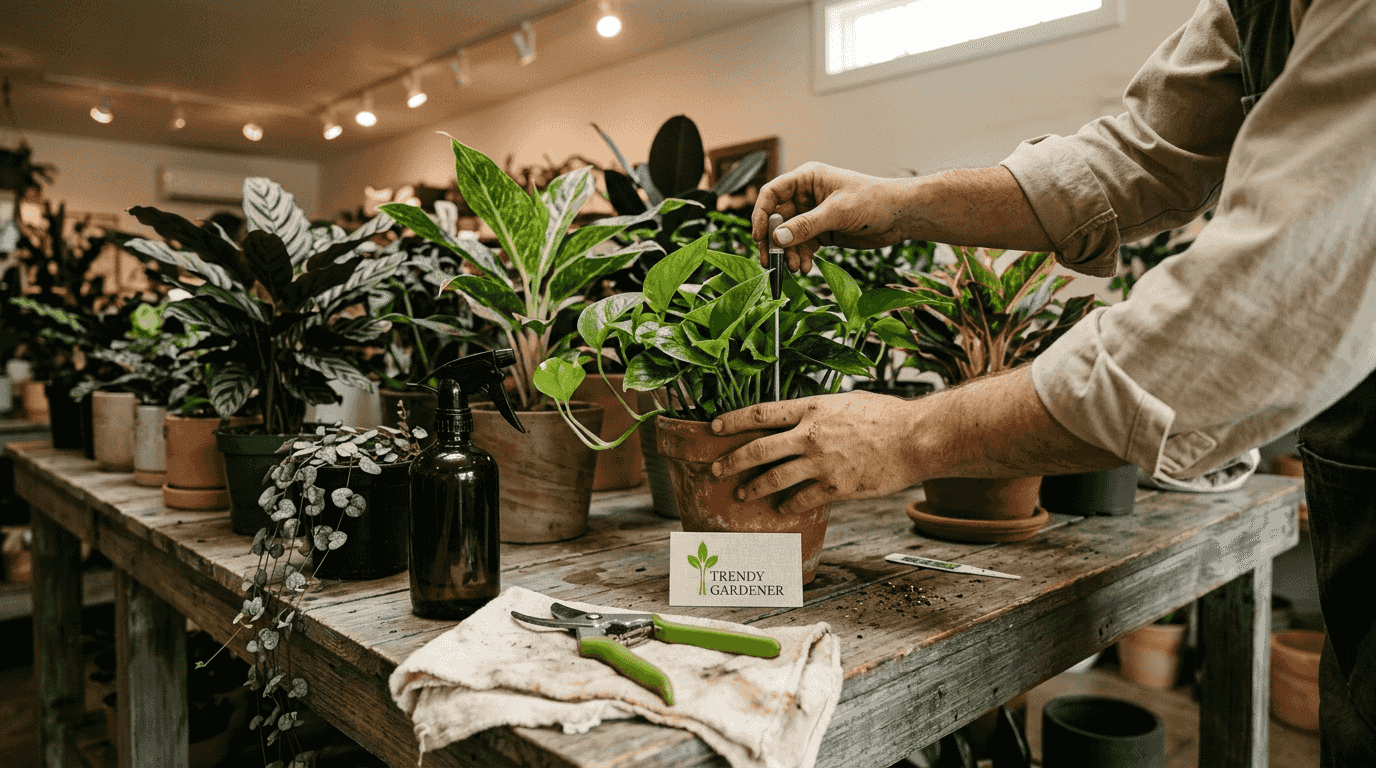
Establish moderate watering schedules based on each plant’s needs and your store’s humidity levels. Overwatering causes 60% of indoor plant deaths in stores. Check soil moisture before watering by inserting your finger two inches deep. Water only when soil feels dry at that depth to prevent root rot.
Implement these maintenance practices:
- Create a weekly watering schedule assigned to specific staff members for accountability
- Prune dead or yellowing leaves immediately to redirect plant energy to healthy growth
- Dust leaves monthly with a damp cloth to improve photosynthesis efficiency and appearance
- Monitor plants during daily opening routines for early pest or disease signs
- Document care activities in a simple log to identify patterns and adjust schedules
Routine pruning and dusting improve photosynthesis efficiency and overall plant vigor significantly. Leaves covered in dust can’t absorb light effectively, reducing growth rates and causing gradual decline. Simple cleaning takes minutes but extends plant lifespan substantially.
Pro Tip: Train all staff on basic watering signs like drooping leaves or dry soil texture. Multiple team members who can spot issues prevent extended care gaps during vacations or busy periods.
Follow the step by step plant maintenance guide iowa for detailed care protocols. Consistent maintenance schedules keep plants healthy and attractive with minimal daily time investment.
Lighting optimization for in-store plants
Lighting quality directly impacts plant growth rates, foliage color, and overall health in retail environments. Most boutique stores rely on fluorescent or LED retail lighting optimized for product display rather than plant needs.
Fluorescent lighting slows plant growth by 25% compared to natural or LED grow lights. This common retail lighting lacks the full spectrum plants need for photosynthesis, resulting in leggy growth and pale leaves over time.
Maximize natural light exposure where your store layout permits. Position plants near windows or glass doors where they receive indirect sunlight without temperature extremes. South-facing windows provide consistent bright light while north-facing windows offer gentler illumination suitable for low-light species.
Implement these lighting strategies:
- Install affordable LED grow lights above plants in darker store areas to boost growth dramatically
- Use adjustable fixtures that direct light precisely where plants need it most
- Position high-light plants like fiddle leaf figs near natural light sources and low-light species deeper in the store
- Rotate plants monthly if light distribution is uneven to ensure balanced growth on all sides
- Consider daylight-spectrum LED bulbs in existing fixtures as a cost-effective improvement
LED grow lights tailored for plant species boost growth rates significantly while consuming minimal electricity. Modern LED options are stylish enough to complement store aesthetics rather than looking industrial or temporary.
Pro Tip: Balance light needs with customer traffic flow. Place statement plants where lighting is optimal and they create natural focal points that guide customers through your space.
The ultimate guide to indoor plantscaping in Des Moines explains lighting techniques in greater detail. Strategic lighting optimization transforms struggling plants into thriving design elements.
Choosing between low-maintenance and high-impact plants
Balancing visual impact with care requirements is the central decision for boutique store plant programs. Your choice depends on staff availability, aesthetic priorities, and operational constraints.
Low-maintenance plants like snake plants and pothos require minimal intervention but offer modest visual drama. They tolerate inconsistent care and survive in challenging conditions, making them ideal for stores with limited staff time. These species deliver reliable greenery without demanding daily attention.
High-impact plants like fiddle leaf figs or monstera dramatically boost ambiance but need frequent watering and specific care. Their large, dramatic foliage creates memorable visual moments that customers photograph and share. Low-maintenance plants require 50% less watering and care time but offer 30% less visual impact than high-impact species.
Consider staff training and workload when opting for high-maintenance plants. A fiddle leaf fig requires consistent watering schedules, humidity monitoring, and careful positioning to prevent leaf drop. If your team already feels stretched, the extra care burden may outweigh aesthetic benefits.
| Plant Type | Watering Frequency | Weekly Care Time | Visual Impact | Best For |
|---|---|---|---|---|
| Snake Plant | Every 2-3 weeks | 5 minutes | Moderate | Limited staff, low light areas |
| Pothos | Weekly | 10 minutes | Moderate | Versatile placement, easy care |
| Fiddle Leaf Fig | Twice weekly | 25 minutes | High | Statement pieces, dedicated care |
| Monstera | Twice weekly | 20 minutes | High | Instagram-worthy displays |
The decision depends on staff availability, aesthetic goals, and operational constraints. Stores prioritizing maximum visual impact with trained staff should choose high-maintenance statement plants. Boutiques with small teams benefit more from low-maintenance species that still enhance ambiance reliably.
Understanding the role of indoor plants in retail helps clarify which approach fits your specific situation. You can also mix both types by placing low-maintenance plants throughout the store and one high-impact specimen as a focal point.
Plant leasing and rental options to simplify care
Leasing programs offer professional-quality plants with included maintenance, eliminating the care burden entirely. This approach works exceptionally well for boutiques prioritizing aesthetics without expanding staff responsibilities.
Leasing reduces initial plant procurement costs by 70% and ensures expert maintenance reducing staff workload. You pay a monthly fee that covers plant selection, installation, regular watering, pruning, pest control, and plant replacement if needed.
Leasing offers substantial upfront cost savings making professional-quality plants accessible. Instead of investing thousands in purchasing plants outright, you spread costs across manageable monthly payments. This preserves capital for other business priorities while still enjoying premium greenery.
Key leasing benefits include:
- Professional plant selection matched to your specific lighting and space conditions
- Scheduled maintenance visits by trained technicians who handle all watering, pruning, and care
- Automatic plant replacement if specimens decline or no longer fit your aesthetic
- Flexible contracts that adjust to store size changes or seasonal needs
- No equipment purchases for specialized care tools or grow lights
Leasing is ideal for stores with small teams or limited time for plant care. Your staff focuses entirely on customers while experts ensure plants always look pristine. This arrangement guarantees consistent quality without requiring internal plant knowledge.
You can combine leasing with in-house care for customizable plant management. Lease high-maintenance statement plants that receive professional care while maintaining simpler species yourself. This hybrid approach optimizes costs while ensuring critical display plants never decline.
The indoor plantscaping guide Des Moines details leasing program structures. This option transforms plant care from a staff burden into a reliable service.
Avoiding common plant care pitfalls in boutique stores
Most plant failures in retail result from preventable mistakes rather than difficult plants. Understanding common pitfalls helps you implement systems that keep plants thriving long term.
80% of plant decline in retail results from inconsistent watering, lighting neglect, and pruning omission. These issues accumulate gradually until plants look unhealthy, requiring expensive replacement.
Avoid overwatering by establishing staff-trained watering schedules. More plants die from too much water than too little. Soggy soil suffocates roots and promotes fungal diseases that kill plants quickly. Always check soil moisture before adding water.
Common mistakes to prevent:
- Skipping regular dusting allows dust buildup that blocks light absorption and slows growth dramatically
- Ignoring early pest signs like sticky leaves or tiny insects leads to infestations requiring plant removal
- Placing plants in high-traffic areas where they get bumped causes physical damage and stress
- Using cold water directly from the tap shocks roots and causes leaf drop in sensitive species
- Forgetting to rotate plants results in lopsided growth leaning toward light sources
Ensure plants receive adequate lighting or use supplemental grow lights. Plants positioned too far from windows gradually decline even with perfect watering. Pale new growth and dropping lower leaves signal insufficient light.
Include pruning and dusting in regular maintenance routines. Schedule these tasks weekly during slow periods so they become automatic rather than forgotten. Clean, well-pruned plants look intentional and cared for, reinforcing your brand’s attention to detail.
Pro Tip: Schedule monthly plant health checks integrated with store cleaning routines. Designate one staff member to inspect all plants thoroughly, checking for pests, disease, or care issues before they become visible to customers.
The plant maintenance guide Iowa provides detailed troubleshooting steps. Catching issues early prevents costly plant replacement and maintains consistent store ambiance.
Summary comparison and situational plant care recommendations
Choosing the optimal plant care approach requires evaluating your specific constraints and priorities. This comparison clarifies trade-offs between different strategies.
| Factor | Low-Maintenance Plants | High-Impact Plants | Plant Leasing | In-House Care |
|---|---|---|---|---|
| Upfront Cost | $50-150 per plant | $150-400 per plant | $0 upfront | $50-400 per plant |
| Monthly Cost | $0 | $0 | $75-200 per month | $0 |
| Staff Time | 5-10 min/week | 20-30 min/week | 0 min | Varies |
| Visual Impact | Moderate | High | High | Varies |
| Expertise Needed | Minimal | Moderate | None | Moderate |
| Replacement Risk | Low | Moderate | None (included) | Moderate |
Recommend snake plants for stores with minimal staff and low attention. These virtually indestructible plants tolerate weeks of neglect and still maintain attractive vertical foliage. They work perfectly in corners or flanking displays where dramatic impact isn’t the priority.
Suggest fiddle leaf figs for boutiques prioritizing visual impact despite higher care needs. These statement plants create Instagram-worthy moments that customers share, generating organic social media exposure. Position them prominently where their dramatic leaves become part of the shopping experience.
Advocate plant leasing for budget-conscious stores to balance cost and professional care. Right plant choice and care approach depend on budget, staff skill, lighting, and store size. Leasing eliminates guesswork and ensures plants always look exceptional without internal expertise.
Practical next steps:
- Assess your current lighting conditions by observing natural light patterns throughout the day
- Calculate realistic staff time available for plant care weekly
- Start with 2-3 low-maintenance plants to build confidence before expanding
- Document watering and care in a simple log to identify what works
- Consider leasing for high-visibility areas while maintaining simpler plants yourself
The plantscaping guide Des Moines offers detailed implementation strategies. Matching your approach to operational realities ensures plants enhance rather than burden your boutique operations.
Enhance your boutique store with Trendy Gardener solutions
Trendy Gardener delivers professional plant programs designed specifically for retail environments where aesthetics and reliability matter equally. Our customizable solutions ensure your store always features healthy, striking greenery without burdening your team.
Our 24 pocket wall mounted living wall system creates dramatic vertical gardens perfect for boutique feature walls. This system transforms blank walls into living art that customers remember and photograph. For larger installations, the recirculating living wall system provides automated irrigation that maintains consistent moisture levels without daily staff attention.
Leasing programs reduce upfront investment while guaranteeing expert care. Our technicians handle selection, installation, watering, pruning, and seasonal refreshes so your plants always look pristine. You focus on customers while we manage every plant care detail.
Visit Trendy Gardener to explore living walls, leasing options, and maintenance programs tailored to Des Moines boutique stores.
FAQ
Which plants require the least maintenance for boutique stores?
Snake plants and pothos require minimal watering and tolerate low light, making them ideal for low-maintenance boutique environments. They reduce staff time needed for plant care to just 5-10 minutes weekly while still providing attractive greenery that enhances store ambiance.
How can I optimize lighting for plants with limited natural light?
Use LED grow lights tailored for plant species to boost growth efficiently in darker store areas. Maximize any available natural light by positioning plants near windows and rotate them monthly to ensure balanced growth on all sides.
Are plant leasing services cost-effective for small boutique stores?
Leasing can reduce upfront costs by up to 70% compared to purchasing plants outright. It includes professional maintenance, easing staff workload and ensuring plant health, making it highly cost-effective for stores with limited teams or plant care expertise.
How often should I water plants in my boutique store?
Watering frequency depends on plant species, pot size, and store conditions but typically ranges from weekly to every 2-3 weeks. Always check soil moisture two inches deep before watering to prevent overwatering, which causes 60% of indoor plant deaths in retail environments.
What are the biggest mistakes boutique owners make with plant care?
The most common mistakes include overwatering, inadequate lighting, skipping regular pruning and dusting, and inconsistent care schedules. These issues account for 80% of plant decline in retail settings but are easily preventable with proper staff training and simple maintenance routines.