

Role of Plant Care in Offices – Impact on Wellbeing
Every office manager in Des Moines faces the challenge of keeping workspaces inviting and supportive for employees. The search for better well-being and productivity often leads to biophilic design, where caring for office plants plays a vital role. Backed by scientific studies, even small indoor plants offer significant relief for stress and fatigue, while thoughtfully maintained greenery can improve air quality and job satisfaction. Discover why effective plant care programs are essential for healthy, productive workplaces.
Table of Contents
- What Plant Care Means for Modern Offices
- Biophilic Design Principles and Employee Wellbeing
- Types of Office Plant Care Programs
- Key Elements of Effective Plant Maintenance
- Common Pitfalls and How to Avoid Them
Key Takeaways
| Point | Details |
|---|---|
| Impact on Workplace Wellness | Integrating plants improves air quality, reduces stress, and enhances employee satisfaction. |
| Biophilic Design | This design approach fosters meaningful connections with nature, improving overall employee well-being and productivity. |
| Plant Care Programs | Tailored maintenance strategies, whether comprehensive or self-managed, are essential for vibrant office environments. |
| Proactive Maintenance | Regular monitoring and preventive actions are keys to avoiding common pitfalls and ensuring plant health. |
What Plant Care Means for Modern Offices
Plant care in modern offices transcends simple decoration - it represents a strategic approach to enhancing workplace well-being and productivity. Scientific studies confirm that intentional integration of plants can transform sterile work environments into dynamic, health-promoting spaces.
Modern plant care involves more than occasional watering. It requires a comprehensive understanding of how vegetation impacts workplace dynamics. Key aspects include:
- Purposeful plant selection matching specific office environmental conditions
- Regular maintenance and monitoring of plant health
- Strategic placement to maximize psychological and physiological benefits
- Understanding each plant’s unique care requirements
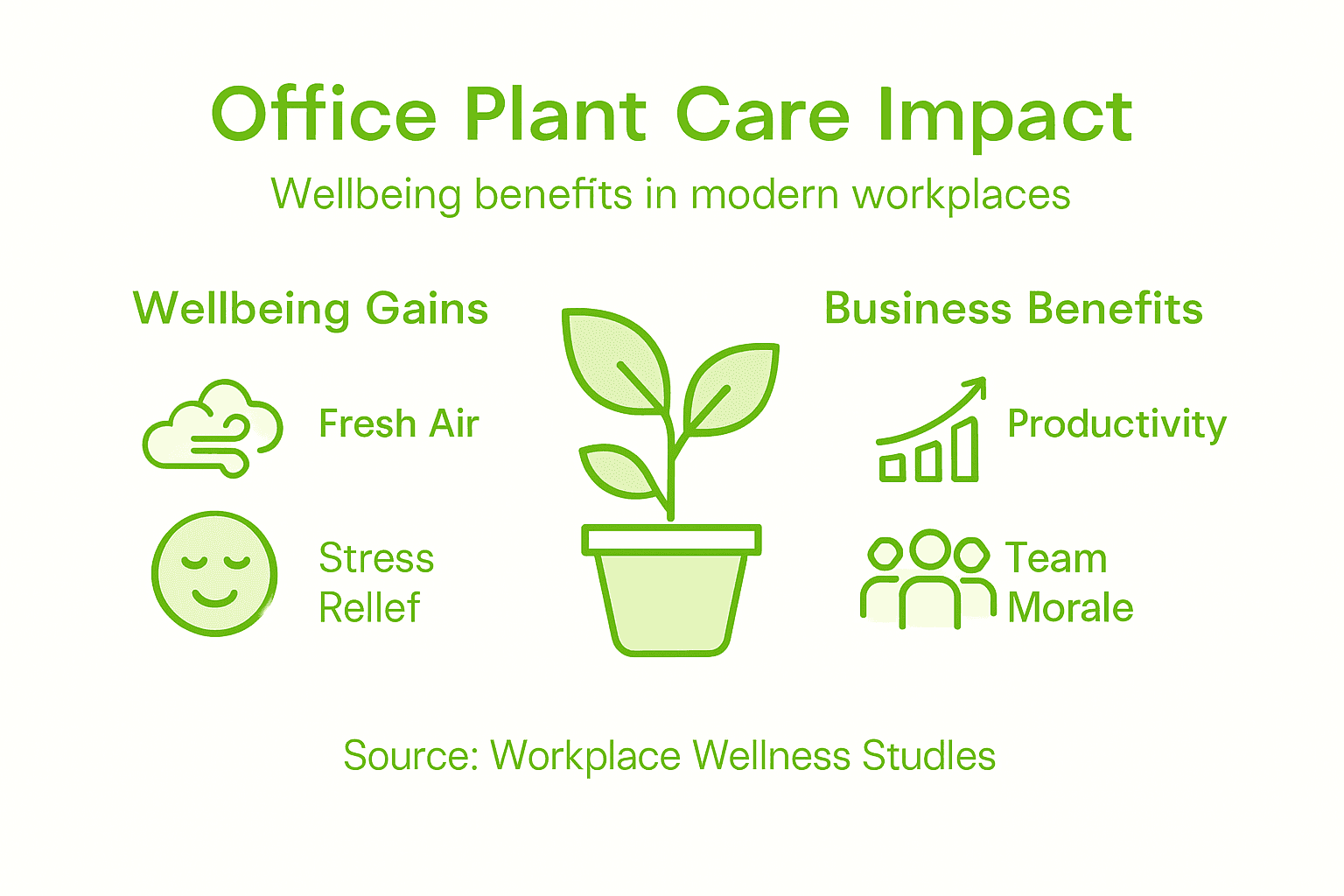
The impact of thoughtful plant care extends far beyond aesthetics. Research demonstrates that well-maintained office plants directly contribute to improved air quality, reduced stress levels, and increased employee satisfaction. These living elements create microenvironments that support mental and physical wellness.
Professional plant care transforms workspaces from mere functional areas into holistic environments that nurture human potential. By treating plants as integral workplace components rather than decorative afterthoughts, organizations can create more engaging, restorative professional settings.
Here’s how plant care initiatives impact key workplace outcomes:
| Workplace Outcome | Effect of Plant Care | Business Benefit |
|---|---|---|
| Air Quality | Reduces pollutants, improves O2 | Fewer sick days, better focus |
| Employee Satisfaction | Enhances mood, sense of comfort | Higher retention, team morale |
| Stress Reduction | Calms through biophilic effects | Lower absenteeism, productivity |
| Productivity | Supports cognitive performance | Increased output, innovation |
Pro tip: Develop a standardized plant care protocol that assigns specific maintenance responsibilities and schedules to ensure consistent, high-quality vegetation management in your office environment.
Biophilic Design Principles and Employee Wellbeing
Biophilic design represents a revolutionary approach to workplace environments that goes beyond traditional interior design. Systematic research reveals that integrating natural elements can profoundly transform employee experiences and organizational productivity.
The core principles of biophilic design center on creating meaningful connections between humans and natural environments within professional spaces. Key elements include:
- Direct visual access to greenery and natural landscapes
- Incorporation of natural materials like wood and stone
- Strategic use of natural lighting and ventilation
- Design that mimics organic shapes and patterns
- Multisensory experiences that evoke natural environments
Workplace wellness emerges as a critical outcome of thoughtful biophilic design. Nature connectedness research demonstrates that intentional integration of natural elements directly impacts employee vigor, job satisfaction, and psychological resilience.

By transforming sterile office environments into dynamic, nature-inspired spaces, organizations can create workplaces that not only support productivity but also nurture employee mental and emotional well-being. The strategic implementation of biophilic design principles represents an investment in human potential and organizational effectiveness.
Pro tip: Conduct a comprehensive workplace assessment to identify specific opportunities for introducing biophilic design elements that align with your organization’s unique spatial constraints and cultural dynamics.
Types of Office Plant Care Programs
Office plant care programs represent sophisticated strategies for maintaining vibrant workplace environments. Comparative studies reveal that organizations must develop nuanced approaches tailored to their unique workspace characteristics and employee needs.
These programs typically fall into several distinct categories:
-
Comprehensive Maintenance Programs
- Full-service professional plant management
- Regular scheduled maintenance
- Systematic health monitoring
-
Self-Managed Plant Care Systems
- Employee-driven plant care responsibilities
- Minimal external professional intervention
- Training and basic support provided
-
Hybrid Care Models
- Combination of professional and internal maintenance
- Periodic professional assessments
- Shared responsibility between facility management and employees
Strategic plant selection plays a crucial role in determining program effectiveness. Different office environments require specialized approaches, considering factors like lighting conditions, humidity levels, and available maintenance resources. Some organizations opt for low-maintenance succulent collections, while others invest in more complex tropical plant ecosystems.
Successful plant care programs go beyond simple aesthetic considerations. They represent integrated wellness strategies that contribute to improved workplace atmosphere, air quality, and employee psychological comfort. The most effective programs view plants not as decorative elements, but as living components of the workplace ecosystem.
Compare different office plant care programs by involvement and resources:
| Program Type | Professional Involvement | Employee Engagement | Resource Requirement |
|---|---|---|---|
| Comprehensive Maintenance | High, scheduled services | Minimal, mostly passive | Significant financial budget |
| Self-Managed System | Low, occasional guidance | High, daily interaction | Moderate, relies on employees |
| Hybrid Care Model | Periodic professional checks | Shared responsibility | Balanced between both sources |
Pro tip: Conduct a comprehensive workplace plant audit to determine the most suitable care program that balances maintenance complexity, employee engagement, and organizational resources.
Key Elements of Effective Plant Maintenance
Plant maintenance in office environments requires a strategic and multifaceted approach. Comprehensive maintenance strategies are essential for sustaining healthy and vibrant workplace greenery.
Critical elements of effective plant maintenance include:
-
Environmental Monitoring
- Precise temperature tracking
- Humidity level management
- Light exposure assessment
-
Systematic Care Protocols
- Regular watering schedules
- Nutrient management
- Periodic pruning and cleaning
-
Proactive Health Management
- Early pest detection
- Disease prevention techniques
- Stress indicator recognition
Integrated maintenance frameworks demand more than routine care. Successful maintenance approaches emphasize continuous improvement, risk assessment, and performance measurement to ensure plants remain functional and aesthetically pleasing workplace assets.
Ultimately, effective plant maintenance transforms greenery from passive decorative elements into dynamic contributors to workplace wellness. By implementing comprehensive care strategies, organizations can create living environments that support employee health, productivity, and psychological comfort.
Pro tip: Develop a standardized plant maintenance checklist that includes detailed tracking of environmental conditions, care interventions, and performance metrics to ensure consistent and effective plant management.
Common Pitfalls and How to Avoid Them
Office plant management requires vigilance and strategic understanding. Common plant care challenges can significantly impact workplace greenery health and aesthetic appeal.
Frequent office plant maintenance pitfalls include:
-
Watering Mistakes
- Overwatering leading to root rot
- Inconsistent moisture levels
- Failing to understand plant-specific hydration needs
-
Environmental Stress Factors
- Inadequate light exposure
- Extreme temperature fluctuations
- Poor air circulation
-
Neglected Health Monitoring
- Delayed pest detection
- Ignoring early disease symptoms
- Lack of proactive maintenance
Preventive strategies are crucial for mitigating these challenges. Understanding each plant’s unique requirements helps create a resilient indoor ecosystem that maintains visual appeal and supports workplace wellness. Consistent observation, targeted interventions, and adaptive care protocols can transform potential pitfalls into opportunities for thriving office vegetation.
Successful plant management demands more than reactive solutions. By anticipating potential issues and implementing systematic monitoring, organizations can create robust green environments that contribute positively to workplace dynamics and employee well-being.
Pro tip: Develop a standardized plant health tracking system with digital logs for monitoring individual plant conditions, interventions, and environmental parameters to enable proactive and precise maintenance.
Elevate Your Office Wellbeing with Expert Plant Care Solutions
The article highlights how thoughtful plant care transforms office spaces into wellness-enhancing environments by improving air quality, reducing stress, and boosting productivity. Many workplaces struggle with consistent maintenance, tailored plant selection, and integrating biophilic design principles that truly connect employees to nature. Achieving these goals requires a strategic partner who understands the unique demands of commercial settings and can deliver reliable, expert care.
At Trendy Gardener, we specialize in creating intentional and vibrant workplaces through end-to-end plant programs built around expert plant care and biophilic design. Whether you need living walls, custom moss installations, or a tailored plant leasing program with ongoing maintenance, our solutions are designed to keep your office greenery thriving and your employees inspired. Discover how our premium services bring lasting benefits to your space and support wellbeing every day.
Start nurturing your office environment today with the leading interior plantscaping partner.
Explore our Interior Plant Styling and Staging options and learn how professional plant care can transform your workplace. Visit Trendy Gardener now to schedule a consultation and take the first step toward a healthier, more productive office atmosphere.
Frequently Asked Questions
What are the benefits of having plants in the office?
Plants improve air quality, reduce stress levels, and increase employee satisfaction, leading to better overall workplace productivity and well-being.
How often should I water office plants?
Watering frequency depends on the type of plant and environmental conditions. Generally, monitor soil moisture and establish a consistent schedule to prevent over or under-watering.
What factors should I consider when selecting plants for an office?
Consider lighting conditions, humidity levels, and the maintenance needs of each plant. Choose species that adapt well to indoor environments and require varying degrees of care.
How can I implement a successful plant care program in my office?
Start by assessing your office environment, selecting appropriate plants, and establishing a maintenance schedule. Involve employees in care responsibilities and consider professional assistance for comprehensive programs.
Recommended
- Role of Indoor Plants in Enhancing Productivity
- The Power of Office Plants: Enhance Your Workspace with Nature’s Touch
- The Power of Office Plants: Enhance Your Workspace with Nature’s Touch
- Office Plant Care Guide for Healthy and Lively Workspaces
- Office Carpet Cleaning Frequency: Best Practices for 2025 - Yarra Valley Carpet Cleaning