


Role of Plant Care in Elevated Interiors
For many designers in suburban Iowa, incorporating living greenery into upscale interiors is no longer just about looks. Understanding the unique ecological requirements of indoor plants is crucial when natural light and air circulation vary from project to project. Innovative plant care transforms static décor into dynamic, health-enhancing features that support modern biophilic design goals. This resource highlights tailored strategies for integrating, maintaining, and optimizing plantscapes that thrive in both high-end residential and commercial settings.
Table of Contents
- Defining Plant Care In Interior Spaces
- Types Of Indoor Plant Installations
- How Proper Plant Care Impacts Design
- Maintenance Responsibilities And Best Practices
- Common Pitfalls And Professional Solutions
Key Takeaways
| Point | Details |
|---|---|
| Understand Plant Requirements | Successful interior plant care involves recognizing each species’ light, temperature, humidity, and soil needs. Adapting to these factors is essential for thriving indoor ecosystems. |
| Select Appropriate Installations | Choosing the right type of indoor plant installation enhances both the aesthetic and functional qualities of a space. Consider factors such as available light and space layout. |
| Implement Ongoing Maintenance | A structured maintenance routine is vital to ensure plant health. Regular tasks should be integrated into design strategies to support the longevity of indoor greenery. |
| Avoid Common Mistakes | Awareness of frequent pitfalls, such as overwatering and poor drainage, can prevent serious issues. Proactive assessment and adjustments are key to maintaining healthy plants. |
Defining Plant Care in Interior Spaces
Plant care in interior spaces represents a sophisticated approach to integrating living greenery into design environments. More than simply placing vegetation, it involves understanding the unique ecological requirements of plants within controlled indoor settings. Interior plant maintenance demands strategic consideration of environmental factors that differ dramatically from natural outdoor habitats.
Indoor plant care fundamentally requires addressing critical environmental parameters:
- Light Management: Understanding specific light requirements for each plant species
- Temperature Regulation: Maintaining consistent ambient temperatures
- Humidity Control: Creating appropriate moisture levels for plant survival
- Soil Quality: Using specialized indoor potting mixes
- Nutrient Supplementation: Providing targeted fertilization strategies
Understanding indoor plant ecosystems involves recognizing that commercial and residential interior spaces present challenging growing conditions. These environments typically feature low light tolerance, constant temperature ranges, and limited air circulation. Successful plant care requires selecting species specifically adapted to these constraints, transforming interior spaces into living, breathing ecosystems.
Pro tip: Select plants not just for aesthetic appeal, but for their demonstrated ability to thrive in specific indoor environmental conditions.
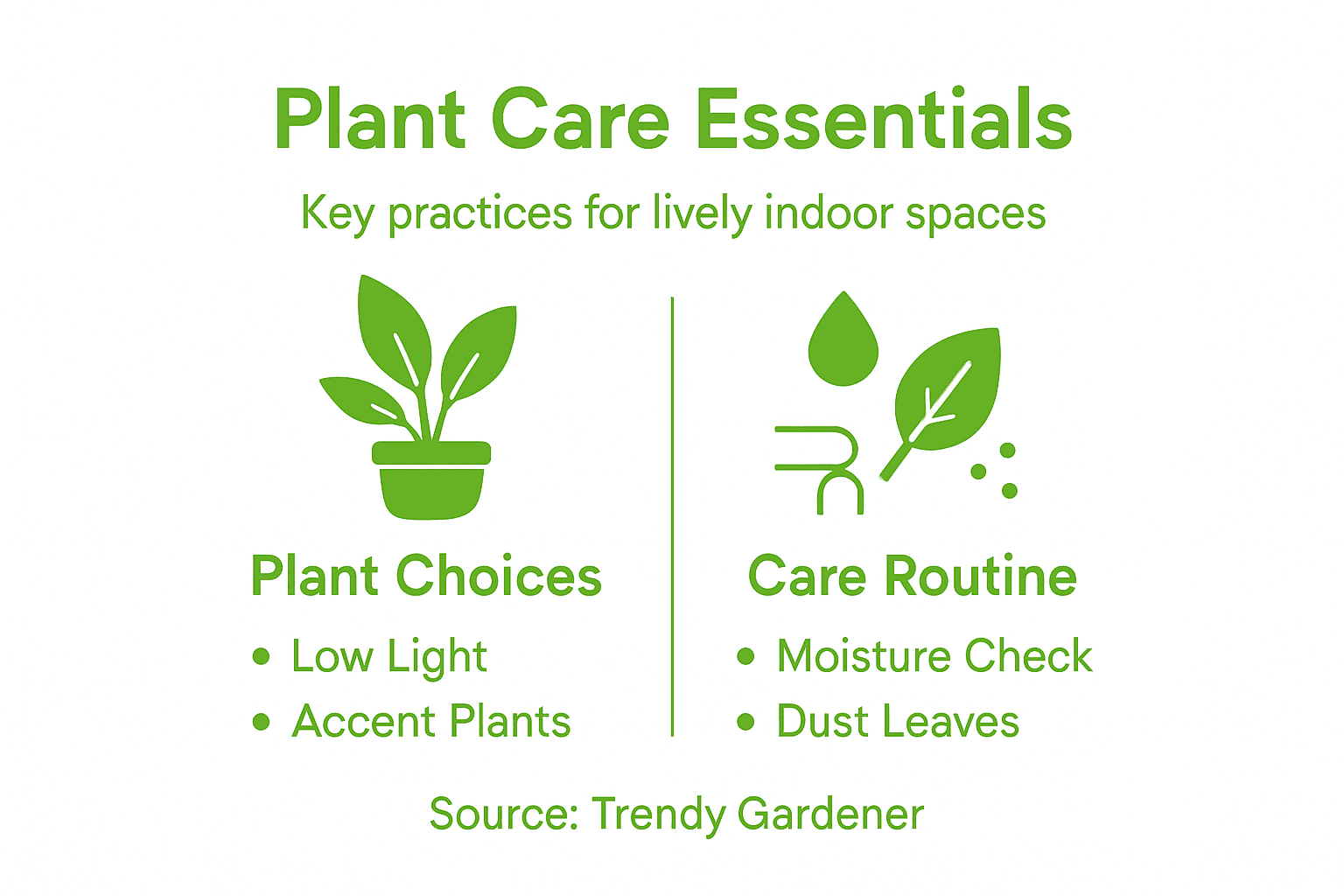
Types of Indoor Plant Installations
Indoor plant installations represent a sophisticated approach to integrating vegetation into architectural spaces, transforming interiors into dynamic, living environments. Vertical garden designs have emerged as a cutting-edge method for maximizing green spaces within limited square footage, offering designers unprecedented flexibility in plant integration.
The primary types of indoor plant installations include:
- Live Plant Walls: Large-scale vertical gardens covering entire wall surfaces
- Suspended Botanical Displays: Hanging plant arrangements that create visual depth
- Container Plant Collections: Strategic groupings of potted plants in specific design configurations
- Architectural Tree Installations: Integrated indoor trees as focal design elements
- Modular Green Screens: Movable plant partitions that define spatial boundaries
Indoor vertical gardens offer unique advantages for commercial and residential spaces. These installations not only enhance aesthetic appeal but also provide significant environmental benefits, including improved air quality, sound absorption, and psychological well-being. Modern design approaches increasingly view plants as integral architectural elements rather than mere decorative additions.
Here’s a summary comparing the main types of indoor plant installations and their ideal use case:
| Installation Type | Best For | Space Requirements | Notable Advantages |
|---|---|---|---|
| Live Plant Walls | Large commercial interiors | Broad vertical areas | Maximizes greenery, dramatic effect |
| Suspended Botanical Displays | Modern residential or offices | High ceilings | Creates visual depth, saves floor space |
| Container Plant Collections | Homes and small offices | Flexible, movable | Easy to rearrange, versatile |
| Architectural Tree Install. | Lobbies and atriums | Spacious floor area | Provides striking focal point |
| Modular Green Screens | Open-plan offices, studios | Adjustable, partition | Defines zones, mobile structure |
Pro tip: Consider the specific microclimate and lighting conditions of your space before selecting an indoor plant installation type.
How Proper Plant Care Impacts Design
Design success hinges critically on the health and vitality of interior plant installations. Plant care strategies directly influence the aesthetic and functional quality of interior environments, transforming vegetation from mere decorative elements into living design components that evolve and interact with architectural spaces.
Key design impacts of proper plant care include:
- Visual Consistency: Maintaining uniform plant health and appearance
- Spatial Definition: Creating dynamic boundaries and visual interest
- Aesthetic Longevity: Ensuring plants remain vibrant and structurally sound
- Environmental Performance: Supporting air quality and acoustic moderation
- Psychological Well-being: Contributing to occupant comfort and mood
Indoor plant management requires meticulous attention to environmental conditions that support plant vitality. Designers must consider factors like light exposure, humidity levels, temperature ranges, and nutrient availability to create sustainable interior ecosystems. Proper care transforms plants from static decorative elements into dynamic, breathing design features that respond and adapt to their architectural context.

Pro tip: Develop a comprehensive maintenance protocol that integrates plant care directly into your design strategy, treating plants as living architectural elements.
Maintenance Responsibilities and Best Practices
Successful interior plant management demands a strategic and comprehensive approach to ongoing care. Indoor plant maintenance requires systematic attention to multiple environmental and biological factors that ensure plant health and aesthetic performance in controlled interior spaces.
Key maintenance responsibilities include:
- Precise Watering: Monitoring individual plant moisture requirements
- Light Management: Strategically positioning plants for optimal exposure
- Climate Control: Maintaining consistent temperature and humidity
- Pest Prevention: Regular inspection and proactive intervention
- Nutritional Support: Implementing targeted fertilization strategies
- Structural Maintenance: Pruning, cleaning, and supporting plant growth
Plant care routines must be tailored to specific plant species and their unique environmental needs. Designers and caretakers should develop comprehensive maintenance protocols that consider daily, weekly, and monthly tasks, transforming plant care from a reactive to a proactive discipline. This approach ensures plants remain vibrant, healthy, and integral to the overall design aesthetic.
Pro tip: Create a detailed plant care calendar that documents specific maintenance requirements for each plant in your interior installation.
Common Pitfalls and Professional Solutions
Interior plant installations often encounter complex challenges that can compromise their aesthetic and functional integrity. Common plant care mistakes reveal systemic issues that frequently undermine even the most well-intentioned design strategies, requiring sophisticated diagnostic and preventative approaches.
Frequent plant care pitfalls include:
- Overwatering: Causing root rot and fungal growth
- Incorrect Lighting: Resulting in stunted growth or plant decline
- Poor Drainage: Creating environments conducive to disease
- Inconsistent Humidity: Triggering stress responses in sensitive species
- Inappropriate Soil Selection: Limiting nutrient absorption and root development
- Neglectful Pest Management: Allowing uncontrolled infestations
Professional plant care solutions demand a holistic understanding of plant biology, environmental conditions, and proactive maintenance strategies. Design professionals must develop nuanced intervention protocols that address specific plant requirements, transforming potential vulnerabilities into opportunities for robust, resilient interior ecosystems that maintain aesthetic excellence and biological health.
This table consolidates common interior plant care mistakes with brief solutions:
| Pitfall | Risk/Consequence | Recommended Solution |
|---|---|---|
| Overwatering | Causes root rot, fungal growth | Use moisture meters for guidance |
| Inadequate Lighting | Leads to stunted plant growth | Select species for light level |
| Poor Drainage | Increases disease susceptibility | Use pots with drainage holes |
| Inconsistent Humidity | Triggers plant stress | Install humidifiers, monitor air |
| Neglectful Pest Mgmt | Rapid pest infestations | Routine inspections, prompt action |
Pro tip: Implement a quarterly plant health assessment to identify and address potential issues before they become critical maintenance challenges.
Elevate Your Interior Spaces with Expert Plant Care and Design
The article highlights the challenges of maintaining thriving indoor plants in controlled environments where light, humidity, and soil conditions often fall short. Many struggle with overwatering, insufficient lighting, and inconsistent humidity that undermine the beauty and health of indoor plant installations. These common pitfalls threaten the lasting impact and vitality that plants bring to elevated interiors. The goal is to transform plants from simple decorations into flourishing living elements that enhance atmosphere, improve air quality, and boost well-being.
At Trendy Gardener, we specialize in solving these very challenges by delivering comprehensive indoor plant styling and staging and bespoke living walls that are thoughtfully designed and expertly maintained. We understand how critical precise watering, light management, and ongoing plant care protocols are to preserve visual consistency and spatial definition in your interiors. Our end-to-end plant programs include consultation, sourcing, installation, and meticulous maintenance so your plants continue to thrive and elevate your space long after installation.
Transform your interiors into vibrant, intentional environments today. Visit Trendy Gardener to explore how our premium biophilic design solutions can bring your elevated interior visions to life with healthy, flourishing greenery that captivates on day one and every day after.
Frequently Asked Questions
What are the key environmental factors to consider for indoor plant care?
Proper indoor plant care involves managing light levels, temperature regulation, humidity control, soil quality, and nutrient supplementation to create a sustainable environment for plants.
How do indoor plant installations improve design aesthetics?
Indoor plant installations enhance aesthetics by adding greenery, creating visual depth, defining spaces, and contributing to the overall mood and comfort of the interior environment.
What are the best practices for maintaining indoor plants?
Best practices for indoor plant maintenance include precise watering, strategic positioning for light exposure, temperature and humidity control, regular pest inspections, targeted fertilization, and structural maintenance like pruning.
What common mistakes should be avoided in indoor plant care?
Common mistakes include overwatering, inadequate lighting, poor drainage, inconsistent humidity, inappropriate soil selection, and neglectful pest management, which can lead to plant health issues and aesthetic decline.