

Sustainable plant programs: big impact for Iowa interiors
Most people treat indoor plants as finishing touches, the same way they’d choose a throw pillow or a piece of wall art. That framing misses almost everything that matters. A well-structured sustainable plant program does something a decorative plant never can: it actively improves the air you breathe, stabilizes humidity, supports your well-being, and reduces the environmental footprint of your space over time. For Iowa homeowners and businesses navigating cold winters, dry indoor air, and growing interest in eco-conscious design, the difference between a plant on a shelf and a professional plant program is significant. This guide breaks down what that difference looks like in practice.
Table of Contents
- What sets sustainable plant programs apart?
- The science: Environmental benefits explained
- Practical considerations and pitfalls
- How to get started with a sustainable plant program
- Our take: Sustainable plant programs succeed where design and care connect
- Ready to transform your space? Explore sustainable solutions
- Frequently asked questions
Key Takeaways
| Point | Details |
|---|---|
| Holistic benefits | Sustainable plant programs boost air quality, support wellness, and enhance the design of Iowa interiors. |
| Know the limits | Environmental and comfort benefits are real but depend on plant type, maintenance, and space conditions. |
| Smart implementation | Program success relies on site assessment, expert care, and leveraging local incentives for maximum impact. |
| Long-term results | Ongoing professional maintenance ensures that the advantages of sustainable plant programs last for years. |
What sets sustainable plant programs apart?
A standard houseplant approach usually means buying a few plants from a garden center, placing them around your space, and hoping for the best. A sustainable plant program is structured differently from the ground up. It starts with intentional sourcing, uses minimal chemicals, incorporates reusable containers, and includes scheduled professional maintenance. The goal isn’t just a good-looking space on day one. It’s a space that stays healthy, performs environmentally, and evolves with your needs.
Understanding the benefits of plant programs helps clarify why structure matters so much. Without it, even the best plants underperform.
Traditional vs. sustainable plant programs at a glance:
| Feature | Traditional approach | Sustainable program |
|---|---|---|
| Sourcing | Retail, unverified | Vetted, eco-conscious suppliers |
| Containers | Single-use plastic | Reusable, recycled materials |
| Chemical use | Frequent pesticides | Minimal, targeted only |
| Maintenance | DIY, inconsistent | Scheduled professional care |
| Plant lifecycle | Replaced when dead | Rotated, leased, or swapped |
Plant leasing is one of the most environmentally smart options available. Instead of buying plants that get discarded when they struggle, leasing keeps plants in circulation. Healthy plants go to new spaces. Stressed plants get rehabilitated. Nothing gets thrown away unnecessarily. This model also means your space always looks its best, because plant health is the provider’s responsibility, not yours.
Core elements of a genuinely sustainable program include:
- Plants sourced from growers who prioritize low-impact cultivation
- Earth-friendly containers made from recycled or biodegradable materials
- Integrated pest management instead of routine chemical spraying
- Scheduled maintenance visits that prevent problems before they start
- Seasonal plant swaps that keep your space fresh and your plants thriving
For Iowa residents, this aligns well with local momentum around eco-friendly practices. Homeowners in Johnson County can get reimbursed for eco-friendly practices, and sustainable plant programs fit naturally within that framework. Knowing the plant maintenance value behind these programs helps you make a stronger case for the investment.
Pro Tip: Ask any plant program provider whether they offer seasonal plant swaps and what their containers are made from. Those two details reveal a lot about how seriously they take sustainability.
The science: Environmental benefits explained
Once you understand the blueprint of a sustainable program, it’s time to see the science behind its benefits.
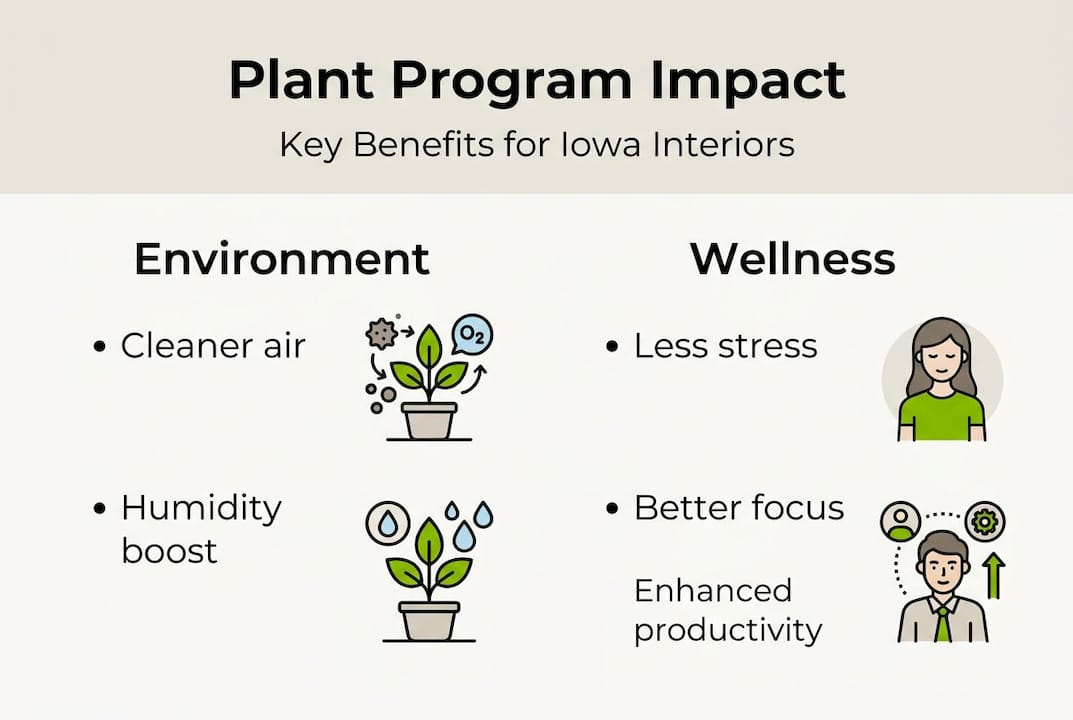
Phytoremediation is the process by which plants absorb and neutralize airborne pollutants through their leaves, roots, and associated soil microbes. It sounds technical, but the practical result is simple: certain plants pull harmful particles and gases out of your indoor air. For Iowa spaces that stay sealed up through long winters, this matters more than most people realize.
Research confirms that indoor plants reduce PM2.5 and help purify air through phytoremediation, with species like Sansevieria showing measurable results. PM2.5 refers to fine particulate matter small enough to enter your lungs. VOCs, or volatile organic compounds, come from furniture, paint, and cleaning products and are linked to headaches, fatigue, and long-term health risks.
Top-performing species for Iowa interiors:
| Plant | Key benefit | Light requirement |
|---|---|---|
| Sansevieria | PM2.5 reduction | Low to medium |
| Pothos | VOC absorption | Low |
| Peace lily | Humidity balance | Low to medium |
| Spider plant | Formaldehyde removal | Medium |
| ZZ plant | Air filtration | Low |
“Comprehensive reviews confirm measurable indoor air quality improvements from plants, especially in low-ventilation spaces.”
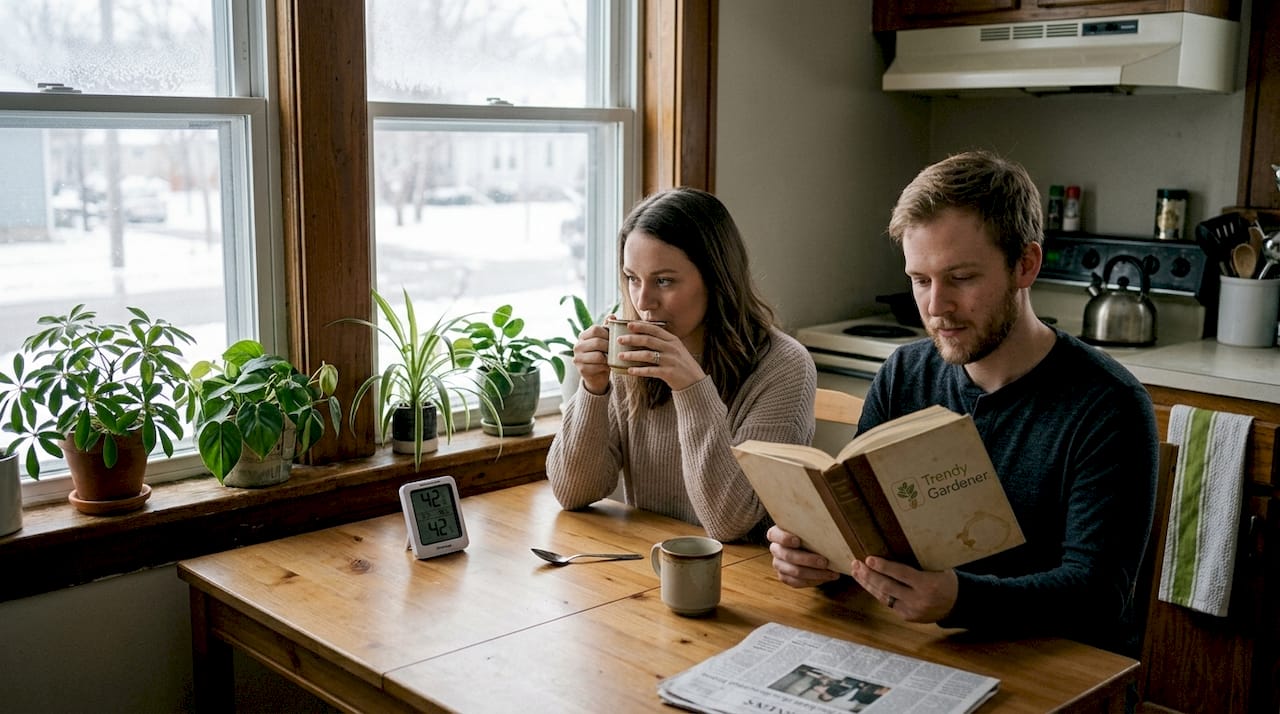
Beyond air quality, plants stabilize relative humidity, which is particularly valuable in Iowa’s dry winter months when forced-air heating strips moisture from indoor environments. Stable humidity reduces respiratory irritation, protects wood furniture, and makes spaces feel more comfortable without running a humidifier constantly.
Studies also link indoor plants to measurable productivity gains in office environments, with some research pointing to double-digit improvements in focus and task completion.
Main environmental benefits for Iowa homes and offices:
- Reduction of airborne PM2.5 and VOC concentrations
- Humidity stabilization during dry heating seasons
- Lower reliance on synthetic air fresheners and chemical deodorizers
- Improved thermal comfort through transpiration cooling
- Reduced stress and improved cognitive performance for occupants
For a deeper look at which species perform best, the best indoor plants for office and home use are well-documented. A comprehensive IAQ review also provides strong supporting evidence for these findings.
Practical considerations and pitfalls
Recognizing the benefits, it’s equally important to prepare for common risks and misconceptions.
The NASA Clean Air Study from the 1980s is often cited as proof that houseplants dramatically clean indoor air. The reality is more nuanced. That research was conducted in sealed, controlled chambers, not in typical homes or offices with normal ventilation. In real-world settings, the air-purifying effect is real but more modest. You need the right plants, in the right density, with the right care to see meaningful results.
Common pitfalls that undermine sustainable plant programs:
- Poor lighting: Plants placed in low-light corners without appropriate species selection will decline quickly, reducing both aesthetic and environmental value
- Inconsistent watering: Overwatering is the most common cause of plant death and can create soggy soil conditions that invite mold
- Over-humidification: Too many moisture-loving plants in a small, poorly ventilated space can raise humidity beyond comfortable levels
- Neglected maintenance: Without regular inspection, pest infestations spread silently and plants deteriorate before anyone notices
- Wrong plant for the space: A tropical species in a drafty Iowa entryway will struggle regardless of how well it’s watered
Research on the effectiveness of indoor plants for air purification shows that in some studies, plants had minimal impact on VOCs, and increased humidity occasionally contributed to mold problems when not properly managed.
“The gap between a thriving plant program and a failing one almost always comes down to maintenance consistency, not plant selection.”
A solid plant maintenance workflow prevents most of these issues before they start. Understanding what expert plant care tasks actually involve helps set realistic expectations. The IAQ study findings reinforce that results are strongest when programs are professionally managed.
Pro Tip: Before installing any plant program, assess your space’s light levels at different times of day, not just at noon. Morning and afternoon light vary significantly in Iowa, especially in winter, and that affects which plants will actually thrive.
How to get started with a sustainable plant program
Understanding challenges lets you plan better, so here’s how to launch your own program effectively.
Starting a sustainable plant program doesn’t require a complete interior overhaul. It requires a clear process. Professional maintenance and program structure are essential for real-world impact and longevity, which means the planning stage matters as much as the plants themselves.
Step-by-step launch process:
- Assess your space: Map light levels, humidity, traffic patterns, and HVAC placement. These factors determine which plants will succeed and where.
- Define your goals: Are you prioritizing air quality, aesthetics, employee wellness, or all three? Your goals shape the plant selection and program structure.
- Choose a qualified provider: Look for a firm with documented experience in sustainable sourcing, professional maintenance, and design. Ask for references.
- Select appropriate plant types: Match species to your actual conditions. Use recommended indoor plants as a starting point, then refine based on your site assessment.
- Structure your maintenance schedule: Monthly visits are a minimum for most programs. High-traffic commercial spaces may need bi-weekly attention.
- Explore leasing options: Leasing reduces upfront cost, keeps plants in optimal condition, and supports circular sustainability.
Site assessment checklist before you begin:
- Natural light availability (hours per day, direction of windows)
- Proximity to heating and cooling vents
- Available floor, shelf, and wall space
- Water access and drainage options
- Budget for installation and ongoing care
For Iowa residents, it’s worth checking Iowa eco-incentives that may offset costs. Johnson County’s reimbursement programs for eco-friendly practices are a strong example of local support for sustainable choices. Pairing those incentives with ongoing plant care planning creates a program that’s both financially smart and environmentally meaningful.
Our take: Sustainable plant programs succeed where design and care connect
Here’s what we’ve learned from working with Iowa homeowners, offices, and commercial spaces: the biggest predictor of a plant program’s success isn’t the species chosen or the budget spent. It’s whether structured maintenance is built in from the start.
DIY plant installations look great on day one. By month three, they often look neglected. Not because the plants were wrong, but because life gets busy and plant care gets deprioritized. That’s not a personal failure. It’s a structural one. A program without a maintenance plan isn’t really a program.
What professional care actually provides is prevention, not just rescue. Regular visits catch early signs of pest pressure, root stress, and light deficiency before they become visible problems. That’s the difference between a plant program that performs and one that just exists.
Leasing amplifies this further. When plants are leased, their health is tied to the provider’s reputation. That accountability creates a fundamentally different relationship with plant care than ownership does. The maintenance workflow insights we’ve developed reflect years of learning what actually keeps programs thriving long-term.
For Iowa spaces, we’d encourage you to think of a sustainable plant program not as a product you buy, but as a culture you build into your home or business.
Ready to transform your space? Explore sustainable solutions
If you’re ready to see these benefits firsthand, here’s how Trendy Gardener can help you take the next step.
We design and manage sustainable plant programs for Iowa homes and businesses that look exceptional from day one and stay that way. Whether you’re starting with a single statement piece or building out a full interior plant strategy, our team handles every detail.
Explore our wall-mounted living wall system for a bold, space-efficient option, or consider our recirculating living wall system for a self-sustaining installation that minimizes maintenance demands. From plant leasing to full-service maintenance programs, Trendy Gardener solutions are built around your space, your goals, and your commitment to sustainable design.
Frequently asked questions
Do sustainable plant programs really improve indoor air quality?
Yes, evidence shows certain plants reduce PM2.5 and VOCs, especially in low-ventilation spaces, though results vary by plant type, density, and care quality.
Can I use a sustainable plant program if my space has little natural light?
Yes, but selecting low-light tolerant species and using professional guidance are essential. Without proper species matching, inadequate light leads to plant failure and wasted investment.
What are the risks of too many indoor plants?
Overcrowding raises humidity and increases mold risk. A comprehensive IAQ review confirms that while plants raise relative humidity, excess moisture in poorly ventilated spaces can become problematic. Always match plant density to your environment.
Are there financial incentives for sustainable plant programs in Iowa?
Yes, Iowa residents may qualify for eco-incentives like soil restoration rebates. Johnson County homeowners can be reimbursed for eco-friendly practices, making sustainable plant adoption more financially accessible.