

What is a living wall? Benefits, design, and tips
A single living wall can do something no paint color or artwork can: actively cool the air around it, filter pollutants, and reduce stress in the people nearby. That is not a marketing claim. It is measurable, documented environmental performance. A living wall is a vertical planting system where live, rooted plants grow on or within a wall-mounted structure, fed by an integrated irrigation system. For Iowa homeowners and design professionals looking to create spaces that feel genuinely alive, living walls represent one of the most impactful design decisions available. This article covers exactly what living walls are, why they perform so well, how to choose the right system, and how to keep one thriving in Iowa’s climate.
Table of Contents
- Understanding living walls: What they are and how they work
- Key benefits of living walls for homes and workplaces
- Types of living walls: Choosing the right system
- Best practices: Installing and maintaining a living wall in Iowa
- The unspoken truth about living walls: Practical insights for Iowa
- Get started with your living wall project
- Frequently asked questions
Key Takeaways
| Point | Details |
|---|---|
| Definition clarified | A living wall is a vertical garden system with live plants and integrated irrigation. |
| Major benefits | Living walls improve air quality, regulate temperature, and enhance aesthetics. |
| System selection matters | Choosing the right living wall system depends on space, climate, and maintenance needs. |
| Maintenance is key | Successful living walls require thoughtful installation and regular plant care. |
Understanding living walls: What they are and how they work
A living wall is a vertical garden installed on an interior or exterior wall surface. Unlike a shelf of potted plants, a living wall integrates its plants, growing medium, and irrigation into a single unified system. The plants grow in panels, pockets, or modular trays attached directly to the wall structure, and water is delivered automatically through drip lines or recirculating channels. The result is a dense, layered planting that reads as a single cohesive feature rather than a collection of individual containers.
Several key components define a true living wall:
- Vertical support structure: A frame or panel system anchored to the wall, designed to hold plant weight and irrigation hardware.
- Growing medium: Soil, felt, foam, or hydroponic substrate depending on the system type.
- Integrated irrigation: Automated drip or recirculating water delivery that keeps plants consistently hydrated without manual watering.
- Plant selection: A curated mix of species chosen for light tolerance, growth habit, and visual texture.
It is worth understanding the difference between a living wall, a green wall, and a moss wall, because these terms get used interchangeably when they should not. You can read a detailed breakdown in our guide on living walls vs green walls, but here is a quick comparison:
| Feature | Living wall | Green wall | Moss wall |
|---|---|---|---|
| Plant type | Live, rooted plants | Live climbing plants | Preserved moss (not alive) |
| Irrigation needed | Yes | Yes | No |
| Maintenance level | Moderate to high | Moderate | Very low |
| Air purification | Yes | Limited | No |
| Best for | Interior feature walls | Exterior facades | Accent panels |
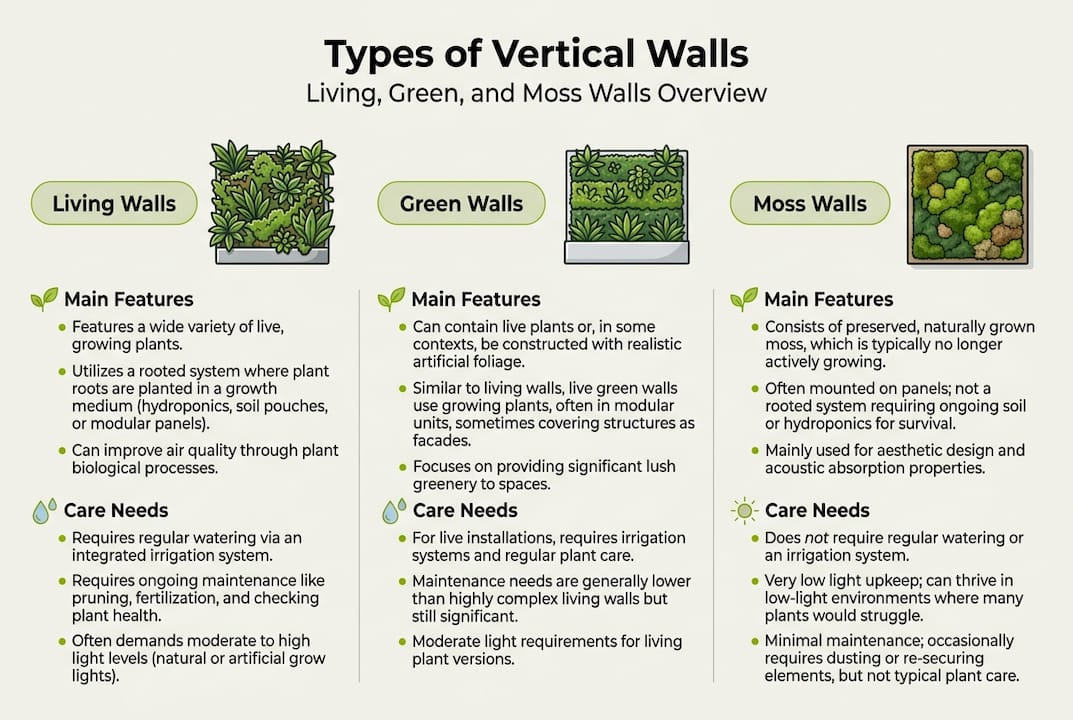
The performance data behind living walls is striking. Research shows living walls can reduce surface temperatures by up to 24°C, decrease CO2 levels by 42 to 46 ppm, and dramatically improve a wall’s insulation value, dropping the U-value from 0.40 to 0.17 W/m²K. That kind of thermal performance is usually associated with construction upgrades, not interior design choices. Living walls are used in residential living rooms and bedrooms, corporate lobbies, healthcare facilities, restaurants, and public atriums. Wherever people spend extended time, a living wall adds measurable environmental value alongside its visual impact.
Key benefits of living walls for homes and workplaces
The case for living walls goes well beyond aesthetics, though the visual impact alone is hard to argue with. The real reasons homeowners and design professionals choose them come down to a combination of environmental performance, human health benefits, and long-term property value.
On the environmental side, the numbers are clear. Living walls can reduce nearby air temperatures by 3.3 to 5.3°C and lower indoor temperatures by up to 1.35°C. In Iowa, where summers can push into the upper 90s, that cooling effect translates directly into reduced air conditioning load. Winter insulation benefits are equally relevant given Iowa’s cold season, with the improved U-value reducing heat loss through exterior walls.
A well-designed living wall does not just look good. It actively regulates the thermal environment of the space it occupies.
For human health, the benefits connect to what researchers call biophilic design, which is the practice of incorporating natural elements into built environments to support human well-being. Studies consistently show that exposure to living plants reduces cortisol (the stress hormone), lowers blood pressure, and improves focus. You can explore more about how cleaner air with living walls connects to reduced stress and improved productivity.
Here is a summary of the core benefits:
- Thermal regulation: Cooling in summer, insulation in winter
- Air quality: CO2 reduction and particulate filtration
- Stress reduction: Biophilic exposure lowers cortisol and improves mood
- Noise absorption: Dense plant mass absorbs and diffuses sound
- Privacy and zoning: Freestanding systems divide spaces without hard walls
- Brand and aesthetic impact: Memorable visual feature for commercial spaces
- Property value: Distinctive design elements that differentiate a home or office
For Iowa businesses, a living wall in a reception area or conference room signals a commitment to thoughtful design. For homeowners, it transforms a blank wall into a living focal point that also improves the air they breathe every day. Consistent plant care for living walls is what keeps those benefits compounding over time rather than fading after the first season.
Types of living walls: Choosing the right system
Not all living wall systems are built the same, and choosing the wrong type for your space is one of the most common and costly mistakes. The system you select affects installation complexity, ongoing maintenance, plant health, and long-term performance, especially in Iowa’s variable indoor climate.
Here are the four main system types and their key characteristics:
- Modular panel systems: Pre-planted panels that attach to a wall frame. Easy to install and replace section by section. Best for large feature walls in offices or commercial lobbies.
- Pocket systems: Fabric or felt pockets mounted to a backing panel. Flexible and affordable, great for smaller residential installations. The 24-pocket wall living wall is a strong example of this format.
- Recirculating systems: Closed-loop irrigation that collects, filters, and reuses water. Ideal for spaces where water access is limited or where sustainability is a priority.
- Freestanding systems: Self-supporting structures not attached to a wall. Perfect for open-plan offices, event spaces, or renters who cannot modify walls.
| System type | Installation complexity | Maintenance level | Best Iowa application |
|---|---|---|---|
| Modular panel | High | Moderate | Commercial lobbies, large residences |
| Low | Low to moderate | Home accent walls, small offices | |
| Recirculating | Moderate | Low | Sustainability-focused projects |
| Freestanding | Low | Moderate | Offices, rental properties, events |
For Iowa specifically, indoor humidity swings between seasons matter. Iowa winters are dry, and that affects how quickly growing media dries out. Insulation effectiveness and energy savings also depend on the system’s structure, including its canopy depth and layering. Thicker, multi-layer systems perform better thermally, which is worth considering if energy efficiency is part of your goal.
Pro Tip: If you are installing a living wall in a room with limited natural light, choose a recirculating or modular system with built-in grow light compatibility. Pocket systems in low-light spaces tend to struggle without supplemental lighting.
For inspiration on how different systems look in real commercial environments, browse our living wall ideas gallery, or read our detailed design living walls Iowa guide for region-specific recommendations.
Best practices: Installing and maintaining a living wall in Iowa
A living wall that looks stunning on day one but declines by month three is a failure of planning, not plant quality. Iowa’s climate adds specific variables that make pre-installation decisions especially important.
Before installation, work through this checklist:
- Structural assessment: Confirm the wall can support the weight of the system, growing medium, and water. A saturated living wall can weigh significantly more than expected.
- Waterproofing: Install a moisture barrier behind the system to protect the wall structure from irrigation runoff or condensation.
- Irrigation access: Plan water supply and drainage routes before mounting anything. Retrofitting irrigation after installation is expensive and disruptive.
- Lighting audit: Measure natural light levels at the wall location across different times of day. Most interior plants need at least moderate indirect light.
- Climate control check: Confirm the space maintains consistent temperature and humidity. Rooms near exterior doors or HVAC vents create stress for plants.
For plant selection in Iowa interiors, prioritize species that tolerate lower humidity and indirect light. Strong performers include pothos, philodendron, ferns, peace lily, and certain ficus varieties. Avoid plants with high humidity requirements unless your space has consistent humidification.
Key maintenance steps to follow:
- Watering: Check irrigation emitters monthly for clogs. Adjust frequency seasonally as Iowa winters reduce evaporation rates.
- Trimming: Remove dead or overgrown growth every four to six weeks to maintain density and airflow.
- Fertilizing: Apply a diluted liquid fertilizer monthly during the growing season.
- Plant replacement: Swap out failing plants quickly before decline spreads to neighbors in the system.
Research confirms that proper plant selection and maintenance routines are the single biggest factor in long-term living wall success. Our plantscaping maintenance guide covers the expert-level tasks that separate thriving installations from struggling ones.
Pro Tip: Schedule a full system inspection every six months. Catching a failing irrigation emitter or early root rot early saves far more time and money than waiting until visible plant decline appears.
The unspoken truth about living walls: Practical insights for Iowa
Here is something the marketing materials rarely say: a living wall is not a set-it-and-forget-it feature. We have seen beautifully conceived installations lose half their plant mass within a year because the owner underestimated what consistent care actually requires. That is not a knock on living walls. It is a reality check.
Iowa presents specific challenges that generic living wall advice does not address. The humidity swing between a humid July and a furnace-dry January can stress plants that would thrive in a more stable climate. Heating systems that run hard from November through March pull moisture out of the air faster than most people realize, and plants in pocket systems are the first to show it.
The designers and homeowners who get the best results are the ones who invest in the right system for their actual conditions, not the most visually impressive option in a catalog. They also build a maintenance relationship early, before problems develop. Our Iowa living wall design insights reflect years of real installations across the state. Up-front planning is not overhead. It is the difference between a wall that performs for a decade and one that disappoints within a season.
Get started with your living wall project
Ready to turn inspiration into reality? Trendy Gardener makes it straightforward to begin, whether you are a homeowner adding a statement feature or a designer specifying a large-scale commercial installation.
Our product range includes the flexible 24-pocket wall living wall for residential and smaller commercial projects, and the efficient recirculating living wall system for sustainability-focused builds. Both are designed for real-world performance, not just launch-day impact. Visit Trendy Gardener to explore our full range of living wall systems, request a consultation, and connect with a team that has delivered successful installations across Iowa and beyond.
Frequently asked questions
How long does a living wall last?
With consistent care, a living wall can perform well for many years. Individual plants may need occasional replacement, but proper maintenance routines keep the overall system healthy and visually strong long-term.
Do living walls require a lot of maintenance?
Living walls need regular watering, trimming, and seasonal adjustments, but a well-chosen system with automated irrigation and strong plant care practices keeps the workload manageable for most homeowners and facilities teams.
What is the difference between a living wall and a green wall?
A living wall features live, rooted plants in a vertical planting system with integrated irrigation, while a green wall may include climbing plants on a facade or even non-living elements like preserved moss panels.
Are living walls suitable for Iowa’s climate?
Yes. With the right system, appropriate plant selection, and attention to Iowa’s seasonal humidity swings, living walls thrive indoors and in sheltered outdoor areas across the state year-round.