

What Is Biophilic Design and Why It Matters
Trying to create spaces in Greater Des Moines that feel both vibrant and restorative can be a daily challenge for architects and designers. Clients expect more than surface-level upgrades—they want environments that bring lasting well-being and authenticity. By understanding the core principles of biophilic design, you can move beyond simple décor and deliver thoughtful, nature-connected interiors that transform how people live and work.
Table of Contents
- Defining Biophilic Design and Core Principles
- Major Types of Biophilic Design Elements
- Key Health and Well-Being Benefits
- Applying Biophilic Design to Interior Projects
- Common Pitfalls and How to Avoid Them
Key Takeaways
| Point | Details |
|---|---|
| Biophilic Design Focus | Prioritize the integration of natural elements to improve occupant well-being and foster a connection to nature. |
| Core Principles | Successful biophilic design relies on direct nature contact, indirect nature references, spatial design, and ongoing engagement. |
| Health Benefits | Biophilic environments can significantly reduce stress, enhance cognitive function, and promote faster recovery times. |
| Importance of Maintenance | Proactive maintenance planning is critical to sustaining the visual and psychological benefits of biophilic design over time. |
Defining Biophilic Design and Core Principles
Biophilic design is the practice of connecting people with nature through thoughtfully designed built environments. It recognizes that humans have an innate need to interact with the natural world, and strategically brings that connection indoors through plants, light, water, and natural materials.
This approach matters because it transforms how spaces function and feel. When you incorporate biophilic elements, you’re not just adding decoration—you’re creating environments that actively improve occupant well-being, focus, and creativity.
What Biophilic Design Actually Means
Biophilic design integrates natural elements like sunlight, fresh air, plants, and water into indoor spaces. For architects and designers in Des Moines working on residential and commercial projects, this means moving beyond surface-level greenery to create deliberate connections between inhabitants and nature.
The core idea is simple: spaces that feel intentional and alive perform better. Your clients notice it immediately—a office with strategic natural light and living walls feels different than one without it.
The Four Core Principles
Every successful biophilic design project rests on these foundational principles:
-
Direct nature contact – Actual living plants, natural light, water features, and organic materials that people can see and interact with daily
-
Indirect nature references – Natural patterns, shapes, and colors inspired by nature even when live elements aren’t present
-
Space and place – Designing layouts that mimic natural environments, creating refuge, prospect, and connection to the outdoors
-
Sustained engagement – Ongoing care and maintenance that keeps spaces looking alive and vibrant, not declining
Biophilic spaces work best when they’re designed to evolve with intentional maintenance, not fade after installation.
For residential projects, direct nature contact might mean a living wall in the main living area or large window placement that frames outdoor views. For commercial spaces, it could include potted plant arrangements strategically positioned throughout open offices, or preserved moss walls that add organic texture without watering requirements.
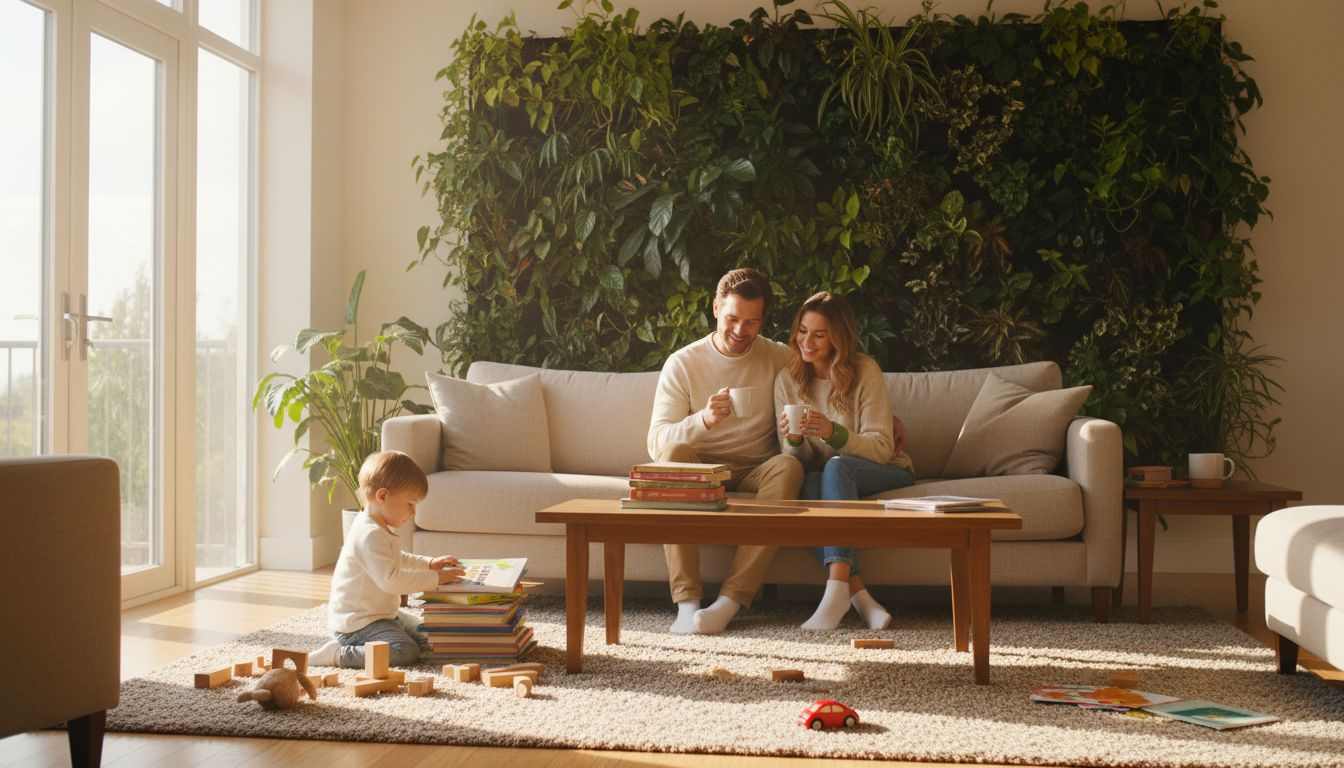
The difference between basic greenery and true biophilic design comes down to intention. A single neglected plant in a corner isn’t biophilic. A carefully curated indoor plantscape that’s actively maintained and integrated into your overall design vision? That’s biophilic design done right.
When you work with clients who want spaces that feel elevated and alive, biophilic principles give you a framework to deliver exactly that. It’s the difference between spaces that look good on day one and spaces that feel like home for years.
Pro tip: Start biophilic design conversations with clients by asking how they want to feel in the space, then work backward to identify which natural elements will deliver that feeling—whether that’s calming greens for a bedroom, energizing light for a workspace, or a textured preserved moss feature for visual interest.
Major Types of Biophilic Design Elements
Biophilic design isn’t one-size-fits-all. There are multiple frameworks and approaches to bring nature into spaces, each addressing different aspects of the human-nature connection.
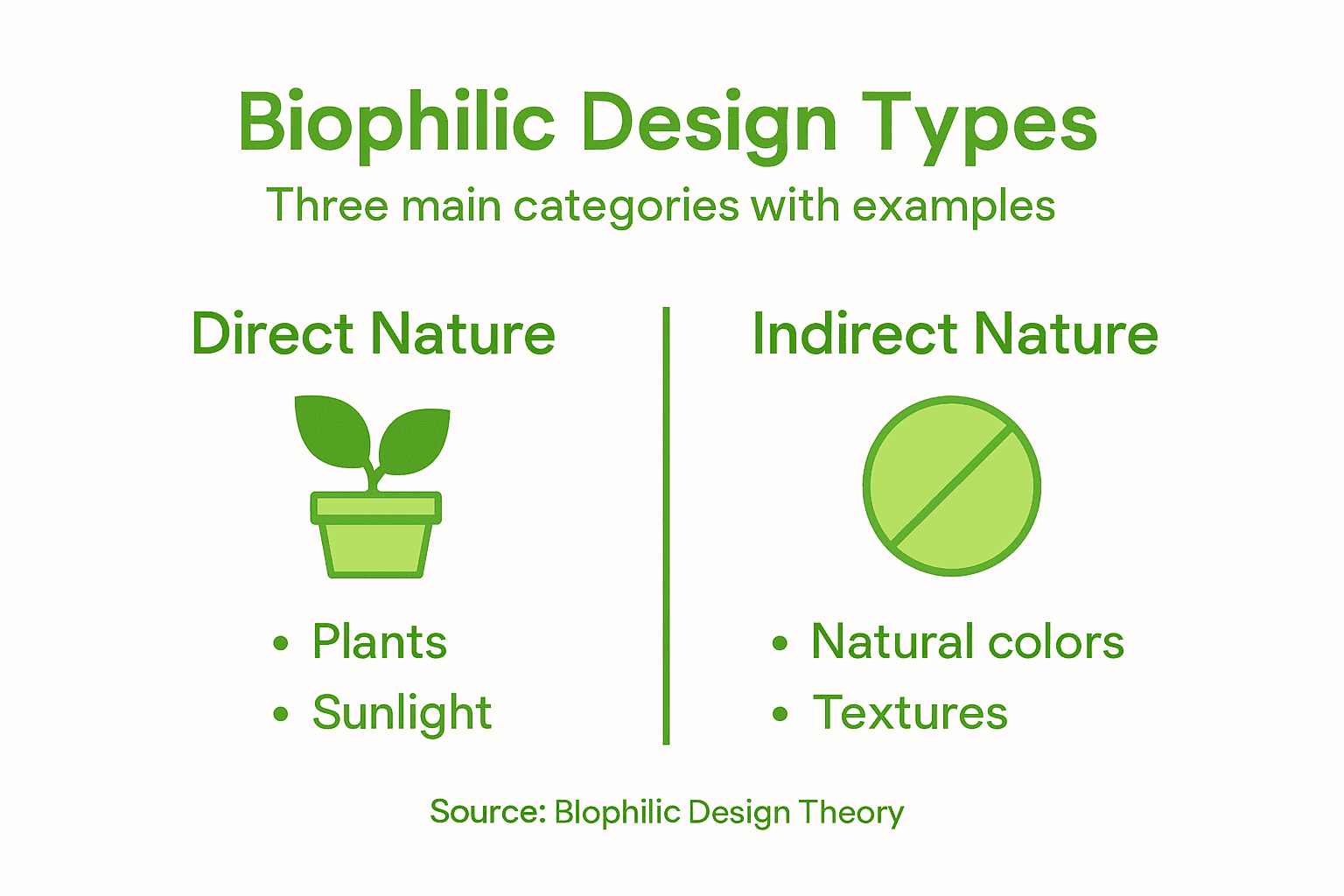
Understanding these categories helps you choose the right elements for your Des Moines projects. You might combine several types in a single space to create layered, authentic connections to nature.
Three Main Categories
The 14 Patterns framework and Six Elements approach organize biophilic design into three broad groups that guide most professional applications.
Nature in the Space brings direct, tangible contact with living elements. This category includes:
- Living plants and green walls
- Natural light and views to outdoors
- Water features or water sounds
- Natural materials like wood and stone
- Fresh air circulation
Natural Analogues represent nature indirectly through design choices. Consider:
- Biomorphic patterns inspired by organic shapes
- Natural colors and textures
- Images or artwork depicting nature
- Preserved moss walls and dried botanicals
- Geometric patterns found in nature
Nature of the Space focuses on how layout and design evoke emotional responses tied to natural environments. This includes:
- Prospect (views and sightlines that create openness)
- Refuge (cozy nooks that feel protected)
- Complexity and mystery in spatial flow
- Connection to natural processes and seasons
The most effective biophilic spaces use all three categories together, not just one element in isolation.
How These Work in Real Projects
For a residential project, “Nature in the Space” might mean a living wall feature in the main living area paired with large windows. “Natural Analogues” could include preserved moss wall accents or a wood feature wall. “Nature of the Space” happens through layout—creating a cozy reading corner near windows while maintaining sight lines across the room.
In commercial settings, the role of indoor plants in wellness-focused design becomes critical. Strategic plant placement reduces stress and boosts creativity without overwhelming the space.
The key difference between amateur and professional biophilic design? Intentionality. You’re not randomly adding plants or nature imagery—you’re strategically layering elements that work together to create cohesive, meaningful spaces.
Here’s a quick comparison of amateur versus professional biophilic design approaches:
| Aspect | Amateur Approach | Professional Approach |
|---|---|---|
| Plant Placement | Random, isolated pots | Layered, strategic installations |
| Maintenance Planning | Overseen or forgotten | Included from day one |
| Design Intent | Aesthetic focus only | Blends form and function |
| Results Over Time | Rapid decline, patchy | Long-term, vibrant environment |
Pro tip: Start by identifying which category your client space needs most: direct nature contact for stress-prone environments, natural analogues for visual interest in minimal-maintenance spaces, or spatial flow designed around refuge and prospect for comfort and engagement.
Key Health and Well-Being Benefits
Biophilic design isn’t just aesthetically pleasing—it directly impacts how people feel and function. The research is clear: spaces designed with nature in mind create measurable improvements in occupant health and well-being.
For architects and designers in Des Moines, understanding these benefits gives you concrete reasons to pitch biophilic solutions to clients beyond “it looks nice.”
Physical Health Improvements
Biophilic environments reduce stress, lower patient mortality, and shorten hospitalization times, particularly in healthcare settings. When patients have access to natural elements, their bodies respond with measurable physiological changes.
This extends to everyday spaces. People in biophilic offices experience:
- Reduced blood pressure and cortisol levels
- Faster physical recovery from stress
- Improved immune function
- Better sleep quality when biophilic elements support rest
- Decreased pain perception in spaces with natural views
These aren’t marginal improvements. Hospitals with nature views report shorter recovery times. Offices with plants and natural light show lower sick days among staff.
Below is a summary of biophilic design’s main health impacts in built environments:
| Benefit Type | Key Outcome | Typical Project Example |
|---|---|---|
| Physical Health | Lower stress response | Hospital with nature views |
| Mental Wellness | Improved mood and focus | Office with living wall |
| Cognitive Gains | Enhanced creativity levels | Workspace with natural light |
| Recovery Speed | Faster rehabilitation times | Patient room with green views |
Mental and Cognitive Benefits
The psychological impact runs equally deep. Exposure to biophilic design stimulates inspiration and reduces stress, with participants reporting improved mental states and enhanced psychological wellness.
Specific cognitive gains include:
- Enhanced focus and attention span
- Improved creative problem-solving
- Reduced anxiety and depression symptoms
- Better emotional regulation
- Increased sense of calm and refuge
When you place a living wall in an office break room or add preserved moss accents to a workspace, you’re not just changing the aesthetics—you’re activating your client’s brain’s restoration and recovery systems.
Biophilic spaces literally help brains function better, making them investments in occupant performance, not just comfort.
Why This Matters for Your Projects
In residential work, these benefits translate to homes where families actually feel calm and connected. In commercial projects, biophilic design becomes a productivity and employee retention tool.
Your Des Moines clients aren’t just hiring you to make spaces look intentional and elevated—they’re investing in environments that actively support health. That distinction changes how you pitch projects and measure success.
Pro tip: When presenting biophilic designs to corporate clients, emphasize measurable outcomes like reduced stress leave and improved employee retention rather than just aesthetic appeal—the business case is stronger and justifies higher design budgets.
Applying Biophilic Design to Interior Projects
Understanding biophilic design principles is one thing. Translating them into actual projects is where the real skill matters. Your Des Moines clients need practical guidance on what works in their specific spaces.
The good news: biophilic design adapts to any interior, whether residential or commercial, large or constrained.
Start with Space Assessment
Before selecting biophilic elements, understand what you’re working with. Evaluate your project space for:
- Available natural light and window placement
- Climate control and humidity levels
- Traffic patterns and how people move through the space
- Existing architectural features you can enhance
- Budget constraints and maintenance capacity
- Client lifestyle or business operations
A sunlit residential living room presents completely different opportunities than a windowless office conference room. Applying biophilic design to urban interiors requires strategic thinking because high-density environments have limited outdoor access—making intentional plant placement and natural material selection even more critical.
The best biophilic designs work within constraints, not against them.
Practical Implementation Strategies
For residential projects, consider layered approaches:
- Living walls or plant clusters in main gathering spaces for direct nature contact
- Preserved moss features in secondary spaces like hallways or bedrooms for low-maintenance natural textures
- Large windows or skylights framing outdoor views to strengthen connection to nature outside
- Natural materials like wood accent walls, stone elements, or natural fiber textiles
- Indirect nature references through artwork, color palettes inspired by nature, or geometric patterns
In commercial settings, the role of plants in commercial spaces creates measurable impacts on employee experience and productivity. Strategic placement near work areas, break rooms, and meeting spaces maximizes psychological benefits.
The key is avoiding scattered decoration. A single plant in a corner reads as afterthought. Thoughtfully curated plant programs—whether living walls, clustered plantings, or preserved moss accents—create the cohesive, intentional spaces your clients want.
Maintenance Realities
Sustaining biophilic design impact requires ongoing plant care. This is non-negotiable. Design day-one beauty fades without proper maintenance planning.
Discuss care requirements upfront with clients and recommend professional maintenance partnerships to ensure spaces remain elevated long-term.
Pro tip: When presenting biophilic designs, create a maintenance roadmap showing watering schedules, seasonal adjustments, and professional care intervals—clients invest confidently when they understand what keeps the space thriving.
Common Pitfalls and How to Avoid Them
Biophilic design sounds straightforward, but implementation often reveals hidden challenges. Many architects and designers in Des Moines encounter the same mistakes repeatedly. Knowing what to avoid saves projects from becoming expensive, disappointing installations that don’t deliver promised benefits.
The gap between good intentions and actual results comes down to overlooking critical details.
The Maintenance Trap
This is the most common failure point. A living wall installed without a maintenance plan looks stunning for three months, then deteriorates into brown, sad vegetation that contradicts every biophilic principle.
Clients often underestimate ongoing care costs. They see the installation invoice and think they’re done. What happens next:
- Plants require consistent watering, humidity control, and light management
- Seasonal changes demand different care protocols
- Neglected plantings die, creating visual and emotional disappointment
- The space loses all psychological benefits—stressed occupants see dead plants daily
Build maintenance into your project scope from day one. Specify watering systems, humidity levels, and professional care intervals in your design documentation.
Design Without Evidence
Overgeneralizing nature concepts without contextual evidence leads to ineffective installations. Just because biophilic design works doesn’t mean any nature element will work anywhere.
Avoid these common mistakes:
- Adding plants to spaces without adequate light
- Ignoring climate control needs for specific plant types
- Choosing visually impressive species that can’t survive your environment
- Decorating with nature imagery without functional natural elements
- Neglecting cultural or ecological appropriateness
Biophilic design rooted in your specific space’s constraints outperforms generic nature decoration.
Aesthetics Over Function
Designs emphasizing visual appeal without functional benefits fail to deliver well-being improvements. A stunning living wall that doesn’t improve air quality, reduce stress, or enhance occupant experience is expensive decoration.
Functional biophilic design considers:
- Measurable stress reduction for occupants
- Improved focus and cognitive performance
- Enhanced air quality and environmental control
- Actual connection to nature, not just the appearance of nature
- Long-term engagement with natural elements
Ask yourself: Does this design element create real benefits, or does it just look nice?
Getting It Right
Success requires evidence-based thinking. Research your specific project context. Understand what plants thrive in your Des Moines humidity and light conditions. Build maintenance partnerships into your design scope. Focus on functional benefits alongside aesthetics.
Biophilic design done well transforms spaces. Biophilic design done poorly becomes a cautionary tale your clients tell their friends.
Pro tip: Before finalizing any biophilic design, create a detailed maintenance manual with your client showing exact care requirements, costs, and responsibility ownership—misaligned expectations about upkeep destroy even excellent designs.
Elevate Your Space with Expert Biophilic Design Solutions
If you are ready to transform your home or office into a thriving biophilic environment that truly supports well-being and productivity, Trendy Gardener is your trusted partner in Des Moines. We understand the challenges of creating intentional, elevated spaces that combine direct nature contact, natural analogues, and spatial flow to deliver lasting benefits. From the pain of fleeting plant installations failing to thrive to the goal of sustained engagement with living elements, our comprehensive plant programs address every detail including consultation, sourcing, installation, and ongoing care.
Discover how our bespoke living walls, preserved moss features, and tailored indoor plant design can bring measurable health and cognitive benefits to your space. Don’t let maintenance or design pitfalls compromise your vision. Take action now to create an environment that feels alive and supports your lifestyle or business objectives. Visit Trendy Gardener to explore our offerings and schedule a consultation today. Experience biophilic design done right with professional care that keeps your space vibrant from day one and beyond.
Frequently Asked Questions
What is biophilic design?
Biophilic design is the practice of connecting people with nature through built environments that incorporate natural elements like plants, light, and water to enhance occupant well-being.
Why is biophilic design important for interior spaces?
Biophilic design is important because it transforms how spaces function and feel, leading to improved well-being, focus, and creativity for the occupants, making environments feel intentional and alive.
What are the core principles of biophilic design?
The core principles include direct nature contact, indirect nature references, space and place design, and sustained engagement to ensure spaces support occupants’ well-being long-term.
How can I apply biophilic design elements in my home or office?
You can apply biophilic design by incorporating living plants, maximizing natural light through window placement, using natural materials, and creating layouts that evoke emotional responses tied to nature.