

Why Use Indoor Plantscapes in Modern Interiors
Every designer knows that thoughtful details make all the difference when creating memorable interior spaces. For those in the Greater Des Moines area, bringing life indoors with intentional plantscapes means blending design expertise with nature’s restorative power. By focusing on selecting the right plants for specific indoor environments, you can craft living installations that boost both aesthetics and well-being for clients, setting your projects apart as vibrant, productive retreats.
Table of Contents
- Defining Indoor Plantscapes And Core Principles
- Types Of Indoor Plantscapes And Key Differences
- Design Impact And Aesthetic Integration
- Health, Wellness, And Productivity Benefits
- Cost, Maintenance, And Long-Term Value
Key Takeaways
| Point | Details |
|---|---|
| Indoor Plantscaping Principles | Effective plantscaping combines environmental compatibility, design integration, functional enhancement, and sustainable maintenance for optimal results. |
| Types of Indoor Plantscapes | Various styles, including atriums and green walls, offer distinct aesthetic and maintenance characteristics suited for different environments. |
| Health and Wellness Benefits | Incorporating indoor plants can significantly improve air quality, reduce stress, and enhance cognitive function, supporting overall well-being. |
| Cost and Maintenance Considerations | Assess initial and ongoing costs, as well as maintenance strategies, to ensure sustainable and valuable indoor plantscaping investments. |
Defining Indoor Plantscapes and Core Principles
Indoor plantscaping represents a sophisticated design approach that transforms interior environments by strategically integrating living plants into architectural spaces. Far beyond simple decoration, interior landscaping/Part_03_Plants_for_Different_Planting_Situations/01.1%3A_Introduction_to_Interior_Landscaping) involves creating intentional, harmonious ecosystems within built environments.
The core principles of indoor plantscaping revolve around several critical considerations:
- Environmental Compatibility: Selecting plants that thrive within specific indoor conditions
- Design Integration: Ensuring botanical elements complement architectural aesthetics
- Functional Enhancement: Improving air quality, acoustics, and psychological well-being
- Maintenance Sustainability: Choosing plant varieties that can be reliably sustained
Successful indoor plantscaping requires a nuanced understanding of both botanical science and interior design principles. Designers must carefully analyze factors like available light, humidity levels, temperature ranges, and spatial dynamics to create living installations that remain healthy and visually compelling.
Professional plantscapers approach each project as a unique ecosystem, meticulously matching plant species with specific environmental conditions. This means considering not just aesthetic preferences, but also practical requirements like maintenance complexity, growth patterns, and potential interactions with human occupants.
Pro tip: When designing an indoor plantscape, always start by conducting a comprehensive environmental assessment of the space to ensure optimal plant selection and placement.
Types of Indoor Plantscapes and Key Differences
Indoor plantscapes encompass a diverse range of design approaches, each offering unique aesthetic and functional possibilities. Interior plantscaping techniques include multiple styles that can transform environments from minimalist to lush and complex.
The primary types of indoor plantscapes include:
- Atriums: Large, open interior spaces filled with multiple plant species creating an indoor garden environment
- Green Walls: Vertical botanical installations that serve as living architectural features
- Potted Plant Displays: Individual or clustered plant arrangements in decorative containers
- Color Bowls: Compact, curated plant collections designed for specific color and texture combinations
- Dish Gardens: Miniature landscape designs featuring multiple small plants in shallow containers
Each plantscape type varies significantly in complexity, maintenance requirements, and design impact. Large installations like atriums demand extensive planning and professional horticultural expertise, while smaller displays offer more flexibility and easier maintenance for residential or compact commercial spaces.
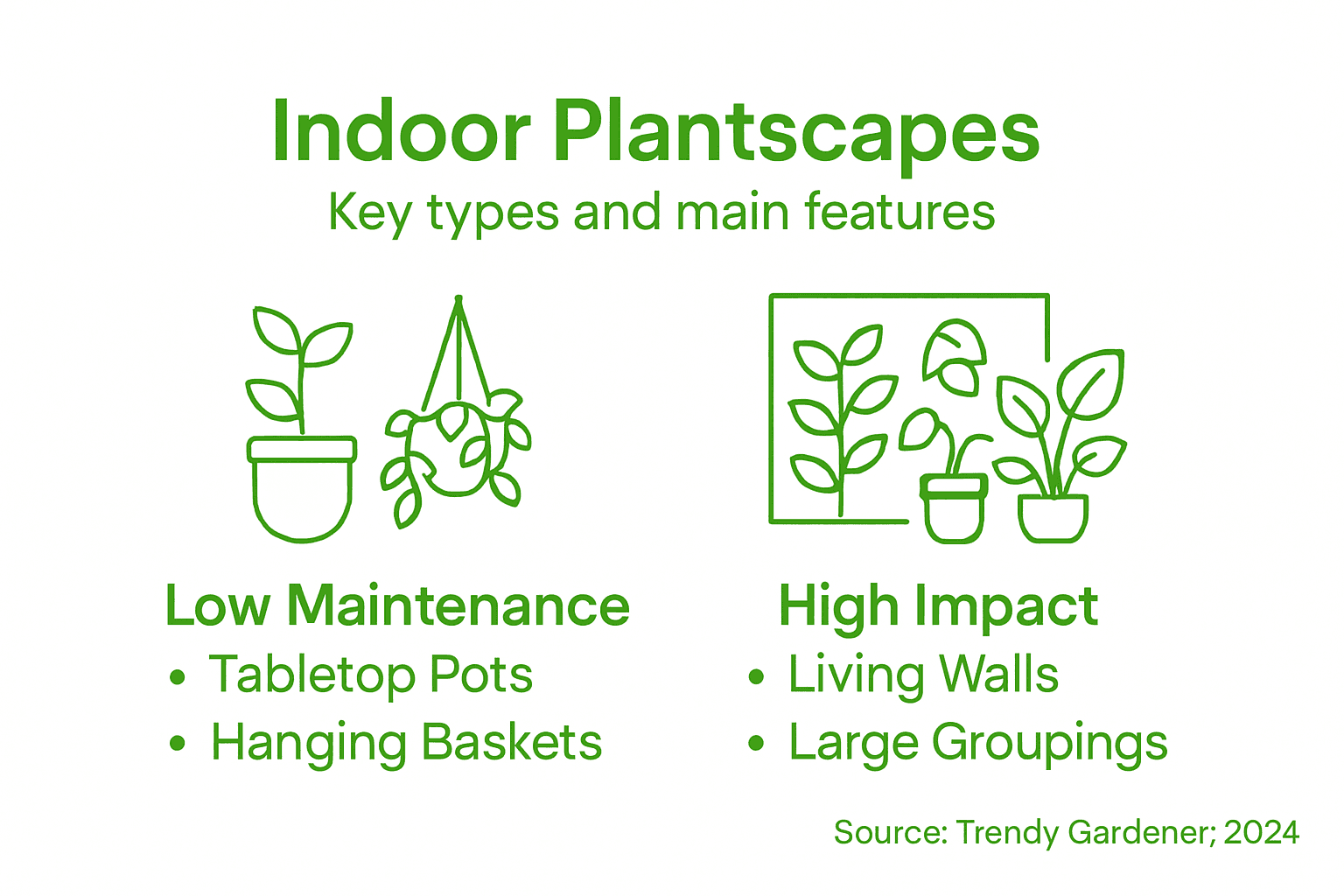
Here’s a quick comparison of common indoor plantscape types and their ideal applications:
| Plantscape Type | Best Space Use | Design Impact | Maintenance Level |
|---|---|---|---|
| Atrium | Large commercial lobbies | Dramatic visual anchor | High, professional care |
| Green Wall | Offices, cafes, homes | Architectural accent | Moderate to high |
| Potted Display | Homes, small offices | Flexible, easy change | Low to moderate |
| Color Bowl | Reception, desktops | Pop of color | Low |
| Dish Garden | Window sills, tables | Miniature landscape | Low to moderate |
Professional designers carefully consider factors like lighting conditions, spatial constraints, and client aesthetic preferences when selecting and implementing different indoor plantscape styles. The goal remains creating living environments that are both visually compelling and functionally supportive of human well-being.
Pro tip: Always evaluate your specific space’s environmental conditions before selecting an indoor plantscape style to ensure long-term plant health and design success.
Design Impact and Aesthetic Integration
Indoor plantscaping transforms interior spaces by strategically leveraging design principles of landscape integration. Designers approach botanical elements as living architectural components that dramatically enhance spatial aesthetics and environmental quality.
Key design integration principles include:
- Proportion: Matching plant sizes to room dimensions
- Color Harmony: Selecting plants that complement existing interior color palettes
- Textural Contrast: Using varied leaf shapes and plant structures
- Visual Balance: Creating symmetrical or asymmetrical arrangements
- Spatial Connectivity: Bridging indoor and outdoor visual experiences
Successful aesthetic integration requires understanding how plants interact with architectural elements. Designers carefully consider factors like natural light exposure, architectural lines, and existing interior design themes to ensure plants feel like intentional, harmonious additions rather than afterthoughts.
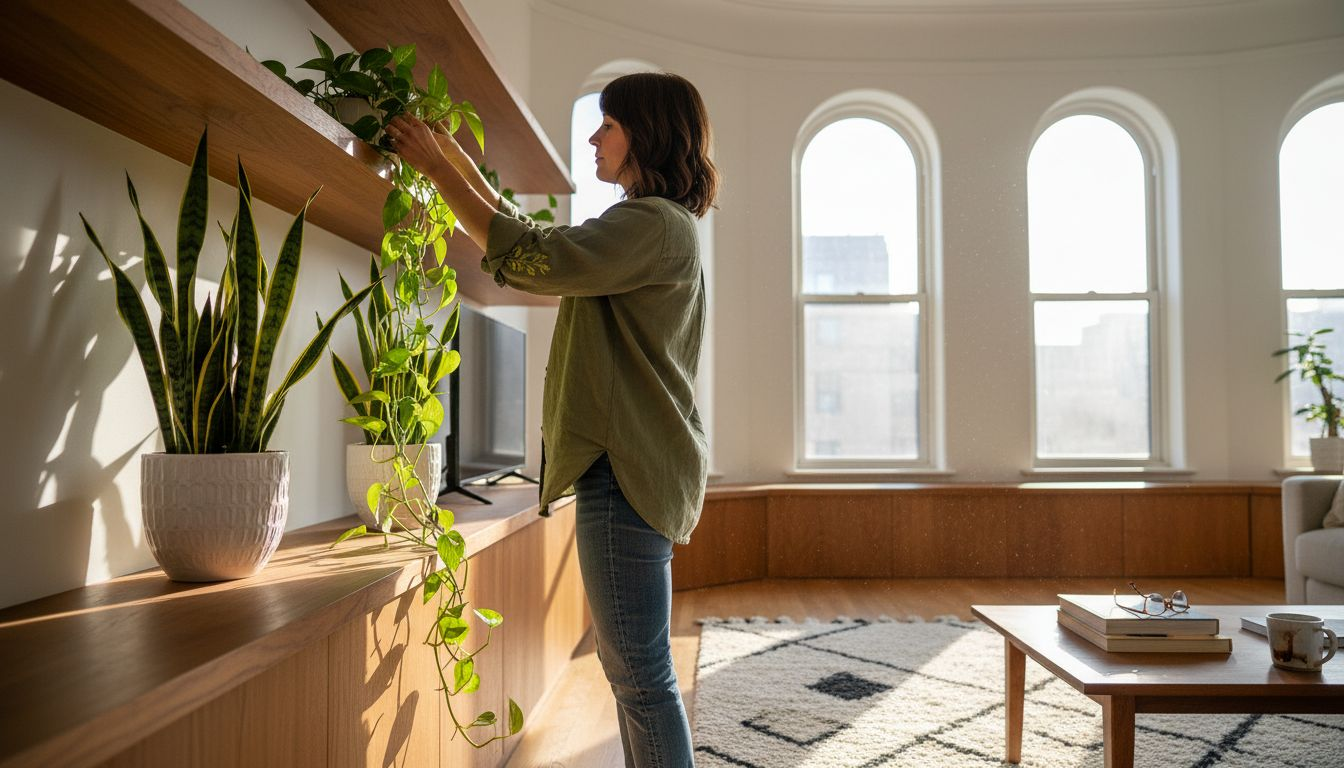
Professional interior plantscapers approach each space as a unique canvas, analyzing architectural characteristics, lighting conditions, and client aesthetic preferences. The goal transcends mere decoration—creating living environments that breathe life, improve psychological well-being, and elevate spatial experiences through carefully curated botanical installations.
Pro tip: Select plants with complementary colors and textures that echo your existing interior design elements for a seamless, intentional aesthetic integration.
Health, Wellness, and Productivity Benefits
Indoor plants represent more than aesthetic additions—they are powerful wellness interventions that transform interior environments. Scientific research demonstrates remarkable physiological and psychological benefits that extend far beyond simple decoration.
Key health and wellness benefits include:
- Air Quality Improvement: Reducing CO2 levels and increasing oxygen circulation
- Stress Reduction: Lowering cortisol and promoting relaxation
- Cognitive Function: Enhancing mental clarity and concentration
- Mood Elevation: Creating positive emotional environments
- Humidity Regulation: Supporting respiratory health
Modern workplaces and residential spaces increasingly recognize plants as critical wellness infrastructure. Employees in green-enhanced environments report significantly higher job satisfaction, demonstrating that botanical installations are not luxury additions but strategic investments in human performance and well-being.
Professional designers now view indoor plantscapes as holistic health solutions. By carefully selecting and positioning plants, they create environments that actively support physical and mental wellness, transforming static spaces into dynamic, life-supporting ecosystems that nurture human potential.
Pro tip: Position plants near workstations and high-stress areas to maximize their natural stress-reduction and air-purifying benefits.
Cost, Maintenance, and Long-Term Value
Indoor plantscaping represents a strategic investment that requires careful financial and operational planning. Long-term maintenance considerations play a critical role in determining the overall value and sustainability of botanical interior design.
Key cost and maintenance factors include:
- Initial Installation Costs: Varies by complexity and plant selection
- Regular Maintenance Expenses: Watering, pruning, pest control
- Replacement Frequency: Depends on plant species and environmental conditions
- Infrastructure Requirements: Lighting, irrigation, and specialized care systems
- Professional Service Contracts: Expert maintenance and design coordination
Successful indoor plantscapes require a holistic approach that balances aesthetic goals with practical maintenance realities. Professional designers recommend integrating plant care infrastructure early in the design process to minimize long-term expenses and ensure sustained visual and environmental performance.
Strategic plantscaping goes beyond simple decoration—it’s a calculated investment in space quality. By selecting appropriate plant species, designing efficient maintenance protocols, and working with specialized care providers, organizations can transform botanical installations from potential cost centers into valuable assets that continuously enhance interior environments.
To help evaluate plantscaping investments, here’s a summary of cost and value factors:
| Factor | Short-Term Impact | Long-Term Benefit |
|---|---|---|
| Installation Cost | Initial expense | Sets project foundation |
| Maintenance Expenses | Ongoing time and budget | Sustains plant health |
| Plant Replacement | Unexpected costs possible | Keeps visual quality stable |
| Infrastructure Setup | Up-front planning needed | Reduces care complexity |
| Professional Services | Expertise enhances outcome | Maximizes asset longevity |
Pro tip: Budget for professional maintenance from the start and select plant species native to your specific indoor environment to minimize long-term care expenses.
Elevate Your Space with Expert Indoor Plantscaping Solutions
The article highlights the challenges of selecting the right plants that thrive indoors while blending seamlessly with architectural designs and supporting well-being. If you are looking to overcome these obstacles and ensure your indoor plantscape is both stunning and sustainable, you need a partner who understands the delicate balance of environmental compatibility, design integration, and maintenance sustainability. Key goals such as improving air quality, enhancing mood, and creating living environments that last require expertise beyond standard decoration.
At Trendy Gardener, we specialize in delivering premium biophilic design services that bring your space to life with intentional and elevated indoor plantscape solutions. Our end-to-end plant programs cover everything from consultation and concepting to sourcing, installation, and ongoing care. Whether you want a bespoke living wall, custom preserved moss wall, or flexible plant leasing with expert maintenance, we ensure your investment thrives and continuously enhances your environment.
Discover how our expert plant styling and professional care can transform your interiors by visiting our main site and explore our indoor plant styling and staging services tailored to your unique space and wellness goals.
Transform your interiors now and experience the lasting benefits of expert indoor plantscaping.
Ready to boost your space’s beauty and health with living plants? Contact Trendy Gardener today for a personalized consultation and start creating an indoor plantscape that looks exceptional and stays healthy. Visit Trendy Gardener to take the first step.
Frequently Asked Questions
What are indoor plantscapes?
Indoor plantscapes are design approaches that integrate living plants within architectural spaces, aiming to create harmonious ecosystems that enhance aesthetic appeal and environmental quality.
What are the main benefits of using indoor plants in modern interiors?
Indoor plants offer numerous benefits, including improved air quality, reduced stress levels, enhanced cognitive function, and increased humidity regulation, contributing to better overall health and wellness in indoor environments.
How do I choose the right plants for my indoor plantscape?
Select plants based on environmental compatibility, considering factors such as light availability, humidity levels, and temperature ranges, as well as their maintenance needs and aesthetic appeal.
What type of indoor plantscape is best for small spaces?
Potted plant displays and color bowls are ideal for smaller spaces, as they require less maintenance and can easily fit into limited areas while still providing visual interest and enhancing the environment.