

Role of Indoor Plants in Retail Experience
Stepping into a retail space in Greater Des Moines, shoppers instinctively notice how welcoming or stylish it feels. For boutique owners, curating that atmosphere goes beyond product displays. Indoor plants have been shown by research to significantly influence customer perceptions and time spent in stores, enhancing both comfort and brand appeal. Discover how plant-enhanced environments can create healthier, more inviting retail experiences and visually set your shop apart from the crowd.
Table of Contents
- Defining The Role Of Indoor Plants In Retail
- Types Of Indoor Plant Displays For Stores
- Design Benefits And Customer Experience
- Brand Identity And Psychological Effects
- Maintenance, Costs, And Avoiding Pitfalls
Key Takeaways
| Point | Details |
|---|---|
| Role of Indoor Plants | Indoor plants enhance retail environments by improving air quality, reducing stress, and promoting psychological comfort among shoppers. |
| Types of Displays | Utilizing diverse indoor plant displays, such as potted plants and vertical gardens, can maximize customer engagement and enhance aesthetic appeal. |
| Brand Communication | Indoor plants can communicate brand values and foster psychological connections with customers, aligning visual identity with sustainability and wellness. |
| Maintenance Considerations | Successful indoor plant programs require ongoing maintenance and strategic planning to avoid health impacts and ensure aesthetic consistency. |
Defining the Role of Indoor Plants in Retail
Indoor plants are no longer merely decorative elements but strategic design tools that transform retail environments. Research demonstrates that these living design components significantly influence customer behavior and perception, creating immersive shopping experiences beyond traditional aesthetic considerations.
Retail spaces leverage indoor plants as multifunctional environmental enhancers. They serve critical purposes including improving air quality, managing ambient noise levels, and creating psychological comfort for shoppers. Scientific studies reveal that strategically placed greenery can control humidity, reduce acoustic disruptions, and generate a sense of natural wellness within commercial settings.
The psychological impact of indoor plants extends far beyond visual appeal. They communicate subtle messages about a brand’s commitment to customer experience and environmental consciousness. Customers perceive plant-integrated spaces as more sophisticated, welcoming, and thoughtfully designed. This perception translates directly into increased dwell time, improved mood, and potentially higher purchasing probabilities.
Pro tip: Select indoor plants that complement your specific retail environment’s lighting, temperature, and aesthetic design to maximize their strategic impact.
Types of Indoor Plant Displays for Stores
Retail environments have evolved to incorporate diverse indoor plant displays that go beyond simple decorative elements. Retail plant configurations range from compact potted arrangements to expansive vertical gardens, each designed to maximize spatial impact and customer engagement.
The primary categories of indoor plant displays include standalone potted plants, hanging installations, green walls, and modular plant systems. Scientific research confirms that strategic combination of plant species and display types can significantly enhance a store’s aesthetic appeal and environmental quality. Potted plants offer flexibility and can be easily repositioned, while vertical gardens create dramatic visual statements that transform entire wall surfaces.
Each display type serves unique purposes in retail settings. Tabletop arrangements provide intimate, approachable greenery near product displays. Hanging plants introduce dynamic vertical elements that draw customer eyes upward. Living walls generate immersive experiences, communicating brand sophistication and environmental consciousness. Large floor planters can define spaces, control traffic flow, and create natural architectural divisions within retail environments.

Pro tip: Match your indoor plant display style with your brand’s aesthetic, considering factors like available light, maintenance requirements, and overall store design to create a cohesive and impactful green environment.
Here are the main types of indoor plant displays and their advantages:
| Display Type | Ideal Placement | Key Benefit |
|---|---|---|
| Potted Plants | Entryways, displays | Flexible, easy to reposition |
| Hanging Installations | Above counters or aisles | Maximizes vertical space |
| Green Walls | Feature walls | Strong visual impact, air quality |
| Modular Systems | Any adaptable area | Customizable for different seasons |
Design Benefits and Customer Experience
Indoor plants are powerful design elements that transform retail environments beyond mere decoration. Customer satisfaction studies demonstrate that strategically placed greenery significantly enhances shopper experiences, creating atmospheres that encourage longer store visits and improved purchasing behavior.
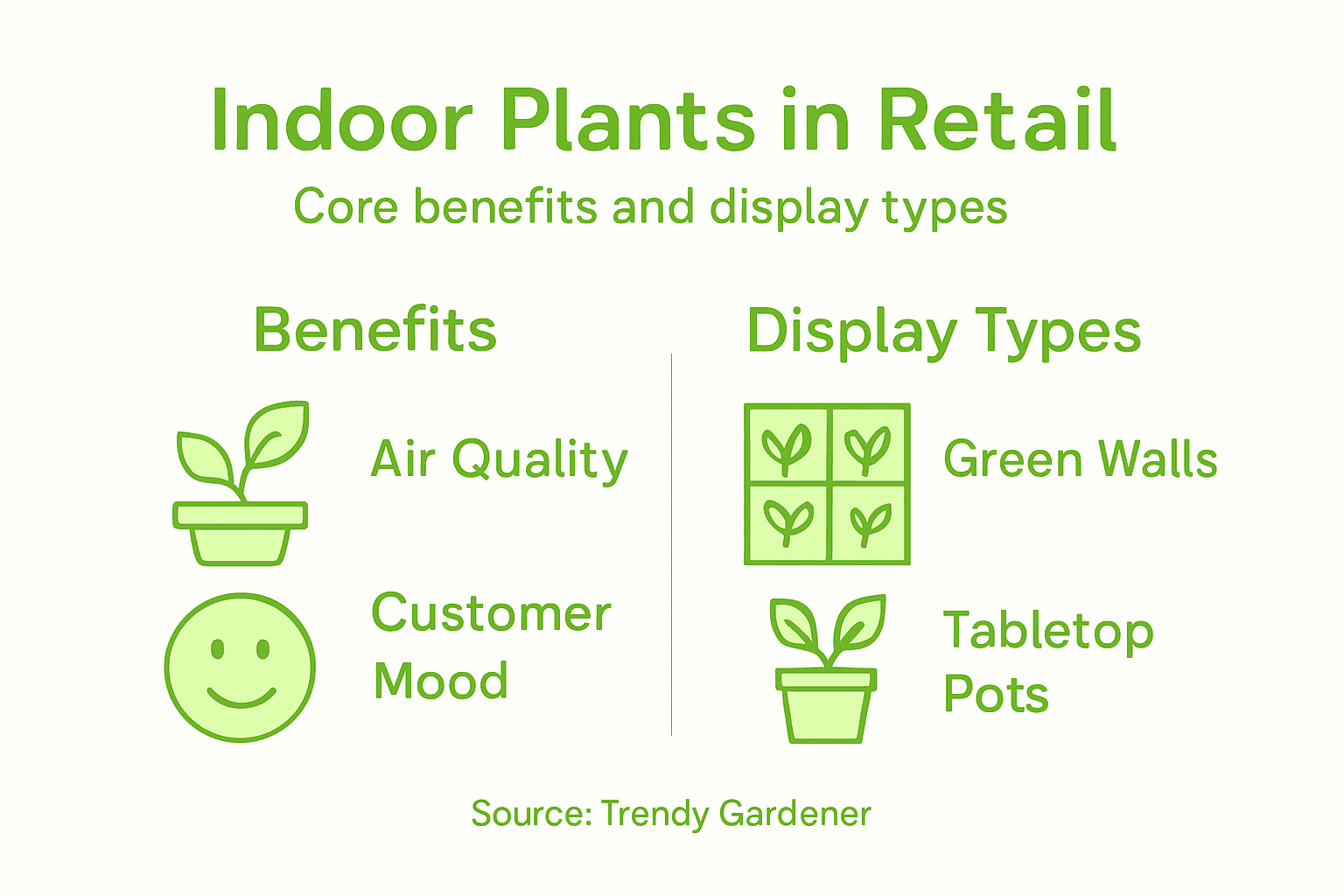
The psychological impact of biophilic design in retail spaces is profound. Sensory engagement through indoor plants triggers positive emotional responses, reducing stress and creating more welcoming environments. Retail design research reveals that plants contribute to wellness by improving air quality, reducing ambient noise, and generating a sense of natural tranquility that makes shopping experiences more enjoyable and memorable.
Beyond aesthetic appeal, indoor plants serve functional design purposes in retail settings. They can subtly guide customer movement, create natural divisions between store sections, and provide visual breaks that prevent sensory fatigue. By introducing organic elements, retailers communicate values of sustainability, health consciousness, and thoughtful design. The strategic placement of greenery can transform sterile commercial spaces into vibrant, inviting environments that resonate with modern consumers seeking more holistic shopping experiences.
Pro tip: Conduct periodic assessments of your plant displays, rotating locations and species to maintain visual interest and prevent design monotony while keeping the retail environment dynamic and engaging.
Brand Identity and Psychological Effects
Indoor plants have emerged as powerful instruments for communicating brand values and creating psychological connections with customers. Psychological research demonstrates that strategic plant integration can symbolize corporate commitments to sustainability, wellness, and environmental consciousness, transforming retail spaces into narratives of brand identity.
The emotional landscape of retail environments is profoundly influenced by botanical elements. Sensory branding through carefully selected greenery triggers nuanced psychological responses, reducing stress and generating positive emotional associations. Customer perception studies reveal that plants communicate subtle messages about a brand’s sophistication, care, and commitment to creating holistic customer experiences.
Brands can leverage indoor plants as multisensory communication tools that transcend traditional marketing approaches. Different plant species, placement strategies, and design configurations can evoke specific emotional responses and reinforce brand personality. A tech company might use sleek, architectural plants to communicate innovation, while a wellness brand could incorporate lush, organic arrangements that suggest natural healing and nurturing environments. These botanical design choices become silent storytellers, communicating brand ethos without uttering a single word.
Pro tip: Develop a consistent plant design language that aligns with your brand’s core values, selecting species and display styles that authentically represent your organizational identity and customer experience philosophy.
Maintenance, Costs, and Avoiding Pitfalls
Indoor plant programs represent significant investment for retail environments, requiring strategic planning and comprehensive understanding of potential challenges. Maintenance research reveals that successful implementation demands consistent horticultural expertise and proactive management to mitigate potential risks and optimize long-term value.
The financial considerations of indoor plant installations extend beyond initial procurement. Retailers must budget for ongoing maintenance, potential plant replacement, professional care services, and environmental adaptation strategies. Scientific studies indicate that strategic placement and professional maintenance can significantly reduce unexpected costs and minimize potential health or aesthetic complications. Key cost factors include plant selection, environmental control, pest prevention, and periodic professional evaluation.
Critical maintenance challenges include managing plant health, preventing pest infestations, addressing potential allergenic concerns, and maintaining aesthetic consistency. Successful retail plant programs require developing comprehensive care protocols that address environmental variables such as light exposure, humidity, temperature, and potential human interactions. Retailers must also consider potential sensitivities of customers and staff, ensuring plant selections minimize respiratory risks while maximizing visual and psychological benefits.
Consider these common indoor plant maintenance challenges and their business impact:
| Challenge | Potential Business Impact | Recommended Action |
|---|---|---|
| Pest Infestation | Damages brand appearance | Implement regular inspections |
| Inconsistent Care | Reduces aesthetic value | Schedule professional maintenance |
| Allergenic Reactions | Impacts customer well-being | Select low-allergen plant species |
| Poor Placement | Ineffective design enhancement | Assess light and traffic patterns |
Pro tip: Develop a comprehensive plant maintenance contract with professional horticultural services that includes regular health assessments, proactive pest management, and flexible replacement strategies to ensure consistent quality and appearance.
Enhance Your Retail Space with Expert Indoor Plant Solutions
The article highlights how indoor plants are essential tools for creating immersive, welcoming, and environmentally conscious retail environments. If you struggle with maintaining plant health, achieving cohesive design impact, or communicating your brand’s values through your store’s greenery, you are not alone. Many retailers face challenges such as inconsistent care, ineffective placement, and costly maintenance that reduce the powerful benefits indoor plants can deliver.
At Trendy Gardener, we understand these specific pain points and offer comprehensive plant programs tailored to your commercial needs. From bespoke living walls and custom plant styling to reliable leasing and full-service maintenance, our expert team ensures your retail space feels intentional, elevated, and alive from day one. Our solutions focus on operational reliability and sophisticated design that reinforce your brand identity while enhancing customer experiences. Explore how our services can solve common challenges and bring your retail vision to life at Trendy Gardener.
Transform your retail environment with plants that deliver lasting psychological and aesthetic impact. Visit Trendy Gardener now to discover tailored interior plantscaping options with professional care included. Contact us today for a consultation and take the first step toward a greener, more engaging retail experience.
Frequently Asked Questions
What are the benefits of using indoor plants in retail spaces?
Indoor plants enhance air quality, reduce ambient noise, and create a sense of psychological comfort, improving the overall shopping experience and potentially increasing customer dwell time and purchasing behavior.
How can I select the right indoor plants for my retail environment?
Choose plants that align with your store’s lighting, temperature, and aesthetic design. Consider factors like maintenance requirements and how they complement your existing decor to maximize their strategic impact.
What types of indoor plant displays are effective in retail settings?
Effective indoor plant displays include potted plants, hanging installations, green walls, and modular systems. Each type can serve unique purposes, such as enhancing aesthetics, providing natural divisions, or guiding customer movement.
How can indoor plants improve brand identity in retail?
Indoor plants can communicate a brand’s commitment to sustainability and enhance customer perceptions of sophistication and care, helping to create emotional connections with shoppers and reinforcing brand values.