

Living Walls: 60% Cleaner Air & 30% Less Stress in 2026
Imagine transforming your home or office into a space that actively cleans the air you breathe. Living walls reduce indoor air pollutants by up to 60%, offering far more than visual appeal. For Des Moines homeowners and business owners, these vertical gardens deliver measurable environmental, psychological, and economic advantages. This guide unpacks the full spectrum of benefits and practical considerations to help you decide if a living wall fits your space.
Table of Contents
- Introduction To Living Walls
- Environmental Benefits Of Living Walls
- Psychological And Well-being Benefits
- Economic Benefits And Property Value
- Common Misconceptions About Living Walls
- Comparison With Other Green Solutions
- Practical Considerations For Choosing And Maintaining Living Walls In Des Moines
- Discover Trendy Gardener Living Wall Solutions
- Frequently Asked Questions About Living Walls
Key Takeaways
| Point | Details |
|---|---|
| Air Quality Boost | Living walls remove VOCs and particulate matter, improving indoor air by up to 60%. |
| Mental Health Impact | Exposure to green walls reduces stress by 30% and increases productivity by 15%. |
| Property Value | Strategic installation can increase home and commercial property values by 5-8%. |
| Maintenance Reality | Automated systems reduce upkeep to under 30 minutes weekly, dispelling high maintenance myths. |
| Climate Adaptability | Proper plant selection makes living walls viable year round in Des Moines. |
Introduction to Living Walls
Living walls, also called green walls or vertical gardens, are self-contained ecosystems where plants grow vertically on structural supports attached to interior or exterior walls. Unlike simple hanging planters, these installations integrate irrigation, drainage, and growing media into cohesive systems that support diverse plant communities. They’ve evolved from ancient Babylonian hanging gardens to modern biophilic design principles that reconnect urban dwellers with nature.
Three primary types dominate the market:
- Modular systems use pre-planted panels or pockets that snap together, offering flexibility for various wall sizes and configurations
- Felt or fabric systems feature layers of synthetic fabric supporting root growth, ideal for custom artistic designs
- Hydroponic systems grow plants in nutrient-rich water without soil, reducing weight and maintenance complexity
Des Moines has seen growing adoption of living walls in both residential and commercial settings. Local architects and interior designers increasingly specify them for lobbies, conference rooms, and upscale homes. This trend reflects broader recognition that indoor plantscaping benefits in Des Moines extend beyond decoration to measurable health and productivity gains. As biophilic design gains traction nationwide, living walls have become accessible and practical for Iowa’s climate.
Environmental Benefits of Living Walls
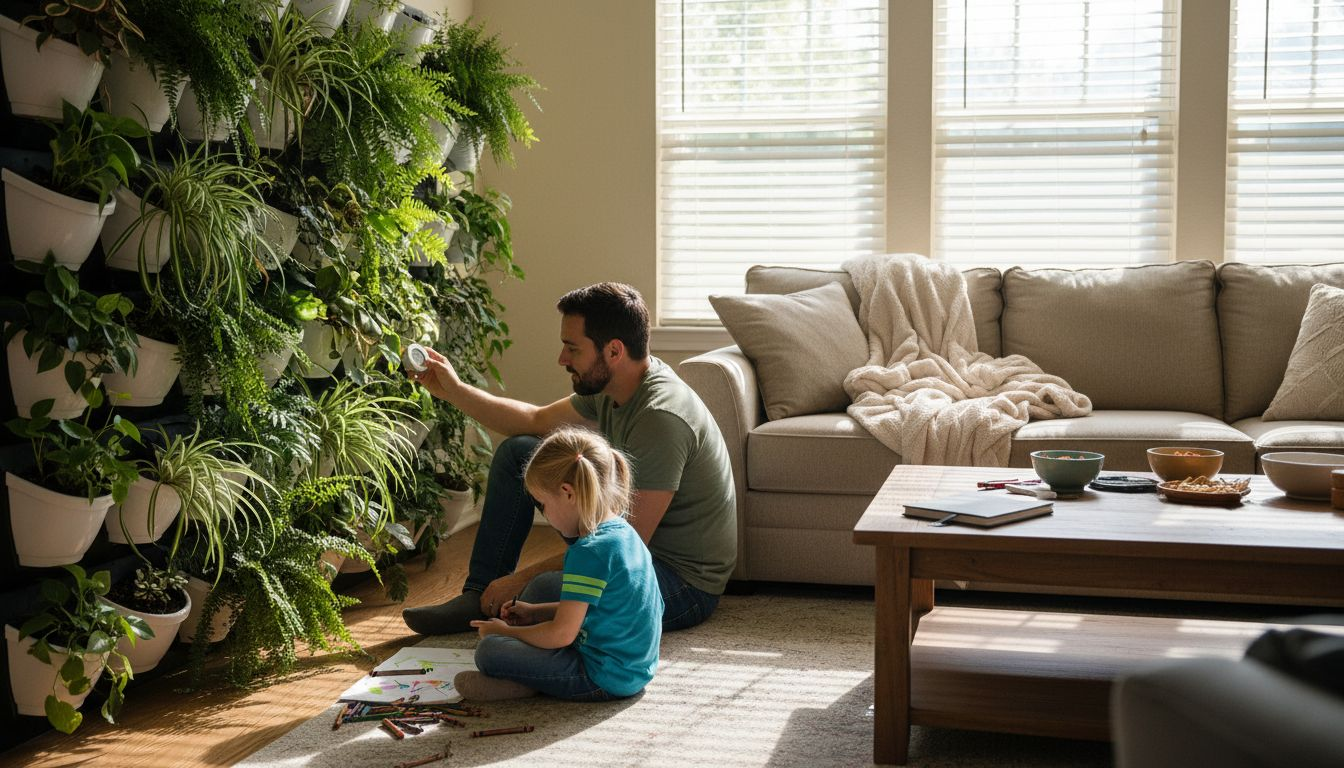
The air quality improvements living walls provide are not anecdotal. Research demonstrates that these systems remove volatile organic compounds like formaldehyde, benzene, and trichloroethylene from indoor air at remarkable rates. Plants absorb these pollutants through their leaves and roots, while beneficial microbes in the growing media break down harmful compounds.
Particulate matter (PM2.5) poses serious health risks, especially in sealed modern buildings. Living walls act as biological filters, trapping these microscopic particles on leaf surfaces and within their root zones. The table below shows typical pollutant reductions:
| Pollutant Type | Reduction Rate | Health Impact |
|---|---|---|
| VOCs | 50-60% | Reduces headaches, respiratory irritation |
| PM2.5 | 30-40% | Lowers asthma triggers, cardiovascular stress |
| CO2 | 10-15% | Improves alertness, cognitive function |
| Humidity | Maintains 40-60% | Prevents dry skin, respiratory discomfort |
Des Moines experiences significant seasonal humidity swings. Winter heating creates excessively dry indoor air, while summer humidity can feel oppressive. Living walls naturally regulate moisture through transpiration, releasing water vapor that maintains comfortable levels year round. This passive climate control reduces reliance on humidifiers and dehumidifiers.
Pro Tip: Select plants based on your specific air quality goals. Spider plants and pothos excel at VOC removal, while ferns and peace lilies boost humidity effectively. Combine species for comprehensive air purification tailored to Des Moines conditions.
Psychological and Well-being Benefits
Beyond environmental improvements, living walls profoundly affect mental health and daily functioning. Studies show that exposure to green walls in workspaces reduces stress levels by 30% and boosts productivity by 15%. These aren’t marginal gains but substantial improvements that translate to better focus, creativity, and job satisfaction.
“Employees in offices with living walls reported 37% fewer sick days and 38% higher productivity compared to traditional office environments, demonstrating the tangible wellness returns of biophilic interventions.”
The mechanisms behind these benefits involve both psychological and physiological responses:
- Visual restoration: Natural elements provide micro-breaks that reduce mental fatigue and eye strain from screens
- Stress hormone reduction: Proximity to plants lowers cortisol levels, promoting calm and emotional regulation
- Cognitive enhancement: Green environments improve concentration spans and problem-solving abilities
- Social connection: Shared appreciation of living walls fosters workplace community and conversation
For Des Moines homeowners, these advantages extend to family life. Children show improved focus doing homework near living walls. Adults report better sleep quality when bedrooms incorporate biophilic elements. The indoor plants wellness benefits compound over time, making living walls an investment in long term health rather than mere decoration.
Economic Benefits and Property Value
Living walls deliver financial returns that justify their upfront investment. Real estate professionals consistently report that homes and commercial properties featuring quality biophilic installations command 5-8% premiums compared to similar properties without them. For a $400,000 Des Moines home, that translates to $20,000-$32,000 in additional value.
Installation costs vary based on system complexity and wall size:
- Modular systems: $150-$250 per square foot installed, including irrigation and plants
- Custom hydroponic walls: $200-$400 per square foot for complex designs with premium species
- Maintenance contracts: $100-$300 monthly for professional care, or minimal cost with automated systems
These numbers might seem substantial, but consider the long term ROI. Energy savings alone offset a portion of costs. Living walls provide natural insulation, reducing heating and cooling expenses by 15-20% for walls they cover. In Des Moines, where temperature extremes demand significant HVAC use, this translates to hundreds of dollars annually.
Pro Tip: Start with a smaller feature wall (40-60 square feet) to experience benefits without major commitment. Modular systems allow easy expansion as you appreciate the value. Choose recirculating systems that minimize water waste and maintenance time, particularly important for Des Moines’ variable climate.
The economic benefits of plant installations extend beyond property value. Businesses report reduced employee turnover and absenteeism, while homeowners enjoy lower utility bills and enhanced quality of life that’s difficult to quantify but deeply felt.
Common Misconceptions About Living Walls
Several persistent myths prevent people from considering living walls. Let’s address the most common misunderstandings directly:
-
“Living walls require constant attention and expert care.” Modern automated irrigation systems and professional maintenance programs have transformed upkeep requirements. Research confirms that properly designed systems need under 30 minutes weekly for visual inspections and occasional pruning. Sensors monitor moisture levels and trigger watering automatically, eliminating guesswork.
-
“The costs are prohibitive for average homeowners.” While premium custom installations can be expensive, modular systems and smaller feature walls start at accessible price points. When you factor in energy savings, property value increases, and health benefits, the lifetime cost per benefit unit compares favorably to many home improvements.
-
“Iowa’s climate makes living walls impractical.” This concern assumes living walls must be outdoors. Interior installations thrive in controlled environments regardless of external weather. Even for exterior applications, cold-hardy species and proper insulation allow year round performance. Des Moines’ four-season climate actually benefits from living walls’ humidity regulation.
-
“They’re just decorative and don’t offer real benefits.” The data contradicts this firmly. Documented improvements in air quality, stress reduction, and productivity demonstrate functional value far exceeding aesthetics. Living walls are working systems that happen to look beautiful, not decorations that incidentally provide minor benefits.
Understanding maintenance realities helps set appropriate expectations. Yes, living walls require more attention than painted drywall. But they demand far less than traditional gardens while delivering concentrated benefits in limited space.
Comparison with Other Green Solutions
How do living walls stack up against alternatives? This comparison clarifies their unique advantages:
| Feature | Living Walls | Traditional Wall Décor | Potted Plants |
|---|---|---|---|
| Air Purification | Excellent (60% VOC reduction) | None | Moderate (limited surface area) |
| Space Efficiency | High (vertical) | Medium | Low (floor/shelf space) |
| Visual Impact | Dramatic, living art | Static, unchanging | Pleasant but scattered |
| Maintenance | Low with automation | Minimal | Medium to high per plant |
| Humidity Control | Active regulation | None | Minimal contribution |
| Property Value | 5-8% increase | Negligible | Modest enhancement |
| Lifespan | 10+ years | Variable | 2-5 years per plant |
Living walls offer several distinct advantages over accumulating individual potted plants:
- Concentrated impact: A single 50 square foot living wall provides equivalent air purification to 50-75 individual plants without consuming floor space
- Design cohesion: Integrated systems create intentional focal points rather than scattered greenery
- Maintenance efficiency: One automated system replaces individual watering schedules for dozens of plants
- Professional appearance: Living walls signal design sophistication that interior plantscaping examples demonstrate in luxury homes and offices
Compared to preserved moss walls, living systems offer ongoing air purification and humidity benefits that preserved installations cannot provide. For a detailed breakdown of different systems, explore living walls vs other green solutions to understand which approach best fits your goals and constraints.
Practical Considerations for Choosing and Maintaining Living Walls in Des Moines
Ready to move forward? Follow these steps for successful implementation:
-
Assess your space: Measure available wall area, lighting conditions, and proximity to water sources. South or west facing interior walls typically provide ideal light for diverse plant selections.
-
Choose your system type: Modular panels work well for DIY-inclined homeowners, while hydroponic systems suit those prioritizing low maintenance. Consider professional living wall systems that integrate irrigation and drainage seamlessly.
-
Select appropriate plants: For Des Moines conditions, prioritize species tolerant of indoor temperature fluctuations. Pothos, philodendron, ferns, and spider plants thrive in Iowa’s climate. Mix textures and colors for visual interest while ensuring compatible care requirements.
-
Install proper irrigation: Automated drip systems or recirculating pumps eliminate the most time-consuming maintenance aspect. Timer-controlled watering maintains consistent moisture without daily attention.
-
Arrange professional installation: Experienced installers ensure proper wall preparation, waterproofing, and system integration. Poor installation causes 80% of living wall failures, making expertise valuable.
-
Establish maintenance routines: Weekly visual checks for pest issues or dead foliage, monthly fertilization through irrigation systems, and quarterly professional assessments keep systems thriving.
Pro Tip: Iowa’s winter heating creates dry indoor air that stresses many plants. Supplement living wall humidity with nearby room humidifiers during peak heating season (December through February). This simple addition dramatically improves plant health and system longevity.
The best plant walls for Des Moines account for local climate realities. Work with specialists who understand Iowa’s seasonal variations and can specify appropriate species and system configurations. Professional maintenance and care guidance ensures your investment delivers benefits for years, not just months.
Discover Trendy Gardener Living Wall Solutions
Trendy Gardener specializes in transforming Des Moines spaces through expert biophilic design and custom living wall systems. Whether you’re envisioning a dramatic lobby installation or an intimate home feature wall, we deliver end-to-end solutions from consultation through ongoing care.
Our recirculating living wall systems feature automated irrigation that reduces maintenance to minutes weekly, while our free-standing living wall systems offer flexibility for renters or those wanting portable options. We source premium plants, design cohesive installations, and provide maintenance programs that keep your living wall thriving through Iowa’s seasons. Schedule a consultation to explore how living walls can elevate your space while delivering measurable health and economic benefits.
Frequently Asked Questions About Living Walls
What maintenance is actually required for living walls?
Modern automated systems need only 20-30 minutes weekly for visual inspections and occasional pruning. Sensors monitor moisture levels and trigger watering automatically, while quarterly professional check-ups address fertilization and any plant replacements. This is far less demanding than maintaining equivalent potted plant collections.
Can living walls survive Des Moines winters?
Interior living walls thrive year round regardless of outdoor temperatures since they exist in climate-controlled spaces. Proper plant selection and supplemental humidity during peak heating season ensure excellent performance through Iowa winters. Exterior installations require cold-hardy species and insulation but are entirely feasible with proper design.
How do living walls improve indoor air quality specifically?
Plants absorb VOCs like formaldehyde and benzene through their leaves and roots, while beneficial microbes in growing media break down pollutants. Simultaneously, leaf surfaces trap particulate matter (PM2.5), and transpiration regulates humidity to comfortable levels. This multi-mechanism approach removes up to 60% of common indoor air contaminants.
Are living walls a good investment for home resale value?
Yes, quality installations increase property values by 5-8% according to real estate professionals. Beyond direct value, they differentiate properties in competitive markets and appeal to health-conscious buyers seeking wellness-focused homes. Combined with energy savings and personal enjoyment, the ROI is compelling for most homeowners.
What are the best plants for living walls in Iowa’s climate?
Pothos, philodendron, ferns, spider plants, and peace lilies all excel in Des Moines conditions. These species tolerate the humidity fluctuations and temperature variations typical of Iowa homes and offices. Mix varieties with different textures and growth habits for visual interest while ensuring all selections share similar light and water requirements for maintenance simplicity.
Recommended
- 6 Elevated Living Wall Ideas for Commercial Spaces
- Living Walls vs Green Walls vs Moss Walls | Trendy Gardener
- Workspace Productivity with the Benefits of Live Plants
- Indoor Plant Trends 2026: Transforming Luxury Spaces
- Natural Marble Aromatherapy Diffuser | Solid Stone Luxury Lamp Decor – Marmorique