

Step by step plant maintenance: 90% foliage retention Iowa
Keeping plants thriving in Iowa’s climate frustrates many homeowners and interior designers. Inconsistent watering, poor light management, and missed pruning schedules lead to drooping leaves and costly replacements. This guide delivers a clear, actionable roadmap to maintain healthy plants year-round, helping you achieve measurable success and unlock the full potential of biophilic design in residential and commercial spaces.
Table of Contents
- Prerequisites: Tools, Materials, And Initial Preparation
- Step-By-Step Plant Maintenance Actions
- Common Mistakes And Troubleshooting Guidance
- Expected Outcomes And Success Metrics
- Enhance Your Space With Expert Plant Care Solutions
- FAQs About Plant Maintenance For Iowa Homes And Interiors
Key takeaways
| Point | Details |
|---|---|
| Essential tools simplify maintenance | Moisture meters, pruning shears, and appropriate containers prevent common errors and save time. |
| Systematic watering prevents root rot | Check soil moisture 1 to 2 inches deep before watering to avoid the leading cause of plant death. |
| Regular inspections catch problems early | Weekly checks for pests, disease, and stress enable fast corrective action and preserve foliage health. |
| Preventive care extends plant lifespan | Scheduled pruning, feeding, and seasonal adjustments reduce mortality and boost retention rates above 90%. |
| Track metrics to measure success | Monitor foliage retention, growth rates, and pest incidents to confirm your maintenance strategy works. |
Prerequisites: tools, materials, and initial preparation
Before you begin any maintenance routine, gathering the right tools and understanding your plants’ specific needs sets you up for lasting success. A well-calibrated planter ensures correct seed placement depth and spacing, crucial for plant emergence and healthy root development. The same principle applies indoors: precision matters.
Start with these essential tools. A digital moisture meter removes guesswork by measuring soil dampness at root level. Bypass pruning shears with sharp, clean blades make precise cuts without crushing stems. Soft gardening gloves protect your hands and prevent contamination. A watering can with a narrow spout delivers water directly to soil, not leaves. Finally, a spray bottle allows you to mist humidity-loving species.
Understanding species-specific requirements prevents costly mistakes. Research each plant’s light tolerance, watering frequency, and humidity preferences before placing them in your space. For indoor plantscaping in Des Moines, this means accounting for Iowa’s dry winter air and fluctuating indoor temperatures. Match container size to root systems and choose pots with drainage holes to prevent waterlogging.
Soil selection directly impacts plant health. Use a well-draining potting mix with perlite or bark for most houseplants. Avoid garden soil indoors as it compacts easily and harbors pests. For outdoor plants, amend native Iowa clay with compost to improve drainage and aeration.
Assess environmental factors in each room. Measure light intensity with your phone’s light meter app or visual cues. South-facing windows provide high light, while north-facing areas remain dim. Track seasonal humidity changes using a hygrometer. Iowa winters drop indoor humidity below 30%, stressing tropical plants. Note temperature fluctuations near drafty windows or heating vents.
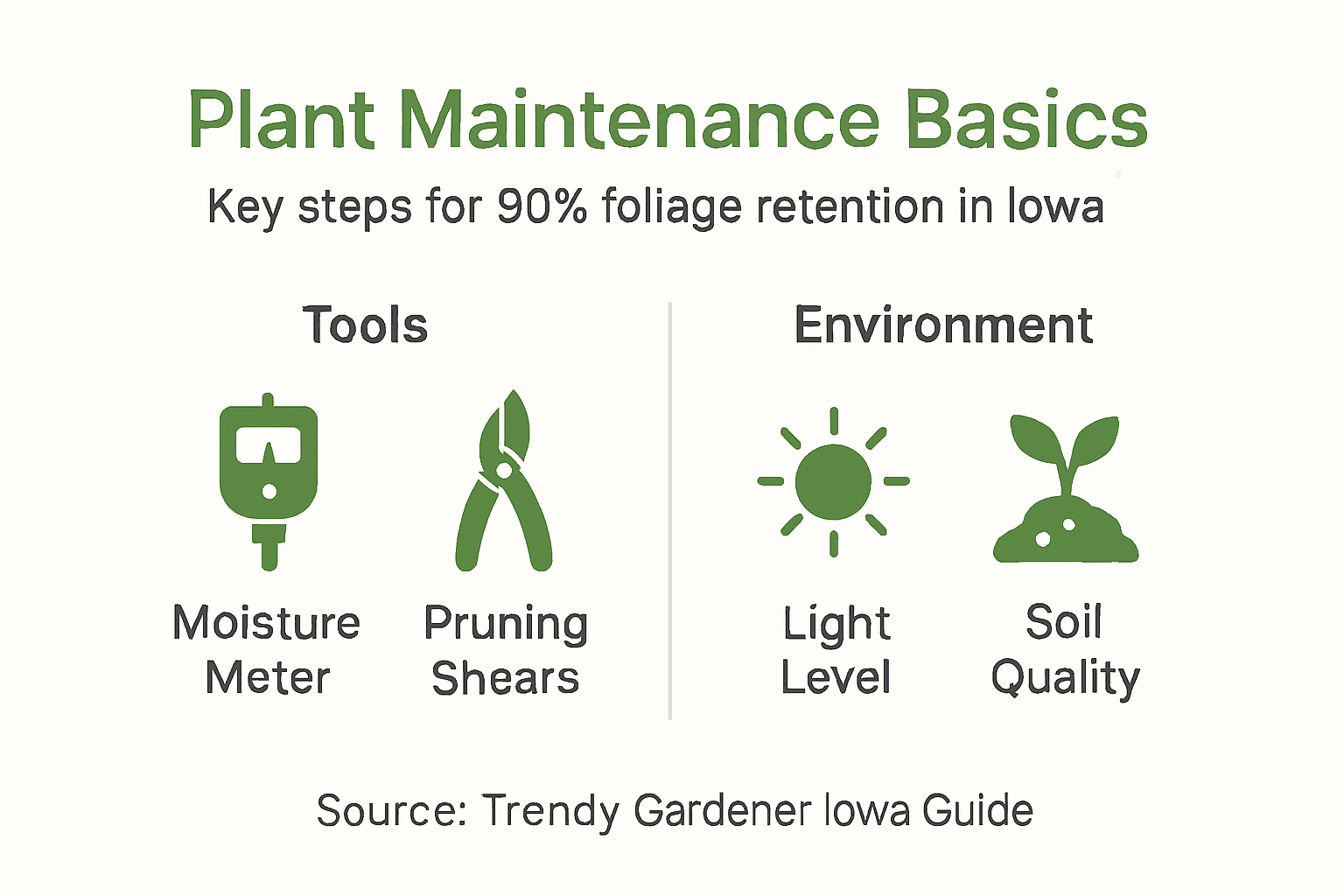
| Tool | Purpose | Maintenance Benefit |
|---|---|---|
| Moisture meter | Measures soil dampness at root depth | Prevents overwatering and root rot |
| Bypass pruners | Makes clean cuts on stems up to 0.75 inches | Promotes faster healing and new growth |
| Watering can | Delivers precise water volume | Avoids leaf splash and fungal disease |
| Spray bottle | Increases localized humidity | Supports ferns and tropical foliage |
| Gloves | Protects hands from irritants | Enables safe handling of toxic species |
Pro Tip: Invest in stainless steel tools with ergonomic grips. They resist rust, clean easily, and reduce hand fatigue during extended maintenance sessions. Label each tool with colored tape to keep them organized and prevent cross-contamination between diseased and healthy plants.
Step-by-step plant maintenance actions
Now that you have your tools ready, follow this systematic approach to keep plants healthy week after week. Standard maintenance procedures that include detailed, stepwise instructions improve reliability and reduce errors in maintenance tasks. Apply the same logic to your plant care routine for consistent results.
-
Inspect every plant weekly. Look for yellowing leaves, brown spots, webbing, or visible insects. Check stems for soft spots indicating rot. Examine the undersides of leaves where pests often hide.
-
Test soil moisture before watering. Insert your finger or moisture meter 1 to 2 inches deep. Water only when the top inch feels dry for most species. Succulents and cacti need the top 2 inches dry. Ferns prefer consistently moist soil.
-
Water thoroughly at the soil line. Pour until water drains from the bottom holes, ensuring the entire root ball gets saturated. Wait 15 minutes, then discard any standing water in saucers to prevent root suffocation.
-
Adjust watering frequency by season. Most indoor plants need water every 7 to 10 days in summer, but only every 14 to 21 days in winter when growth slows. Smaller pots dry faster than large containers. Bright light increases water consumption.
-
Rotate plants quarterly for even growth. Turn each pot 90 degrees every three months so all sides receive equal light exposure. This prevents lopsided development and strengthens stems.
-
Prune damaged foliage immediately. Use clean shears to remove dead, yellowing, or diseased leaves at the base. Cut just above a node on stems to encourage branching. Dispose of diseased material in sealed bags, not compost.
-
Apply organic mulch to outdoor plants. Spread a 2 to 3 inch layer of shredded bark or compost around the base, keeping it 2 inches away from stems. Mulch retains moisture, suppresses weeds, and moderates soil temperature.
-
Feed plants during active growth. Use a balanced liquid fertilizer at half strength every 4 weeks from March through September. Skip fertilizing in winter when most species rest. Follow package directions for species-specific blends.
-
Schedule preventive inspections monthly. Preventive maintenance through scheduled inspections and interventions reduces unplanned downtime and extends asset lifespan by up to 50%. The same principle applies to plants: catching issues early prevents major losses.
-
Document your routine. Keep a simple log noting watering dates, observations, and actions taken. This record helps you spot patterns and refine your schedule over time.
Pro Tip: Create a digital maintenance calendar with phone reminders for each task. Color code by frequency: weekly inspections in blue, monthly feeding in green, quarterly rotations in yellow. This visual system keeps you on track without overwhelming your schedule. For detailed guidance on professional-level care, explore plantscaping maintenance expert tasks to elevate your skills.
Common mistakes and troubleshooting guidance
Even careful gardeners make errors that compromise plant health. Recognizing these missteps early and applying quick fixes saves your investment and restores vitality. Overwatering causes more houseplant deaths than pests and neglect combined by triggering root rot and suffocation.
Fixed watering schedules ignore plant needs. Watering every Sunday sounds simple but fails because factors like temperature, humidity, and growth stage change water requirements constantly. Instead, test soil moisture before each watering session. This responsive approach prevents both drought stress and waterlogged roots.
Insufficient light weakens plants gradually. Placing low-light species in dim corners or sun-loving varieties far from windows causes stretched stems, pale leaves, and poor growth. Move struggling plants closer to windows or add grow lights with 2000 to 3000 lumens for medium-light species.

Improper pruning damages plant structure. Cutting randomly or leaving stubs invites disease. Always prune just above a node at a 45-degree angle using sharp, sterilized blades. Remove no more than 25% of foliage at once to avoid shocking the plant.
Leaving stakes in place too long harms outdoor trees and shrubs. Remove support stakes within one year after planting to allow trunks to develop natural strength. Leaving ties on causes girdling as stems expand.
Neglecting pest control allows infestations to spread. A few aphids multiply into colonies within weeks. At the first sign of insects, isolate affected plants and treat with indoor plant pest spray or insecticidal soap. Repeat applications every 7 days until clear.
| Common Mistake | Why It Harms Plants | Best Practice | Expected Outcome |
|---|---|---|---|
| Watering on a fixed schedule | Ignores variable moisture needs | Test soil before each watering | Healthy roots, no rot |
| Overwatering without drainage | Suffocates roots, causes rot | Ensure pots have holes, discard excess | 90%+ foliage retention |
| Insufficient light exposure | Weakens growth, causes etiolation | Match species to light zones | Strong stems, vibrant color |
| Random pruning cuts | Invites disease, slows healing | Cut above nodes at 45 degrees | Faster recovery, branching |
| Ignoring early pest signs | Allows rapid infestation spread | Isolate and treat immediately | Controlled outbreaks |
Watch for these early warning signs and take corrective action quickly:
- Yellowing lower leaves: Often signals overwatering. Reduce frequency and improve drainage.
- Brown leaf tips: Indicates low humidity or salt buildup. Mist regularly and flush soil monthly.
- Wilting despite moist soil: Suggests root rot. Remove from pot, trim black roots, repot in fresh soil.
- Sticky residue on leaves: Points to aphids or scale. Wipe with soapy water and apply pest control.
- Leggy, pale growth: Means insufficient light. Relocate or supplement with artificial lighting.
For comprehensive troubleshooting beyond these basics, consult a detailed watering houseplants guide that addresses species-specific needs and seasonal adjustments.
Expected outcomes and success metrics
Following this maintenance system produces measurable improvements you can track and celebrate. Healthy foliage retention rates above 90% in well-maintained indoor plants serve as a primary benchmark for success. When you consistently hit this target, you know your routine works.
Within 2 to 4 weeks of implementing proper watering and light adjustments, expect visible changes. New growth emerges greener and more vigorous. Wilted leaves perk up as roots recover from stress. Plants that struggled for months suddenly produce fresh shoots.
Reduction in mortality from root rot caused by overwatering happens quickly once you adopt moisture testing. By month two, you should see zero losses from waterlogging if you’re checking soil before every watering session. Pest-related damage drops similarly when you inspect weekly and treat early.
Long-term benefits compound over 1 to 2 years. Preventive maintenance through scheduled care extends plant lifespan significantly compared to reactive approaches. Mature specimens develop fuller canopies, stronger root systems, and greater resilience to environmental stress. Initial investments in quality plants pay off as they thrive year after year instead of requiring frequent replacement.
Monitor these key success indicators monthly to gauge your progress:
- Foliage retention rate: Aim for 90% or higher of leaves remaining healthy and attached.
- New growth frequency: Count new shoots or leaves emerging each month during growing season.
- Pest incident rate: Track how often you spot insects or disease, targeting zero occurrences.
- Watering accuracy: Record how often soil moisture matches target range before watering.
- Mortality rate: Measure percentage of plants lost per year, aiming for under 5%.
Statistic Callout: Professional plantscaping programs achieve foliage retention rates exceeding 95% through systematic maintenance protocols. Home gardeners using structured care routines regularly hit 90% retention, proving that consistent attention delivers professional-grade results regardless of experience level.
Tracking these metrics builds confidence and motivates ongoing care. When you see retention rates climbing and mortality dropping, the time invested in maintenance feels rewarding. Use a simple spreadsheet or phone app to log monthly observations. Over time, patterns emerge showing which adjustments drive the best outcomes for your specific conditions. For more insights on maintenance benefits and strategies, review this guide on plant maintenance benefits to deepen your understanding.
Enhance your space with expert plant care solutions
Achieving 90% foliage retention becomes easier with the right support system. Trendy Gardener specializes in biophilic design and comprehensive plant care programs tailored to Iowa homes and commercial spaces. Whether you need curated plant selections, installation, or ongoing maintenance, expert guidance ensures your investment thrives.
Explore how biophilic design transforms spaces into living, breathing environments that boost wellness and productivity. Our team delivers end-to-end solutions from consultation through long-term care, so your plants look exceptional on day one and stay that way. Discover proven strategies for ongoing plant care for biophilic design success, or browse Trendy Gardener products designed specifically for Iowa’s climate challenges. Let us help you create spaces that feel intentional, elevated, and alive.
FAQs about plant maintenance for Iowa homes and interiors
How often should I water indoor plants in Iowa?
Water frequency depends on species, pot size, and seasonal conditions. Most houseplants need watering every 7 to 10 days in summer and every 14 to 21 days in winter. Always test soil moisture 1 to 2 inches deep before watering rather than following a fixed schedule.
What tools do I need for regular plant maintenance?
Essential tools include a digital moisture meter, bypass pruning shears, a narrow-spout watering can, soft gardening gloves, and a spray bottle for misting. Quality stainless steel tools last longer and resist rust in humid conditions.
How can I prevent common plant diseases at home?
Prevent disease by avoiding overwatering, ensuring good air circulation, and removing dead foliage promptly. Sterilize pruning tools between cuts with rubbing alcohol. Isolate new plants for two weeks before placing them near existing collections to catch hidden pests or pathogens.
When is the best time to prune indoor plants?
Prune indoor plants during their active growing season, typically March through September. Remove dead or damaged leaves anytime. Avoid heavy pruning in winter when most species rest and heal slowly.
What are signs my plants are not getting enough light?
Insufficient light causes pale, yellowing leaves, stretched stems with wide spacing between leaves, and slow or no new growth. Plants may lean dramatically toward light sources. Move affected plants closer to windows or add grow lights providing 2000 to 3000 lumens.
How do I know if I am overwatering my plants?
Overwatering symptoms include yellowing lower leaves, soft brown roots, musty soil odor, and wilting despite wet soil. Check soil moisture before watering and ensure pots have drainage holes. If roots appear black or mushy, trim damaged sections and repot in fresh, well-draining mix.