

Moss walls in interiors: environmental & design role 2026
Many people assume moss walls are just trendy decoration, offering little more than a splash of green to an otherwise sterile room. In reality, these installations serve as powerful biophilic design elements that actively enhance indoor environmental quality, reduce stress, and introduce natural textures into modern interiors. For Iowa homeowners and interior designers seeking innovative solutions that combine aesthetic appeal with genuine wellness benefits, moss walls represent a practical, low-maintenance option that transforms spaces into healthier, more inviting environments. Understanding their role goes beyond surface-level trends and taps into the science of how nature improves our daily lives indoors.
Table of Contents
- Understanding Moss Walls: What They Are And Why They Matter
- The Environmental & Wellness Benefits Of Moss Walls Indoors
- Incorporating Moss Walls In Iowa Interiors: Design Trends And Practical Tips
- Comparing Moss Walls With Other Biophilic Design Elements
- Explore Trendy Gardener’s Moss Wall Systems For Your Iowa Interior
Key takeaways
| Point | Details |
|---|---|
| Environmental quality | Moss walls filter air pollutants and regulate humidity, creating healthier indoor environments. |
| Aesthetic versatility | They offer unique textures and colors that complement diverse interior design styles. |
| Low maintenance | Preserved moss requires no watering or irrigation, making upkeep minimal compared to traditional plants. |
| Biophilic benefits | These installations support human-nature connection, reducing stress and enhancing mental wellness. |
| Iowa suitability | Moss walls work well in residential and commercial interiors across Iowa’s varied climate conditions. |
Understanding moss walls: what they are and why they matter
Moss walls consist of preserved or living moss arranged on vertical surfaces to create green installations that bring nature indoors. Preservation methods typically involve treating moss with glycerin and dyes to maintain color and texture without requiring ongoing care. This differs significantly from living moss walls, which need consistent moisture and specific light conditions to thrive. The preservation process locks moss in a state that retains its softness and visual appeal while eliminating the need for watering, making it ideal for spaces where irrigation systems are impractical.
When comparing moss walls to living and green walls, the distinctions become clear. Living walls feature actively growing plants that require irrigation, drainage, and regular maintenance. Green walls can include a mix of plants and moss, often with automated watering systems. Moss walls, particularly preserved versions, eliminate these complexities entirely. They offer a static yet vibrant aesthetic without the operational demands of living plant systems. This makes them particularly appealing for high-traffic commercial spaces or residential areas where simplicity matters.
Common moss types used in interior installations include reindeer moss, sheet moss, and mood moss. Each variety provides distinct textures and colors, from the soft, cushiony appearance of reindeer moss to the flat, carpet-like quality of sheet moss. Designers often combine multiple types to create depth and visual interest. These materials fit seamlessly into sustainable interior design strategies because they require no ongoing water consumption, chemical treatments, or energy-intensive care routines once installed.
Comparison of moss wall types:
| Feature | Preserved Moss | Living Moss | Mixed Green Wall |
|---|---|---|---|
| Watering needs | None | Regular misting | Automated irrigation |
| Maintenance level | Minimal dusting | Moderate care | High upkeep |
| Lifespan | 5-10 years | Indefinite with care | Varies by plants |
| Installation cost | Moderate | Lower initial | Higher initial |
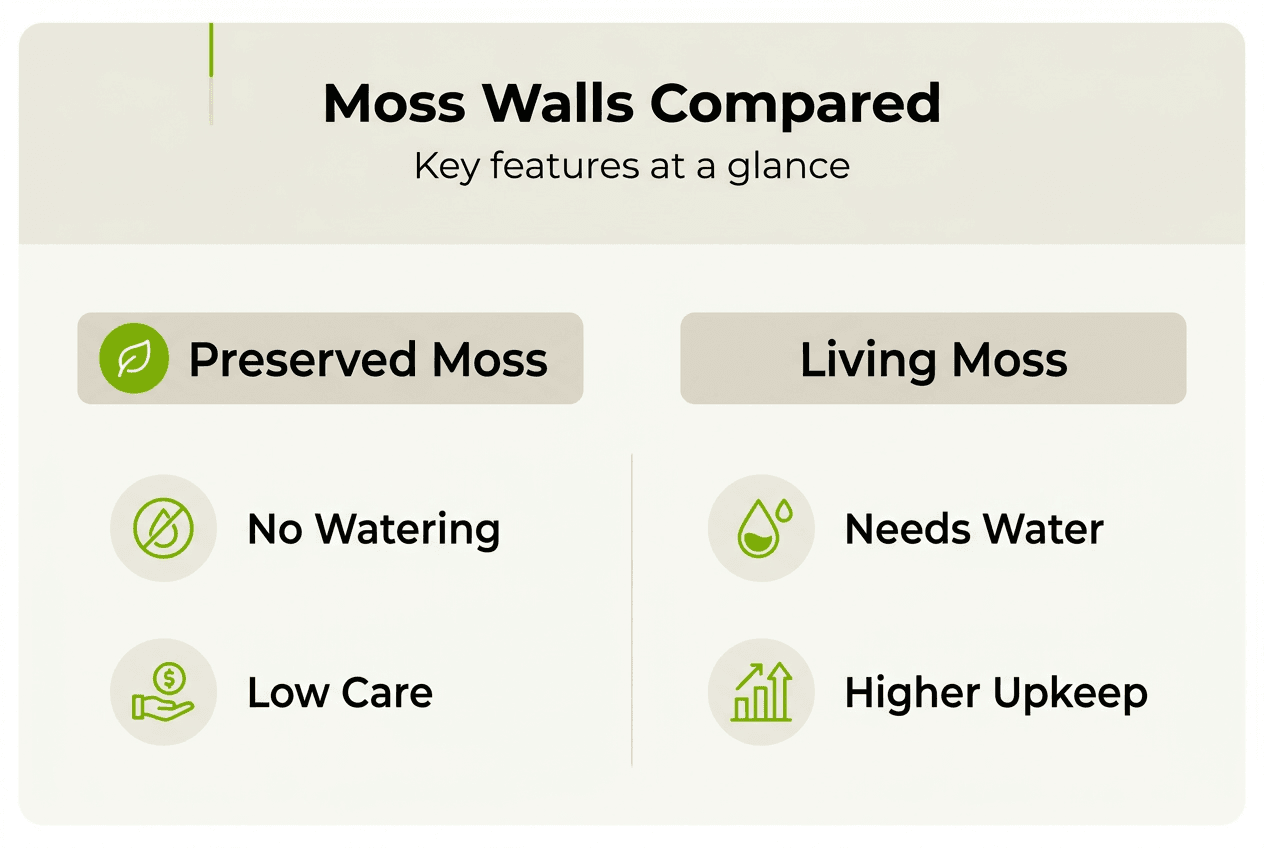
Key benefits of moss walls include their ability to absorb sound, which makes them valuable in open-concept homes or busy office environments. Their texture naturally dampens noise, creating quieter, more comfortable spaces. Limitations exist too. Preserved moss does not actively purify air like living plants, though it contributes to humidity regulation. It also requires protection from direct sunlight, which can fade colors over time. Understanding these trade-offs helps you choose the right system for your specific needs.
The environmental & wellness benefits of moss walls indoors
Moss walls contribute to improved indoor environments in ways that extend beyond aesthetics. While preserved moss does not actively photosynthesize, it still regulates humidity by absorbing and releasing moisture based on ambient conditions. This passive moisture management helps maintain comfortable indoor air quality, particularly in dry winter months common in Iowa. Living moss walls take this further by filtering certain airborne particles and contributing to oxygen production, though the effect is modest compared to larger plant installations.
Scientific research demonstrates that living walls can improve air quality by 60% and reduce stress by 30% in indoor environments. These benefits stem from the presence of greenery itself, which triggers psychological responses linked to nature exposure. Even preserved moss walls, which do not actively purify air, provide visual and tactile connections to natural environments that lower cortisol levels and improve mood. The presence of natural textures and organic colors creates calming environments that support mental wellness.
Psychological benefits from moss walls include:
- Reduced anxiety and stress through visual connection to nature
- Improved focus and productivity in work environments
- Enhanced sense of calm in residential living spaces
- Greater satisfaction with interior aesthetics and comfort
Biophilic design principles emphasize the importance of indoor plants for wellness, and moss walls align perfectly with these goals. They introduce organic elements into built environments, satisfying our innate need for nature contact. This connection becomes especially valuable in urban or suburban Iowa settings where access to outdoor green spaces may be limited during harsh winter months. Bringing nature indoors through moss walls provides year-round access to these wellness benefits.
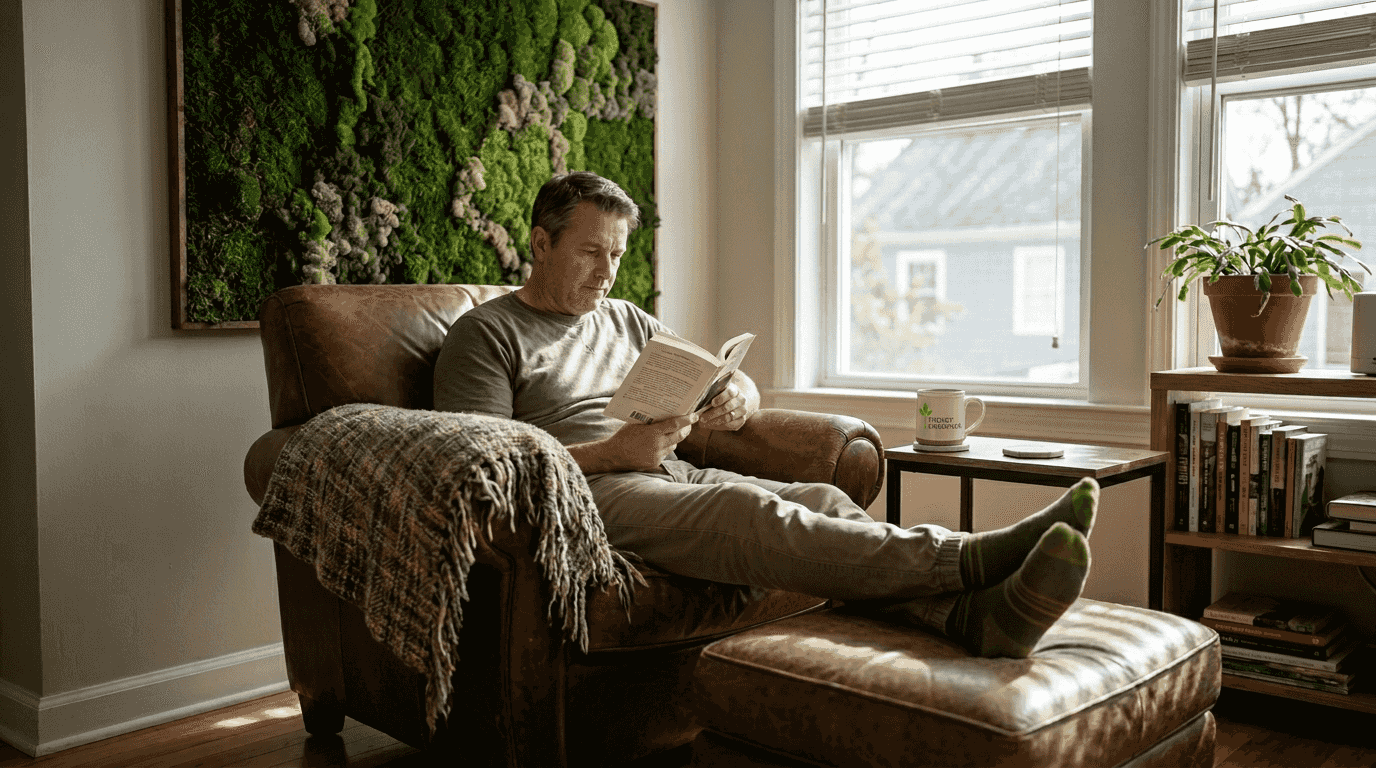
For residential interiors, moss walls create focal points that invite relaxation and contemplation. In commercial settings like offices, retail stores, or hospitality venues, they signal a commitment to employee and customer well-being. The tactile quality of moss invites touch and engagement, though preserved varieties should be handled minimally to maintain their integrity. This sensory dimension adds another layer to the wellness experience, making spaces feel more alive and intentional.
Incorporating moss walls in Iowa interiors: design trends and practical tips
Integrating moss walls successfully starts with selecting the right system for your space. Consider whether you want preserved moss for minimal upkeep or living moss for active air purification. Preserved systems work well in low-light areas like hallways or interior rooms without windows. Living moss needs indirect natural light and higher humidity, making them suitable for bathrooms or sunrooms. Evaluate your space’s conditions before committing to a specific type.
Placement considerations include light exposure, wall structure, and visual balance. Moss walls make strong statements, so position them where they enhance rather than overwhelm a room. Popular locations include behind seating areas, in entryways, or as accent walls in dining rooms. Avoid direct sunlight for preserved moss, which can cause fading. Ensure the wall can support the installation’s weight, particularly for larger systems that include frames or backing materials.
Maintaining moss walls requires minimal effort when done correctly. Preserved moss needs occasional dusting with a soft brush or gentle air blower to remove debris. Avoid water or chemical cleaners, which can damage the preservation treatment. Living moss requires light misting every few days and monitoring for browning or drying. Proper plant care reduces plant loss by 30%, crucial for maintaining wall vibrancy and health. Following indoor plant maintenance workflows ensures lasting beauty and reduced upkeep.
Steps to install a moss wall:
- Assess wall conditions, light exposure, and humidity levels
- Choose preserved or living moss based on maintenance preference
- Select moss types and colors that complement existing décor
- Install backing frame or mounting system securely
- Arrange moss sections for visual balance and texture variety
- Establish care routine appropriate to moss type
Examples of moss wall installations in Iowa demonstrate their versatility. A custom moss wall in Waukee showcases how these installations enhance commercial interiors with local relevance and artistic flair. Residential projects often feature smaller accent panels in living rooms or bedrooms, creating intimate connections to nature without overwhelming the space. The key is scaling the installation to fit the room’s proportions and purpose.
Pro Tip: Avoid placing preserved moss walls in high-humidity areas like bathrooms or kitchens, where constant moisture can degrade the preservation treatment and lead to mold growth. Reserve these spaces for living moss or traditional plants that thrive in humid conditions.
Comparing moss walls with other biophilic design elements
Biophilic design encompasses various elements that bring nature into built environments, from potted plants and water features to natural materials and daylighting strategies. Moss walls represent one option among many, each with distinct advantages. Understanding how they compare helps you choose the right combination for your interior goals. Living plant walls offer active air purification and dynamic growth, while moss walls provide static beauty with minimal care. Water features introduce soothing sounds but require plumbing and regular cleaning.
A side-by-side comparison reveals practical differences. Maintenance requirements vary significantly. Moss walls demand less upkeep than living plant walls, which need watering, pruning, and fertilization. Cost considerations differ too. Initial installation for moss walls can be moderate, while living walls require irrigation infrastructure that increases upfront investment. Long-term costs favor moss walls due to reduced maintenance needs. Aesthetic impact depends on personal preference. Some prefer the vibrant, changing appearance of living plants, while others value the consistent, soft texture of preserved moss.
Feature comparison of biophilic elements:
| Element | Maintenance | Cost | Environmental Impact | Best Use Case |
|---|---|---|---|---|
| Preserved moss wall | Low | Moderate | Humidity regulation | Low-light interiors |
| Living plant wall | High | High | Active air purification | Bright spaces |
| Potted plants | Moderate | Low | Moderate air improvement | Flexible placement |
| Water features | Moderate | Moderate to high | Humidity, sound masking | Relaxation areas |
Best use cases for moss walls include spaces where irrigation is impractical, such as rental properties, historic buildings, or areas without easy water access. They excel in creating visual impact without operational complexity. Living walls suit environments where active plant growth and air purification justify the added maintenance, like offices or wellness centers. Combining multiple biophilic elements often yields the strongest results. Pair a moss wall with potted plants and natural wood furniture to layer textures and deepen the nature connection.
Understanding biophilic design principles helps you integrate these elements thoughtfully. The goal is creating environments that feel intentional and alive, not cluttered or forced. Moss walls contribute soft, organic textures that balance hard surfaces like concrete or metal. They work especially well in modern or minimalist interiors where their simplicity complements clean lines and neutral palettes.
Pro Tip: When combining moss walls with other biophilic features, vary the scale and placement to avoid visual competition. Use moss as an accent wall and distribute potted plants at different heights to create layered interest that guides the eye naturally through the space.
Explore Trendy Gardener’s moss wall systems for your Iowa interior
Ready to bring the benefits of moss walls into your Iowa home or commercial space? Trendy Gardener offers specialized systems designed for easy installation and lasting beauty. Our preserved moss walls deliver the aesthetic and wellness advantages you’ve learned about, with minimal upkeep required. Whether you’re enhancing a residential living room or creating a statement piece in a retail environment, our solutions fit seamlessly into diverse design visions.
Explore our 24 pocket wall mounted living wall system for flexible vertical gardening options, or consider the recirculating living wall system for automated care. The 33 pocket free standing living wall system provides portability and impact without permanent installation. Our team supports you from consultation through installation, ensuring your moss wall enhances your space exactly as envisioned.
FAQ
What maintenance do moss walls require indoors?
Preserved moss walls need minimal maintenance, typically just occasional dusting with a soft brush to remove debris. Avoid water, which can damage the preservation treatment. Living moss walls require light misting every few days and monitoring for dryness or browning. Following structured indoor plant maintenance workflows ensures your installation stays vibrant with minimal effort.
Are moss walls suitable for homes with pets and children?
Moss walls are generally safe, non-toxic, and sturdy when properly installed. Preserved moss contains natural materials treated with glycerin, which is harmless if touched. The installations require minimal interference, making them ideal for homes with curious pets or children. Secure mounting prevents accidental dislodging, ensuring safety and longevity.
How do moss walls support biophilic design in modern interiors?
Moss walls provide natural textures and contribute to improved air quality through humidity regulation. They create calming environments by fostering visual and tactile connections to nature, which reduces stress and enhances mental wellness. These installations align with biophilic design principles that prioritize human-nature relationships in built spaces, making interiors feel more intentional and alive.
Can moss walls be used in commercial interiors in Iowa?
Moss walls enhance brand image and indoor environments in offices, retail stores, and hospitality venues across Iowa. They signal a commitment to wellness and sustainability, improving employee satisfaction and customer experience. Examples like the custom moss wall in Waukee demonstrate their effectiveness in creating memorable, nature-inspired commercial spaces.