


Expert Plant Care Cuts Plant Loss 30% in Living Walls
Many believe moss walls need zero maintenance. That’s a myth that leads to faded colors, lost texture, and disappointed property owners. Both living and moss walls demand expert care to stay vibrant and healthy. This guide reveals how professional plant care extends wall longevity, reduces losses, and transforms Des Moines interiors into thriving biophilic spaces.
Table of Contents
- Understanding Bespoke Living and Moss Walls
- Fundamentals of Expert Plant Care
- Comparing Care Needs: Living Walls Vs Moss Walls
- Common Misconceptions and Realities in Plant Wall Care
- Benefits of Professional Plant Care for Interiors
- Implementing Expert Plant Care in Des Moines Interiors
- Summary and Practical Takeaways
- Enhance Your Interiors with Professional Plant Care Solutions
Key Takeaways
| Point | Details |
|---|---|
| Expert care reduces losses | Smart irrigation and monitoring cut plant loss by 30% and drop maintenance costs by 20%. |
| Living walls need active maintenance | These systems require irrigation, fertilization, and pest control for sustained health. |
| Moss walls demand humidity control | Preserved moss thrives with proper humidity but needs no watering or soil. |
| Professional care boosts environment | Expert maintenance improves air quality, acoustics, and visual appeal in homes and offices. |
| Local conditions matter | Des Moines humidity swings and lighting variability require tailored care strategies. |
Understanding Bespoke Living and Moss Walls
Bespoke living walls are vertical gardens built with living plants rooted in soil or hydroponic media. They bring nature indoors through custom design and active growth. Preserved moss walls use treated moss that’s no longer alive but retains texture, color, and form for years without water or sunlight.
Materials differ significantly. Living walls rely on irrigation systems, grow lights, and nutrient delivery to sustain plant health. Moss walls feature preserved Reindeer moss, Sheet moss, or Pole moss treated with glycerin to stay soft and colorful. Both systems embody biophilic design basics by connecting occupants to nature.
The benefits of moss walls include acoustic dampening and air purification. Moss walls can reduce ambient noise levels by several decibels depending on thickness and density. Living walls add oxygen, filter toxins, and regulate humidity actively. Both systems enhance aesthetics, creating focal points that feel organic and refined.
Key benefits include:
- Air quality improvement through pollutant absorption and oxygen production
- Noise reduction in open offices and residential spaces
- Visual warmth and biophilic connection that reduce stress
- Customizable design to fit any interior style or space constraint
Fundamentals of Expert Plant Care
Expert care starts with precision watering. Living walls need consistent moisture without waterlogging roots. Overwatering causes root rot; underwatering leads to wilting and leaf drop. Professional systems use drip irrigation or automated misting to deliver exact amounts on schedule.
Fertilization fuels growth. Plants in living walls deplete nutrients faster than those in ground soil. Expert care programs apply balanced, water-soluble fertilizers monthly to maintain vigor. Smart irrigation systems cut plant loss by approximately 30% in indoor living walls by adapting to seasonal changes and plant needs.
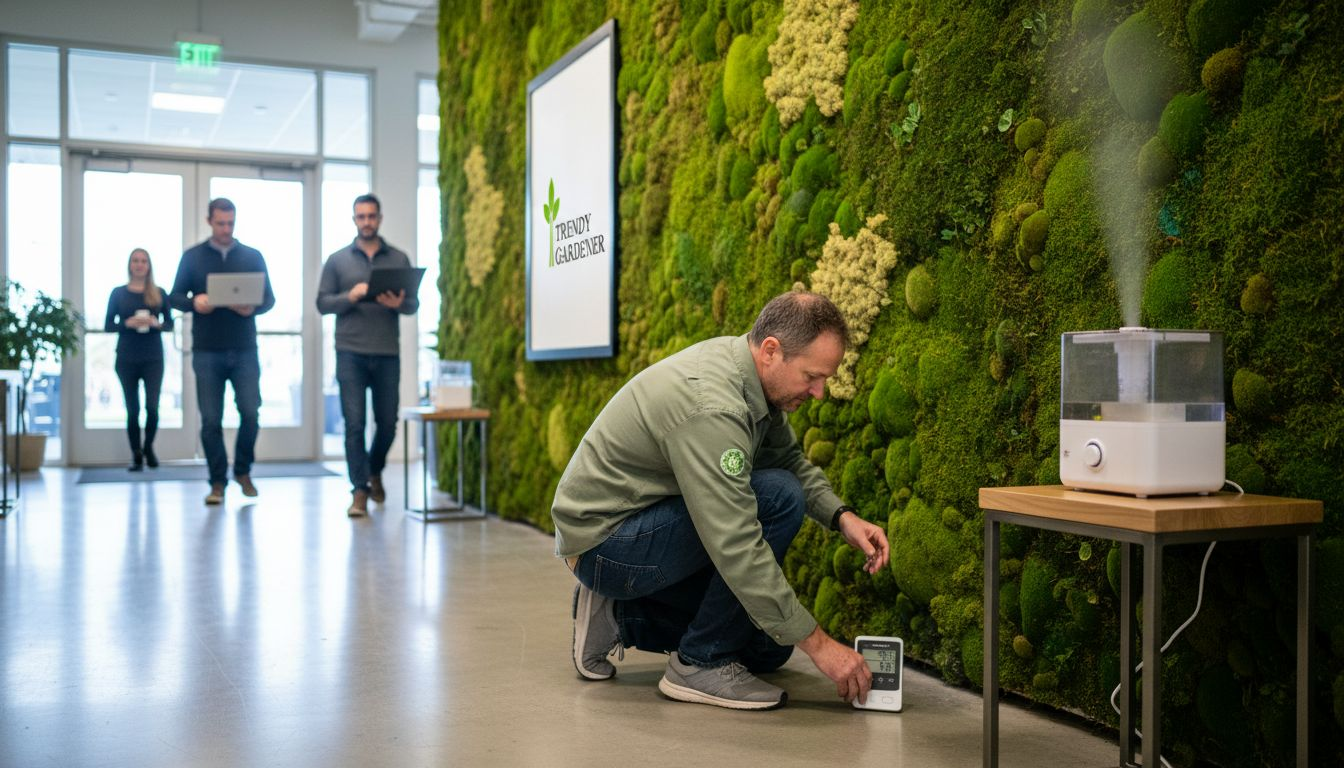
Humidity and light are non-negotiable. Living walls thrive in 40 to 60 percent humidity with bright, indirect light. Moss walls need 40 to 50 percent humidity to stay pliable but no light. Environmental sensors track these parameters in real time. Pest control involves weekly inspections for aphids, spider mites, and fungal issues, with organic treatments applied as needed.
Design customization simplifies care. Grouping plants by water and light needs reduces complexity. Modular panels allow easy access for maintenance. Expert plant care programs include consultation, installation, and ongoing monitoring to keep systems healthy.
Core practices include:
- Scheduled irrigation tailored to plant species and season
- Monthly fertilization with balanced nutrients
- Environmental monitoring via sensors for humidity and light
- Proactive pest management with organic solutions
- Design optimization for maintenance efficiency
Pro Tip: Install a humidifier near moss walls during dry winter months to prevent brittleness and color loss.
Comparing Care Needs: Living Walls vs Moss Walls
Living and moss walls differ fundamentally in care intensity. Living walls are active ecosystems requiring water, nutrients, and light. Moss walls are passive, needing only humidity control and occasional dusting. Understanding these distinctions helps property owners choose the right system and budget appropriately.
| Aspect | Living Walls | Moss Walls |
|---|---|---|
| Watering | Daily or automated irrigation | None |
| Fertilization | Monthly applications | None |
| Soil/Media | Soil or hydroponic substrate | No soil, preserved moss only |
| Light Requirements | Moderate to bright indirect light | None |
| Humidity Needs | 40 to 60 percent | 40 to 50 percent |
| Lifespan | Around 5 years with care | 8 to 15 years |
| Maintenance Labor | High, requires weekly monitoring | Low, quarterly checks sufficient |
| Cost | Higher ongoing costs for water, nutrients, labor | Lower, mainly humidity control |
Living walls demand more labor but deliver active air purification and dynamic growth. Moss walls offer low maintenance and long lifespan but lack the oxygen production of living plants. Living vs moss wall care comparison guides help clarify trade-offs.
Common mistakes include:
- Treating moss walls like living walls by watering them, causing mold and discoloration
- Neglecting humidity control in moss walls, leading to brittleness
- Overwatering living walls due to lack of drainage planning
- Skipping regular pest inspections, allowing infestations to spread
- Using inappropriate fertilizers that burn roots or accumulate salts
Expert care prevents these pitfalls. Professionals tailor maintenance schedules to wall type, location, and occupancy patterns, ensuring longevity and visual appeal.
Common Misconceptions and Realities in Plant Wall Care
Myth one: moss walls require zero maintenance. Reality: preserved moss needs consistent humidity and occasional cleaning. Dust accumulation dulls color over time. Low humidity causes moss to stiffen and crack. Quarterly dusting and humidity monitoring are essential.
Myth two: living walls are always high maintenance. Reality: expert design and technology reduce labor significantly. Automated irrigation, drip systems, and plant selection suited to indoor conditions create low-touch systems. Ongoing plant care myths reveal how smart planning cuts costs.
Environmental control is critical. Living walls fail without proper light and humidity. Moss walls degrade in overly dry or humid conditions. Installing sensors and humidifiers addresses these needs proactively. Plant replacement is inevitable but manageable. Expect to replace 10 to 20 percent of living wall plants annually due to natural lifecycle and stress. Moss walls rarely need replacement if humidity stays stable.
Realistic expectations prevent disappointment:
- Moss walls last 8 to 15 years with proper humidity and cleaning
- Living walls remain vibrant for around 5 years before major replanting
- Both systems benefit from annual professional assessments
- Color fading in moss walls signals humidity imbalance, not end of life
- Wilting in living walls often results from irrigation issues, not plant failure
Pro Tip: Schedule biannual professional inspections to catch small issues before they become costly problems.
Benefits of Professional Plant Care for Interiors
Professional care delivers measurable improvements. Air quality benefits are well documented. Living walls filter volatile organic compounds like formaldehyde and benzene, reducing indoor pollutants by up to 15 percent. Moss walls can reduce ambient noise levels by several decibels depending on thickness and density, making open offices and homes quieter and more comfortable.
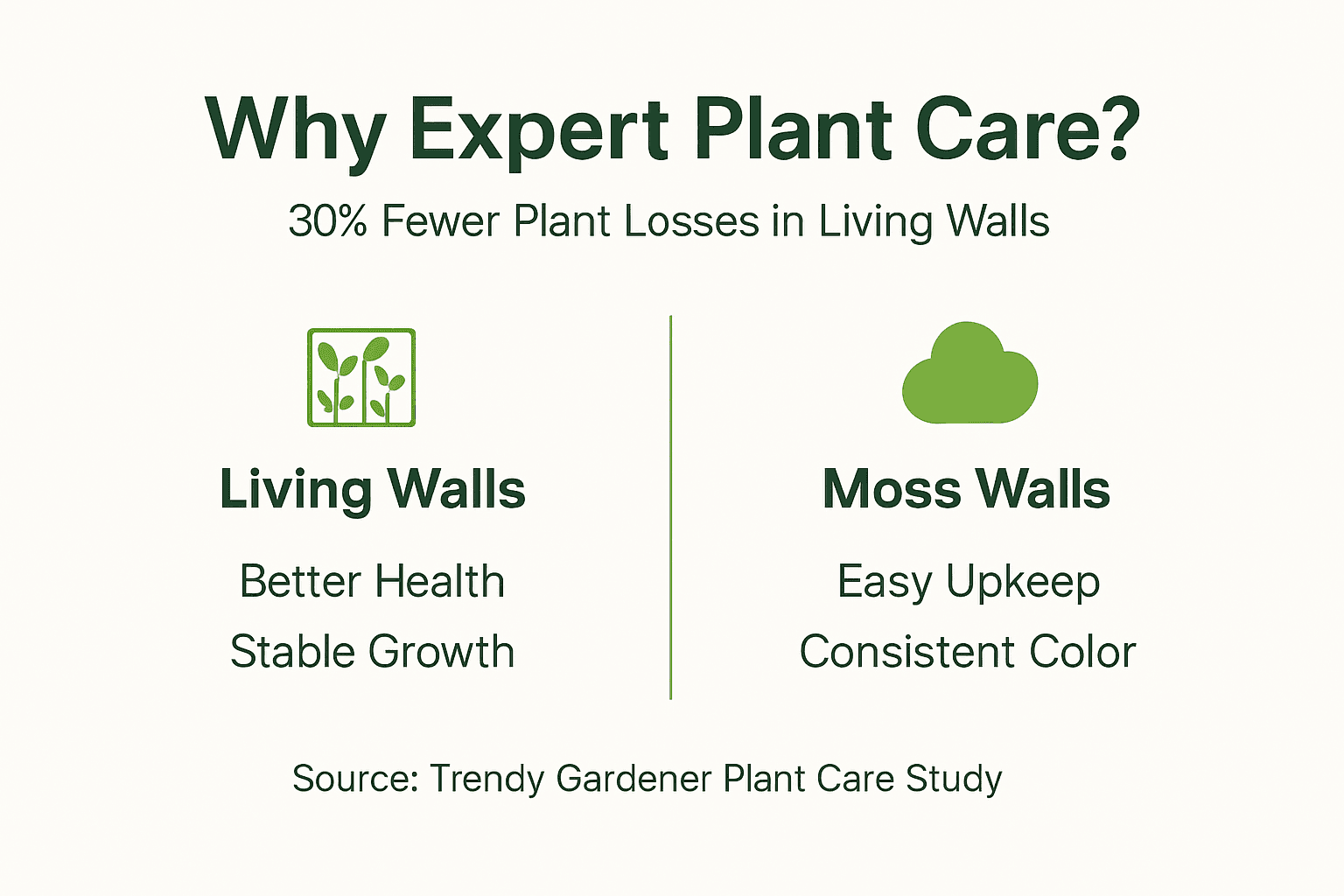
Aesthetic appeal stays consistent. Professionally maintained walls retain color, texture, and fullness year-round. DIY approaches often result in patchy growth, brown spots, or faded moss. Expert care ensures installations look as good in year three as day one. Plant care benefits extend beyond looks to occupant wellbeing.
Cost savings accumulate over time. Proactive maintenance prevents expensive replacements and repairs. Smart systems reduce water and energy use. Labor efficiency from expert scheduling cuts hourly costs by 20 percent compared to reactive approaches. Productivity and wellbeing improve in spaces with professional plant care. Studies show biophilic design boosts focus, reduces stress, and enhances mood.
Key advantages include:
- Sustained air purification and oxygen production in living walls
- Acoustic dampening that improves speech privacy and reduces noise stress
- Consistent visual quality that protects design investment
- Lower total cost of ownership through preventive care
- Enhanced occupant satisfaction and productivity
“Investing in expert plant care transforms interiors from static spaces into living environments that support health, focus, and creativity.”
For more on acoustic and air quality benefits, explore detailed research on moss wall performance in commercial settings.
Implementing Expert Plant Care in Des Moines Interiors
Successful implementation starts with environmental assessment. Des Moines experiences seasonal humidity swings, from dry winters to humid summers. Interior lighting varies widely by building age and window placement. Evaluate these factors before selecting plants or moss types.
Choose compatible species. For living walls, consider pothos, philodendron, and ferns that tolerate moderate light and adapt to indoor conditions. For moss walls, Reindeer moss and Sheet moss handle Des Moines climate well. Plantscaping in Des Moines offers localized plant selection guidance.
Technology enhances care efficiency. Install smart irrigation controllers that adjust watering based on humidity and temperature. Environmental sensors provide real-time data on light levels and air quality. Automated alerts notify you of deviations before damage occurs. These systems reduce manual labor and improve outcomes.
Select professional partners carefully. Look for firms with local experience, custom design capability, and ongoing maintenance programs. Ask for references and view completed projects. Discuss care schedules, response times, and cost structures upfront. Schedule quarterly maintenance visits at minimum, with monthly visits for complex living wall systems.
Implementation steps:
- Assess interior light, humidity, and air flow patterns in target spaces.
- Define goals: aesthetic impact, air quality improvement, noise reduction, or all three.
- Choose wall type based on maintenance capacity and environmental conditions.
- Select plant species or moss varieties suited to local Des Moines climate.
- Install smart irrigation, sensors, and humidifiers as needed.
- Partner with a professional plant care service for design, installation, and maintenance.
- Establish a maintenance schedule: monthly for living walls, quarterly for moss walls.
- Budget for initial installation, ongoing care, and annual plant replacement reserves.
Summary and Practical Takeaways
Expert plant care transforms living and moss walls from decorative elements into thriving biophilic systems. Focus on humidity control, precise irrigation, and environmental monitoring as foundational practices. Smart technology reduces labor and prevents costly mistakes. Choose wall type based on your willingness to invest in active maintenance versus passive upkeep.
Living walls offer dynamic growth and air purification but require consistent water, light, and nutrients. Moss walls provide low maintenance elegance with acoustic benefits and long lifespans. Both systems reward professional care with sustained beauty and function. Des Moines property owners benefit from localized expertise that adapts to seasonal climate shifts.
Key recommendations:
- Prioritize humidity control for moss walls and irrigation precision for living walls
- Install environmental sensors to track conditions and automate responses
- Schedule professional maintenance quarterly for moss walls, monthly for living walls
- Invest in expert design and installation to simplify long-term care
- Set realistic expectations: moss walls last 8 to 15 years, living walls around 5 years
- Leverage local plant care partners familiar with Des Moines conditions
Professional care isn’t an expense; it’s an investment in healthier, more beautiful spaces. Expert services ensure your plant walls deliver value year after year, enhancing interiors and occupant wellbeing simultaneously.
Enhance Your Interiors with Professional Plant Care Solutions
Ready to bring expert plant care to your Des Moines property? Trendy Gardener specializes in bespoke living and moss wall design, installation, and ongoing maintenance. We tailor care programs to your space, ensuring plants and moss thrive in your unique environment.
Explore biophilic design insights to understand how nature transforms interiors. Learn about ongoing plant care services that keep your installations looking exceptional. Review our Des Moines indoor plantscaping guide for localized strategies. Contact us today to create living spaces that feel intentional, elevated, and alive.
FAQ
How often should living walls be professionally maintained?
Professional maintenance is typically needed monthly to ensure watering, fertilization, and pest control are effective. High-traffic commercial spaces may require biweekly visits to address faster nutrient depletion and environmental stress.
Can preserved moss walls improve indoor air quality?
Preserved moss walls absorb pollutants but don’t photosynthesize like living plants. Moss walls act as pollutant absorbers but provide limited active air purification compared to living walls. They contribute mainly through trapping airborne particles and reducing dust.
What local conditions in Des Moines affect plant wall care?
Seasonal humidity swings and interior lighting variability are key factors. Dry winters require humidifiers for moss walls, while humid summers may need dehumidification. Des Moines local plant care strategies adapt irrigation and humidity controls to these patterns.
How can technology improve expert plant care for living walls?
Smart irrigation systems ensure consistent watering and reduce plant loss by adapting to real-time conditions. Environmental sensors monitor humidity, light, and temperature to optimize growing conditions. Technology in plant care automates alerts and adjustments, cutting manual labor and improving outcomes.