

Why Plant Care Is Essential for Modern Living
Choosing the perfect plant can be exciting, but caring for it often leads to confusion and doubt. Many residents across Greater Des Moines, Iowa discover that plant health is more than sunlight and water, with misunderstood biology and care routines causing disappointment. By understanding the true needs of your greenery, you can harness the science of biophilic design and enjoy both vibrant decor and the proven benefits of psychological well-being and cleaner air in your urban home.
Table of Contents
- Defining Plant Care And Common Misconceptions
- Core Benefits Of Indoor Plant Care
- Impact On Well-Being And Productivity
- Essential Practices For Healthy Indoor Plants
- Risks Of Neglect And Common Maintenance Mistakes
Key Takeaways
| Point | Details |
|---|---|
| Understanding Specific Needs | Successful plant care requires acknowledging that each type of plant has unique environmental and care requirements that must be met for optimal growth. |
| Health and Psychological Benefits | Incorporating indoor plants can improve air quality, reduce stress, and enhance emotional well-being, contributing to better productivity and mental health. |
| Common Maintenance Mistakes | Neglect or improper care can lead to serious health issues for plants; awareness of warning signs and proactive monitoring is essential. |
| Importance of Research | Before establishing a care routine for any plant, it is critical to research its natural habitat and specific needs to ensure successful growth and maintenance. |
Defining Plant Care and Common Misconceptions
Plant care represents a nuanced approach to nurturing indoor greenery that extends far beyond simple watering and occasional sunlight. Modern urban dwellers often misunderstand the complex biological needs of houseplants, leading to common misconceptions that can dramatically impact plant health and longevity. Common plant misconceptions stem from anthropomorphizing plant life and lacking fundamental understanding of botanical processes.
At its core, plant care involves understanding specific environmental requirements unique to each species. These requirements include:
- Precise light exposure levels
- Appropriate humidity conditions
- Targeted watering frequencies
- Nutrient-specific soil compositions
- Temperature range tolerances
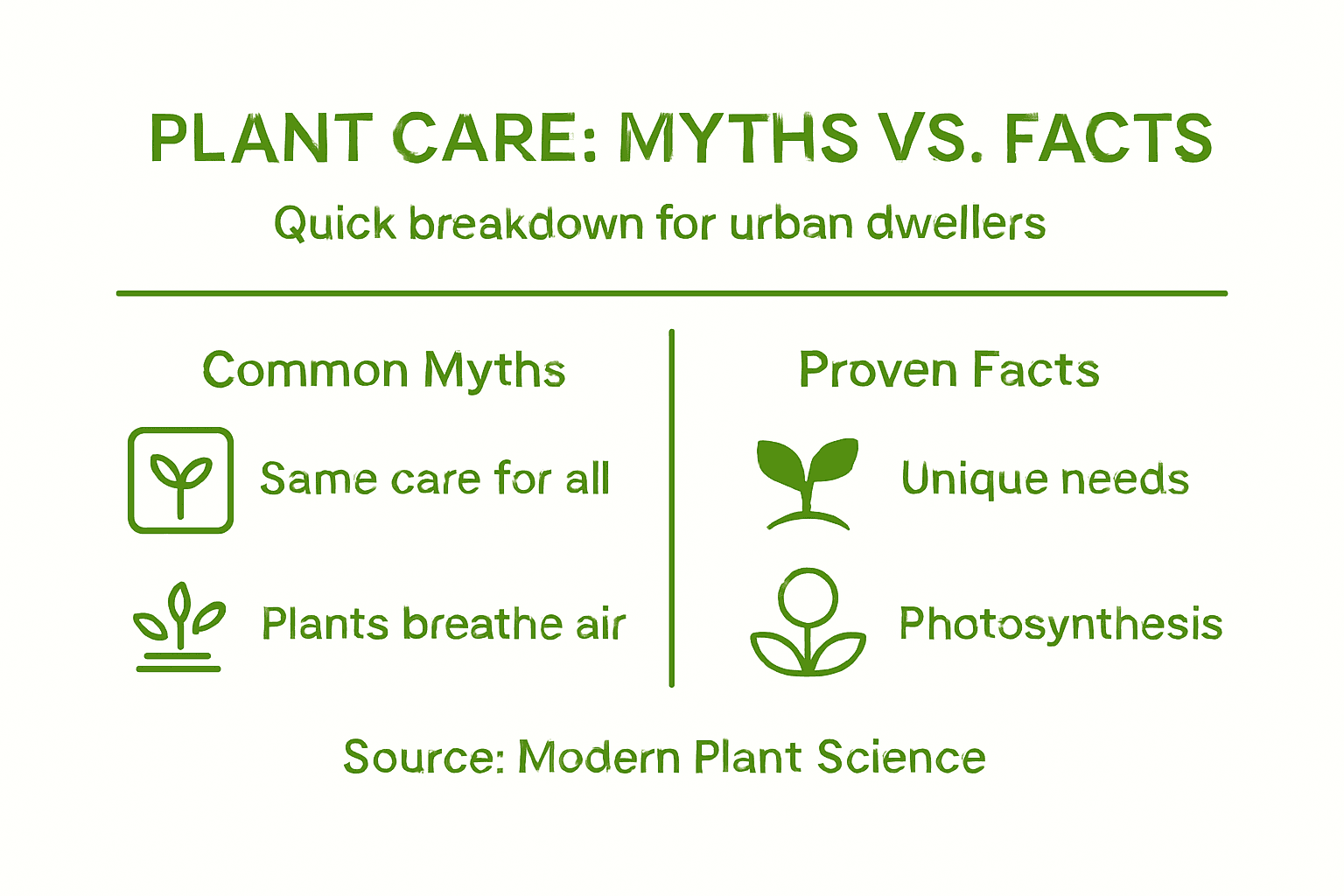
Many urban residents mistakenly believe that all plants require identical care strategies, which couldn’t be further from the truth. Scientific tree care principles emphasize that each plant species demands individualized maintenance approaches based on its native ecosystem and evolutionary adaptations.
Understanding plant biology helps dispel prevalent myths. For instance, plants do not simply “breathe” like animals; they engage in complex photosynthetic and respiratory processes that differ substantially from mammalian respiration. Recognizing these biological nuances transforms plant care from guesswork into a scientifically informed practice.
Pro tip: Research the specific origin and natural habitat of each plant species before establishing its care routine to ensure optimal growth conditions.
Core Benefits of Indoor Plant Care
Indoor plant care transcends mere aesthetic appeal, offering profound health and psychological benefits for modern urban dwellers. Extensive research demonstrates that strategically placed houseplants can dramatically transform living and working environments, providing measurable improvements in air quality, emotional well-being, and cognitive function.
The core benefits of indoor plant care include:
- Significant air quality enhancement
- Natural stress reduction mechanisms
- Improved mental health and cognitive performance
- Temperature and humidity regulation
- Aesthetic and psychological comfort
Scientifically validated research confirms that indoor plants act as natural air purification systems. They effectively remove toxic compounds like formaldehyde and benzene, while simultaneously increasing oxygen levels and creating a more balanced indoor microclimate. Houseplant maintenance strategies reveal that plants such as snake plants and spider plants are particularly effective in filtering environmental pollutants.
Here’s a comparison of popular indoor plants and their unique care requirements:
| Plant Species | Light Needs | Watering Frequency | Air Purification Ability |
|---|---|---|---|
| Snake Plant | Low to bright, indirect | Every 2-3 weeks | High (removes toxins) |
| Spider Plant | Bright, indirect | Weekly | Moderate |
| Peace Lily | Low to medium, indirect | Weekly | High |
| Pothos | Low to moderate | Every 1-2 weeks | Moderate |
Beyond physical health benefits, indoor plants play a critical role in psychological wellness. Caring for plants provides a sense of purpose, reduces stress levels, and creates a more nurturing living environment. Studies have shown that individuals surrounded by greenery experience lower blood pressure, enhanced mood, and increased productivity in both home and professional settings.
Pro tip: Select houseplants that match your specific environmental conditions and lifestyle to maximize both aesthetic and health benefits.
Impact on Well-Being and Productivity
Biophilic design represents more than an aesthetic choice—it’s a scientifically validated approach to enhancing human performance and psychological wellness. Research on plant interactions reveals profound connections between indoor greenery and improved cognitive function, demonstrating how strategically incorporated plants can transform work and living environments.
The key psychological and productivity benefits of indoor plants include:
- Measurable stress reduction
- Enhanced cognitive performance
- Improved emotional regulation
- Increased workplace engagement
- Natural mood elevation
Physiological responses to plant environments are particularly fascinating. Human-plant interactions trigger complex neurological and hormonal changes, lowering blood pressure, reducing cortisol levels, and promoting a sense of calm that directly translates to improved mental clarity and work performance.

Urban professionals spending significant time indoors particularly benefit from plant integration. By creating micro-ecosystems within offices and homes, individuals can counteract the psychological strain of artificial environments. Studies consistently demonstrate that employees surrounded by greenery report higher job satisfaction, demonstrate increased creativity, and maintain more stable emotional states throughout demanding workdays.
Pro tip: Position plants strategically in work and living spaces where they’re visible during high-stress moments to maximize their psychological benefits.
Essential Practices for Healthy Indoor Plants
Successful indoor plant care requires a nuanced understanding of each plant’s unique environmental needs and maintenance requirements. Indoor plant maintenance strategies emphasize the critical importance of tailored approaches that consider species-specific characteristics, light exposure, humidity levels, and seasonal variations.
Key essential practices for maintaining healthy indoor plants include:
- Precise light exposure monitoring
- Consistent watering schedules
- Appropriate humidity management
- Regular soil nutrient assessment
- Strategic pruning and maintenance
- Pest prevention and early detection
Understanding environmental adaptation is crucial for plant survival. Optimal indoor gardening techniques recommend creating microclimates that mimic plants’ native habitats, which involves careful consideration of temperature ranges, light intensity, and air circulation. Different plant species require dramatically different care protocols, making research and observation fundamental to successful indoor plant management.
Proper plant care extends beyond basic maintenance. Urban plant enthusiasts must develop a holistic approach that includes monitoring plant health, understanding subtle stress signals, and creating supportive growing environments. This means investing time in learning each plant’s unique communication methods, recognizing signs of nutrient deficiencies, and responding proactively to potential health challenges.
Pro tip: Develop a consistent plant care journal to track individual plant responses and create personalized care strategies that evolve with your plants’ growth.
Risks of Neglect and Common Maintenance Mistakes
Plant neglect can quickly transform vibrant indoor greenery into struggling, potentially terminal botanical specimens. Common indoor plant problems reveal a range of devastating consequences that stem from improper care and environmental mismanagement.
The most critical maintenance mistakes include:
- Chronic overwatering leading to root rot
- Inconsistent light exposure causing leaf damage
- Improper humidity management
- Neglecting pest prevention
- Using incorrect soil compositions
- Ignoring nutrient deficiencies
Indoor plant care techniques emphasize that each maintenance error carries significant risks. Overwatering, for instance, creates anaerobic conditions that destroy root systems, while underwatering leads to irreversible cellular damage. Urban plant owners must understand that these are not merely cosmetic issues but fundamental threats to plant survival.
Environmental stress manifests through subtle signals that inexperienced caretakers often miss. Leaf discoloration, stunted growth, and sudden leaf drop are critical warning signs indicating systemic plant health problems. Proactive monitoring and rapid intervention can prevent these issues from becoming terminal, transforming plant maintenance from reactive damage control to preventative care.
Here’s a summary of warning signs and preventive actions for common indoor plant care mistakes:
| Warning Sign | Possible Cause | Preventive Action |
|---|---|---|
| Yellow leaves | Overwatering | Check soil moisture, reduce watering |
| Brown leaf tips | Low humidity | Increase humidity, mist leaves |
| Wilting | Underwatering | Water consistently, monitor soil |
| Leaf drop | Sudden temperature change | Maintain stable temperatures |
Pro tip: Create a weekly plant check-in routine that includes moisture testing, visual inspection, and immediate response to any signs of stress or potential disease.
Elevate Your Space with Expert Plant Care Designed for Modern Living
Indoor plants require much more than basic watering and sunlight to thrive. This article reveals how precise light exposure, humidity control, and tailored maintenance are essential to avoid issues like root rot and leaf damage. If you have struggled with keeping your greenery healthy or want to enhance the psychological and air quality benefits of your indoor plants investing in professional care is key. At Trendy Gardener, we understand the challenges you face such as inconsistent watering and the need for environmental adaptation that matches each plant’s unique needs.
Discover how our premium biophilic design solutions offer an end-to-end plant care experience from concept to ongoing maintenance. Whether you desire bespoke living walls or curated indoor plant styling our expert team ensures your plants stay vibrant and alive. The difference is reliability paired with strong design direction, so your space looks exceptional on day one and continues to inspire wellness and productivity. Take control of your plant care challenges now by visiting Trendy Gardener and exploring our indoor plant styling and staging and plant leasing and rental programs. Elevate your environment today with plants that truly thrive.
Frequently Asked Questions
What is the importance of understanding specific plant care requirements?
Understanding specific plant care requirements is crucial because each plant species has unique environmental needs, such as light, humidity, watering frequency, and soil composition. This knowledge helps ensure optimal growth and longevity for your indoor plants.
How do indoor plants improve air quality?
Indoor plants act as natural air purifiers by absorbing toxins like formaldehyde and benzene, while increasing oxygen levels. This leads to a healthier indoor environment and can enhance overall well-being.
What are some common mistakes in indoor plant care?
Common mistakes include overwatering, inconsistent light exposure, neglecting humidity needs, failing to prevent pests, and using incorrect soil types. These errors can lead to significant health issues for plants, including root rot and nutrient deficiencies.
How can I maximize the psychological benefits of indoor plants?
To maximize the psychological benefits of indoor plants, position them in visible areas of your living or working space, particularly during stressful moments. This helps enhance mood, reduce stress, and promote feelings of well-being.