


Plants Boost Workspace Wellbeing 92%: Iowa Office Guide 2026
Did you know that indoor plants can cool office environments by up to 2°C, making your workspace more comfortable without touching the thermostat? Indoor environmental quality dramatically affects employee wellbeing and productivity, yet many Iowa offices overlook a simple, proven solution. Biophilic design with strategically chosen plants can transform physical and psychological workspace conditions. This guide provides evidence-based strategies for integrating and maintaining plants in corporate environments to maximize employee health, cognitive performance, and business outcomes.
Table of Contents
- Environmental Benefits Of Plants In Workspaces
- Psychological And Cognitive Benefits Of Workspace Plants
- Common Misconceptions About Plants And Air Purification
- Biophilic Plant Design Principles For Workspaces
- Maintenance For Ongoing Plant Benefits
- Business And Productivity Benefits Of Plants In Workspaces
- Conclusion: Bringing Plants Into Your Workspace Strategy
- Explore Expert Plant Solutions For Your Workspace
- Frequently Asked Questions
Key Takeaways
| Point | Details |
|---|---|
| Environmental Impact | Plants reduce office temperature by 2°C, improve humidity balance, and lower certain VOC levels for better thermal comfort. |
| Psychological Benefits | Workspace greenery reduces stress, restores cognitive function, and creates welcoming atmospheres that support employee wellbeing. |
| Air Purification Reality | Typical office plant quantities cannot significantly purify air; proper ventilation systems remain the primary air quality solution. |
| Design Strategy | Strategic species selection, placement for visibility, and matching plants to specific office microclimates maximize benefits. |
| Maintenance Imperative | Professional weekly or biweekly care sustains plant health and wellbeing benefits while delivering measurable productivity ROI. |
Environmental Benefits of Plants in Workspaces
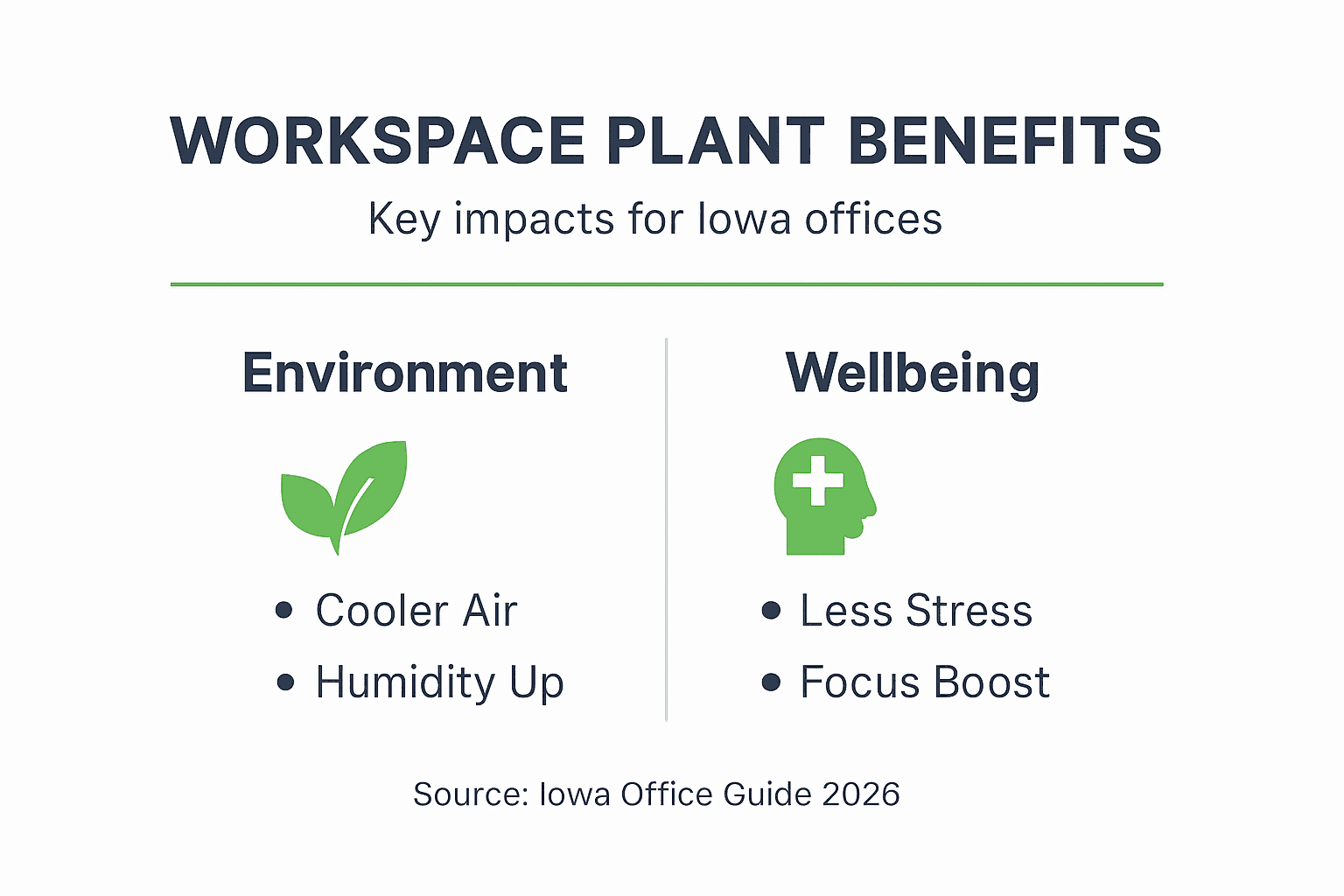
Plants directly influence measurable environmental factors that shape occupant comfort throughout the workday. Indoor plants can cool office environments by up to 2°C, reducing energy demands while improving thermal comfort for your team. This temperature moderation happens through transpiration, where plants release moisture and cool surrounding air naturally.
Beyond temperature control, certain plants reduce volatile organic compounds (VOCs) commonly found in office furniture, carpets, and cleaning products. Plants also help regulate indoor humidity, contributing to optimal moisture levels that prevent dry skin and respiratory irritation during Iowa’s variable climate. The environmental impact varies significantly by species density and office conditions, so matching your plant program to your specific workspace characteristics matters.
Key indoor air quality parameters improved by plants include:
- Temperature regulation through evapotranspiration processes
- Humidity balance for respiratory comfort and skin health
- Reduction of specific VOCs like formaldehyde and benzene
- Enhanced air circulation patterns around plant installations
- Acoustic improvements through sound absorption in leafy areas
These environmental improvements create immediate, tangible comfort gains for employees. When you implement office plantscaping tips that account for your building’s lighting, HVAC systems, and spatial constraints, you maximize these measurable benefits. The cooling effect alone can translate into energy savings during warmer months while maintaining comfortable conditions year round.
Pro Tip: Place larger plants near windows or heat sources to maximize their cooling effect through increased transpiration rates in warmer microclimates.
Psychological and Cognitive Benefits of Workspace Plants
While environmental improvements matter, the psychological impacts of plants often deliver even greater workplace value. Plants reduce stress and mental fatigue based on Stress Reduction Theory, which explains how natural elements help employees recover from cognitive demands. Exposure to greenery during the workday improves mood, attention restoration, and overall job satisfaction.
The presence of plants creates visible evidence that employers care about employee experience. 92% of workers value emotional wellbeing support from employers, and plants contribute to welcoming atmospheres that signal organizational investment in staff comfort. This cultural benefit extends beyond individual wellbeing to shape team dynamics and workplace relationships.
Direct psychological and social benefits provided by plants include:
- Reduced perceived stress levels and lower cortisol responses
- Improved concentration and attention span during demanding tasks
- Enhanced mood and emotional regulation throughout the workday
- Increased feelings of workplace belonging and organizational support
- Greater cognitive restoration during breaks and between meetings
“Incorporating natural elements like plants into office design creates restorative environments where employees can recharge mentally, leading to sustained performance and reduced burnout risk.”
These psychological advantages compound over time as employees interact with plants daily. The plants workplace psychological benefits extend to recruiting and retention, since candidates increasingly prioritize employers who demonstrate commitment to holistic wellbeing. Your plant program becomes a visible differentiator in competitive talent markets.

When plants are placed strategically in break rooms, meeting spaces, and collaborative areas, they create natural conversation points that facilitate social connection. This seemingly small benefit supports the broader workplace culture improvements that Iowa employers need to attract and retain top talent in 2026.
Common Misconceptions About Plants and Air Purification
Despite genuine environmental benefits, widespread marketing has created unrealistic expectations about office plants’ air purification capacity. Effective air purification by plants requires unrealistically high densities of 10 to 1,000 plants per square meter, which no typical office can accommodate. Understanding these limitations prevents misguided implementations and helps you set appropriate goals for your plant program.
The original NASA study that popularized plant air purification used sealed chambers with optimal conditions that don’t reflect real office environments. Ventilation plays a larger role than plants in maintaining indoor air quality, and your HVAC system remains the primary tool for removing airborne pollutants. Plants offer supplementary benefits but cannot replace mechanical ventilation.
Top three misconceptions corrected:
- Plant Density Requirements: Achieving meaningful VOC reduction through phytoremediation would require hundreds of plants in a standard office room, creating impractical maintenance burdens and space constraints that negate other benefits.
- Ventilation Primacy: Modern HVAC systems exchange indoor air multiple times per hour, a rate that dramatically exceeds any biological filtration capacity that office plants could provide even in ideal conditions.
- Marketing Exaggeration: Claims that a few desk plants will purify your office air stem from laboratory conditions that cannot be replicated in real workspaces with open floor plans, air circulation, and human activity.
“While plants offer legitimate comfort and psychological benefits, treating them as primary air purification solutions sets up false expectations that undermine credible biophilic design strategies.”
This realistic understanding helps you position plants correctly in your workspace wellbeing strategy. Focus on the proven environmental comfort benefits like temperature moderation and humidity regulation, plus the substantial psychological advantages, rather than overstating air purification claims. Your plant program will deliver better results when expectations align with scientific evidence.
Biophilic Plant Design Principles for Workspaces
Effective plant programs require thoughtful species selection and strategic placement that accounts for your office’s unique conditions. Biophilic design principles emphasize creating meaningful connections between occupants and nature through intentional design choices. Different office zones have varying light levels, foot traffic patterns, and spatial constraints that influence which plants will thrive.
This comparison helps you match plants to your specific office conditions:
| Plant Type | Light Needs | Maintenance Level | Primary Benefit | Best Placement |
|---|---|---|---|---|
| Snake Plant (Sansevieria) | Low to bright indirect | Very low | Drought tolerance, air quality | Dim corners, low-traffic areas |
| Pothos | Low to moderate | Low | Fast growth, visual impact | Hanging planters, shelves |
| ZZ Plant | Low to moderate | Very low | Neglect tolerance | Reception areas, break rooms |
| Peace Lily | Moderate to bright indirect | Moderate | Humidity regulation | Offices with natural light |
| Rubber Plant | Bright indirect | Moderate | Large visual presence | Lobbies, conference rooms |
| Dracaena | Low to bright indirect | Low | Vertical interest | Entryways, corridor accents |
Place plants where employees will see and interact with them regularly to maximize psychological benefits. Living walls in lobbies create immediate visual impact for visitors and staff. Desk plants within employee sight lines provide continuous nature exposure throughout the workday. Conference room installations enhance meeting environments and signal organizational investment in workspace quality.
Best practices for plant placement and integration:
- Position larger specimens in high-visibility areas like reception and main corridors
- Distribute smaller plants throughout individual work zones for personal connection
- Use vertical installations like living walls where floor space is limited
- Group plants in clusters for greater visual and environmental impact
- Ensure adequate clearance around plants for maintenance access and growth
Your implementation should follow office plantscaping tips 2026 that reflect current best practices for commercial spaces. Consider how your existing interior design, color schemes, and architectural features interact with plant selections to create cohesive, professional environments.
Pro Tip: Match species to office microclimates by observing light patterns throughout the day and noting temperature variations near windows, HVAC vents, and interior zones before finalizing your plant selections.
Maintenance for Ongoing Plant Benefits
Even perfectly selected plants will fail without consistent, professional care that addresses their specific needs. Benefits degrade significantly without proper professional maintenance including appropriate watering schedules, lighting adjustments, and regular health assessments. Neglected plants decline rapidly, creating visual blight that undermines the positive impressions you’re trying to cultivate.
Professional maintenance programs ensure your investment delivers sustained returns rather than creating additional facilities management headaches. Trained plant care specialists understand species-specific requirements and can identify problems before they become visible to occupants. This proactive approach prevents the common scenario where well-intentioned office plants gradually deteriorate into brown, drooping reminders of failed initiatives.
Critical maintenance tasks to sustain plant health and benefits:
- Watering Management: Adjust frequency and volume based on seasonal changes, office temperature fluctuations, and individual plant moisture requirements to prevent over or under-watering.
- Light Optimization: Monitor and respond to changing light patterns from seasonal sun angles, new furniture arrangements, or building modifications that affect plant health.
- Pruning and Grooming: Remove dead foliage, shape growth for aesthetic appeal, and prevent pest establishment through regular inspection and cleaning.
- Soil and Nutrient Care: Replenish nutrients through appropriate fertilization schedules and refresh soil as needed to maintain optimal root health.
- Pest and Disease Control: Identify and address infestations early using integrated pest management approaches that protect plant and human health.
- Rotation and Replacement: Swap out struggling plants before they become eyesores and rotate specimens to ensure even growth and appearance.
The difference between professional care and casual office plant ownership cannot be overstated. An office plant care guide helps facilities teams understand what’s required, but executing consistent care requires dedicated expertise and time. Most organizations achieve better results by partnering with specialists rather than assigning plant care to staff with other primary responsibilities.
Consider how plant care impact on wellbeing extends beyond individual plant health to shape employee perceptions of organizational competence. Thriving, well-maintained plants signal attention to detail and genuine commitment to workplace quality. Struggling plants send the opposite message, regardless of initial design intentions.
Pro Tip: Schedule consistent maintenance programs that align with your building’s cleaning and facilities management calendar to maximize efficiency and ensure ongoing plant care biophilic design integration.
Business and Productivity Benefits of Plants in Workspaces
The environmental and psychological benefits translate directly into measurable business outcomes that justify plant program investments. Green offices with plants report significant productivity improvements and employee loyalty gains, yielding returns that exceed implementation and maintenance costs. These gains stem from reduced absenteeism, improved focus, and enhanced job satisfaction among staff working in plant-rich environments.
Employees in workspaces with integrated plant design demonstrate higher engagement levels and lower turnover intentions compared to peers in barren office settings. The cultural signal that plants send about employer priorities influences retention decisions, particularly among younger workers who prioritize workplace wellbeing. Investment in thoughtful plant programs pays dividends through reduced recruiting costs and preserved institutional knowledge.
Measurable business benefits correlated with plant programs:
- Productivity increases ranging from 6% to 15% in green office environments
- Reduced sick leave and absenteeism linked to improved air quality and comfort
- Enhanced employee satisfaction scores and engagement survey results
- Lower turnover rates and improved retention of high-performing staff
- Stronger employer brand and competitive advantage in talent acquisition
- Positive visitor and client impressions that support business development
ROI Snapshot: Organizations investing in comprehensive plant programs including professional maintenance report productivity gains that offset program costs within the first year, with cumulative benefits increasing over time as plant installations mature and employee familiarity with biophilic elements deepens.
The relationship between plants and productivity has been documented across industries and company sizes. Even modest implementations show positive returns when plants are maintained properly and integrated thoughtfully into existing workspace design. The key lies in treating your plant program as a strategic workplace investment rather than a cosmetic afterthought.
When you examine the full picture of how plants impact commercial spaces, the business case becomes compelling. Reduced HVAC costs from natural cooling, decreased absenteeism from improved comfort, and enhanced productivity from better cognitive function all contribute to positive financial outcomes. These benefits position plant programs as high-value facilities investments that deliver multiple forms of return.
Conclusion: Bringing Plants Into Your Workspace Strategy
Integrating plants thoughtfully into your Iowa workspace improves environmental comfort, psychological wellbeing, and organizational culture simultaneously. The evidence shows that properly designed and maintained plant programs deliver measurable benefits across temperature regulation, humidity control, stress reduction, and cognitive restoration. However, success depends on realistic expectations about air purification capacity and commitment to professional maintenance that sustains plant health over time.
Your plant program offers quantifiable improvements in employee productivity, retention, and workplace satisfaction when you combine strategic design with ongoing expert care. The investments required pay dividends through reduced absenteeism, enhanced focus, and stronger organizational culture that attracts and retains talented staff. Start by assessing your office conditions, selecting appropriate species, and establishing maintenance partnerships that ensure lasting results.
Explore Expert Plant Solutions for Your Workspace
Transforming your Iowa office into a thriving, plant-rich environment requires expertise in both biophilic design solutions and ongoing care strategies. Trendy Gardener specializes in creating customized plant programs for corporate wellness coordinators and interior designers who want workspaces that enhance employee wellbeing while maintaining professional aesthetics.
Our end-to-end approach includes consultation, species selection matched to your specific office conditions, professional installation, and comprehensive professional plant maintenance programs that keep your investment thriving. We handle everything from living wall installations to desk plant rotations, ensuring your workspace delivers sustained benefits without adding facilities management burden. Partner with trusted indoor plant experts who understand Iowa’s unique climate challenges and commercial space requirements. Contact Trendy Gardener to discuss how strategic plant integration can elevate your workspace wellbeing initiatives.
Frequently Asked Questions
What types of plants are best for low-light office areas?
Low-light champions like Snake Plants (Sansevieria) and ZZ Plants thrive in dim office corners with minimal maintenance demands. These species tolerate neglect better than most alternatives, requiring less frequent watering and adapting to fluorescent lighting conditions that challenge other plants.
How often should office plants be professionally maintained?
Professional maintenance typically occurs weekly or biweekly depending on plant density and species requirements. Regular service includes proper watering, pruning, health assessments, and early pest detection to prevent decline. Consistent office plant care schedules ensure your investment continues delivering wellbeing benefits.
Can plants alone improve indoor air quality significantly?
Typical office plant quantities cannot significantly improve air quality alone. Meaningful air purification requires hundreds of plants per room, which is impractical for most workspaces. Effective air quality depends primarily on proper ventilation systems, with plants providing supplementary comfort benefits rather than primary filtration.
How do I calculate ROI for a workspace plant program?
Calculate ROI by tracking productivity metrics, absenteeism rates, and employee satisfaction scores before and after implementation. Factor in reduced HVAC costs from natural cooling, decreased turnover expenses, and enhanced recruiting outcomes. Most organizations see positive returns within the first year when programs include professional maintenance that sustains plant health and appearance.