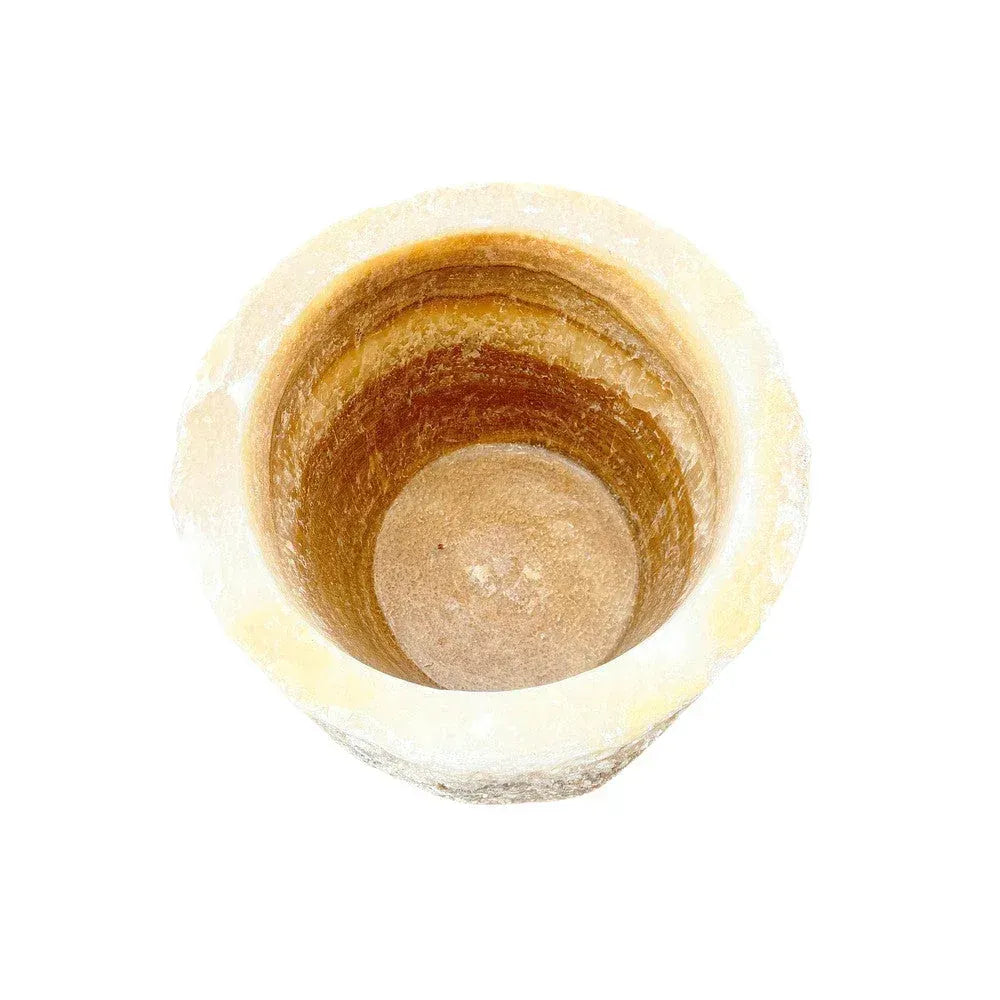
This handcrafted onyx stone planter offers a sculptural presence with a refined polished interior for elevated interiors and covered outdoor spaces. Its organic textured exterior, substantial 20-inch cube silhouette, and natural stone variation add depth, visual weight, and one-of-a-kind character to residential or commercial settings.
This handcrafted onyx stone planter offers a sculptural presence with a refined polished interior for elevated interiors and covered outdoor spaces. Its organic textured exterior, substantial 20-inch cube silhouette, and natural stone variation add depth, visual weight, and one-of-a-kind character to residential or commercial settings.
Many of our stone and terracotta vessels ship via freight due to their scale, weight, and handling requirements. The shipping amount shown at checkout is an estimate only. After purchase, our team will review the vessel specifications, delivery address, site access, and placement considerations, then contact you with the final freight cost before processing your order. Depending on the piece and destination, delivery may require palletized freight, liftgate service, threshold delivery, or other specialty handling.
Many of our stone and terracotta vessels ship via freight due to their scale, weight, and handling requirements. The shipping amount shown at checkout is an estimate only. After purchase, our team will review the vessel specifications, delivery address, site access, and placement considerations, then contact you with the final freight cost before processing your order. Depending on the piece and destination, delivery may require palletized freight, liftgate service, threshold delivery, or other specialty handling.
Care for Stone & Terracotta Vessels
Our stone and terracotta vessels are crafted from natural materials with inherent movement, variation, and character. Subtle shifts in tone, texture, pitting, and surface detail are part of the material story and should be expected.
To preserve the integrity of your vessel, avoid prolonged standing water, protect finished surfaces, and clean gently with a soft cloth and water only. Harsh cleaners, abrasive pads, and acidic products should never be used.
Because these vessels are porous or naturally reactive to their environment, they may develop patina, tonal evolution, or mineral markings over time. That aging process is not a flaw. It is part of the lived beauty of authentic material.
For indoor installations, proper planting methods and surface protection are strongly recommended. For outdoor use, climate exposure should be considered carefully, especially in regions with freeze-thaw cycles.
Our stone and terracotta vessels are crafted from natural materials with inherent movement, variation, and character. Subtle shifts in tone, texture, pitting, and surface detail are part of the material story and should be expected.
To preserve the integrity of your vessel, avoid prolonged standing water, protect finished surfaces, and clean gently with a soft cloth and water only. Harsh cleaners, abrasive pads, and acidic products should never be used.
Because these vessels are porous or naturally reactive to their environment, they may develop patina, tonal evolution, or mineral markings over time. That aging process is not a flaw. It is part of the lived beauty of authentic material.
For indoor installations, proper planting methods and surface protection are strongly recommended. For outdoor use, climate exposure should be considered carefully, especially in regions with freeze-thaw cycles.
Artisan-Made & Globally Sourced
These vessels are not mass-produced products. They are artisan-made forms sourced from workshops and makers around the world, selected for materiality, silhouette, and presence.
Each piece reflects the hand of the maker and the nature of the material itself. Variations in finish, shape, texture, and tone are expected and contribute to the collected, design-forward quality of the vessel.
This is what separates an artisan vessel from factory production: depth, irregularity, and a point of view. No two pieces are exactly alike, and that individuality is precisely what gives them their value.
Our collection is built for interiors and installations that require more than a standard planter. These are statement vessels with provenance, character, and lasting visual weight.
These vessels are not mass-produced products. They are artisan-made forms sourced from workshops and makers around the world, selected for materiality, silhouette, and presence.
Each piece reflects the hand of the maker and the nature of the material itself. Variations in finish, shape, texture, and tone are expected and contribute to the collected, design-forward quality of the vessel.
This is what separates an artisan vessel from factory production: depth, irregularity, and a point of view. No two pieces are exactly alike, and that individuality is precisely what gives them their value.
Our collection is built for interiors and installations that require more than a standard planter. These are statement vessels with provenance, character, and lasting visual weight.
These natural stone and terracotta planters are made from materials shaped by nature, not manufactured to exact uniformity. Variations in shape, size, color, tonal range, texture, and patina are inherent to both natural stone and terracotta and are part of what gives each piece its character and beauty. Natural markings, surface movement, firing variation, and visible differences from one planter to the next should be expected and are not considered defects. Because these qualities are intrinsic to the material, they do not qualify for refund, replacement, or damage claims based solely on aesthetic variation.
These natural stone and terracotta planters are made from materials shaped by nature, not manufactured to exact uniformity. Variations in shape, size, color, tonal range, texture, and patina are inherent to both natural stone and terracotta and are part of what gives each piece its character and beauty. Natural markings, surface movement, firing variation, and visible differences from one planter to the next should be expected and are not considered defects. Because these qualities are intrinsic to the material, they do not qualify for refund, replacement, or damage claims based solely on aesthetic variation.